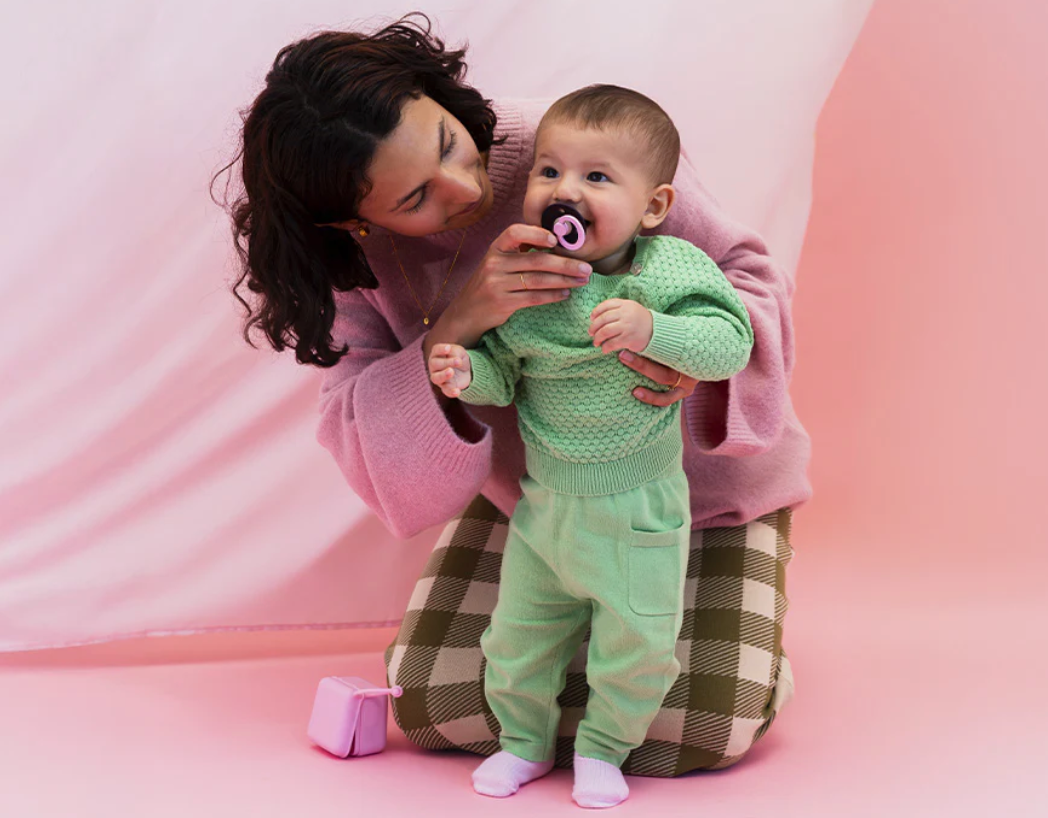
Few baby products generate as much conflicting advice as the pacifier. Some health professionals recommend them from day one. Others urge caution. Meanwhile, parents are left navigating a sea of opinions, often while running on very little sleep. The good news is that the evidence is clearer than the debate suggests. If you are looking to see all pacifiers from BIBS as a starting point, you are already thinking in the right direction: choosing a well-designed, safe product is half the battle.
One of the strongest arguments in favour of pacifier use comes from sleep safety research. The American Academy of Pediatrics includes pacifier use at sleep time in its safe sleep recommendations, noting that it is associated with a reduced risk of sudden infant death syndrome. The mechanism is not fully understood, but the association is consistent enough across studies that most paediatricians consider it a genuine benefit during the first year of life.
This alone shifts the conversation significantly. For many parents who were on the fence, knowing that a pacifier can contribute to a safer sleep environment makes the decision considerably easier.
One of the most common concerns raised by breastfeeding advocates is the idea of nipple confusion: the theory that introducing a pacifier too early can interfere with a baby's ability to latch properly. The evidence here is more nuanced. Some studies suggest that pacifier introduction before breastfeeding is well established may cause difficulties for certain babies, while others find no significant effect.
The current guidance from most lactation specialists is to wait until breastfeeding is going smoothly before introducing a pacifier, typically around three to four weeks. For parents who are not breastfeeding, there is no reason to wait. BIBS pacifiers are designed with a rounded, breast-shaped teat that is intended to support a natural sucking motion, which may help reduce any transition difficulties for breastfed babies.
Some research has linked pacifier use to a slightly increased risk of middle ear infections, particularly in children over six months. The effect appears to be more pronounced with continuous use rather than occasional use, and is less relevant in the newborn phase when the benefits are greatest. Many paediatricians suggest limiting pacifier use after six months as a precaution, while still supporting its use in the early weeks.
Prolonged pacifier use, typically defined as use beyond the age of two or three, has been associated with changes in dental alignment. The American Dental Association notes that pacifier habits in early infancy rarely cause lasting dental problems, and that concerns about alignment are most relevant when use continues well past the age of two. Most children naturally reduce their reliance on a pacifier before this becomes an issue, and those who do not can be supported through gradual weaning strategies. The shape of the pacifier matters here too. BIBS designs its pacifiers with dental development in mind, and parents can find detailed information on the range at Bibsworld when making their selection.
Parents often worry that introducing a pacifier will create a habit that is difficult to break. In practice, most babies who use pacifiers in infancy wean off them naturally between the ages of two and four. The early months are when the sucking reflex is strongest and the soothing benefits are greatest, which is precisely when the safety benefits are also most relevant.
Not all pacifiers are equal, and the right choice depends on your baby's age, feeding method, and individual preferences. Key factors to consider include the size and shape of the teat, the material of the shield, and whether the design allows for adequate airflow around the baby's mouth.
It is also worth buying more than one. Pacifiers have a way of disappearing at the worst possible moments, and having a small supply on hand avoids unnecessary stress. Starting with a consistent brand and design also helps, as babies often develop a preference early and switching can be tricky.
The pacifier debate, like so many parenting discussions, tends to generate more heat than light. The evidence supports careful, age-appropriate use in the early months. The risks associated with pacifiers are largely tied to prolonged or unsupervised use, not to the product itself.
For most families, the practical approach is straightforward: introduce a pacifier once feeding is established, choose a well-made product from a brand with a clear safety focus, and reassess use as your baby grows. The early months are demanding enough without adding unnecessary anxiety to decisions that, with a little context, are far simpler than they first appear.