(Credit: Bergey's Electric)
Bergey's Electric, Hatfield Fire Company team up for safety event highlighting preventable risk
A routine chore most homeowners overlook was put under a microscope — then set on fire — during a recent public safety demonstration in Hatfield.
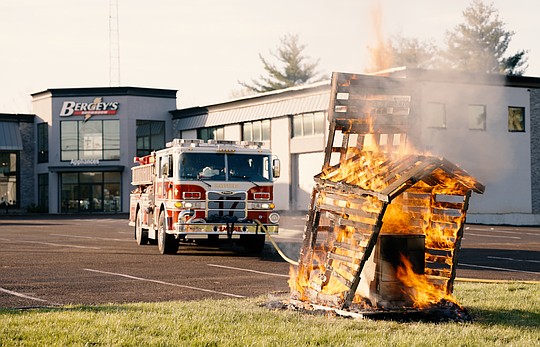
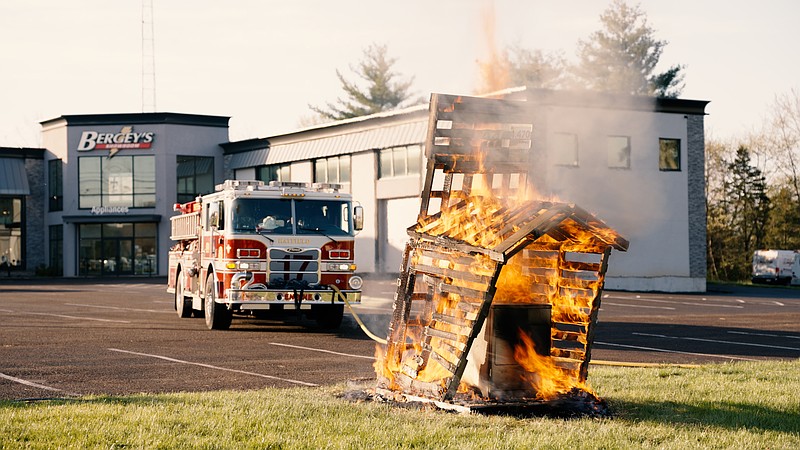
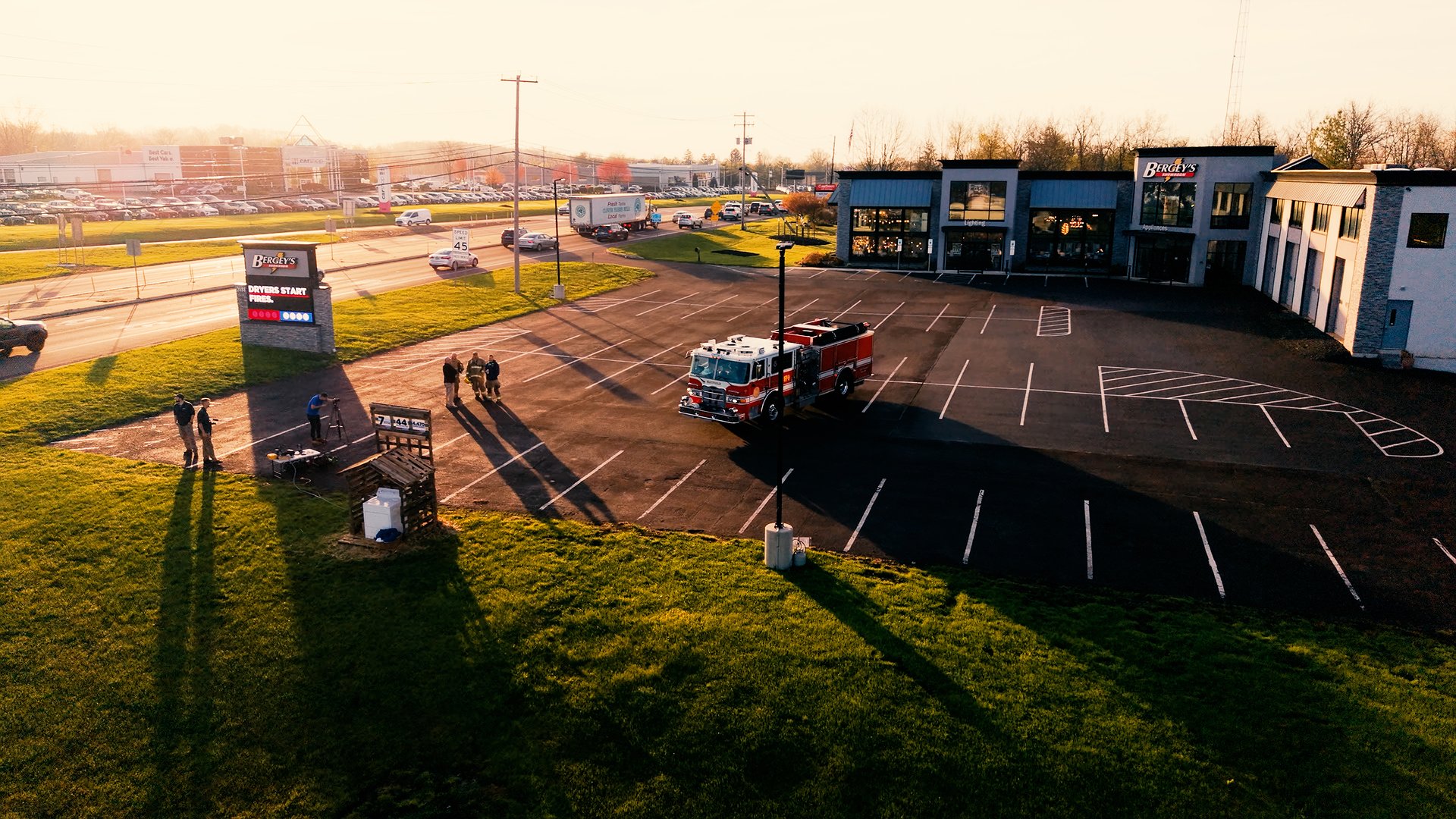
Bergey's Electric partnered with the Hatfield Fire Company on April 14 to stage a live, fire marshal-approved dryer fire at its showroom along Bethlehem Pike in Hatfield Township, showing just how quickly lint buildup can turn an everyday appliance into a dangerous blaze.
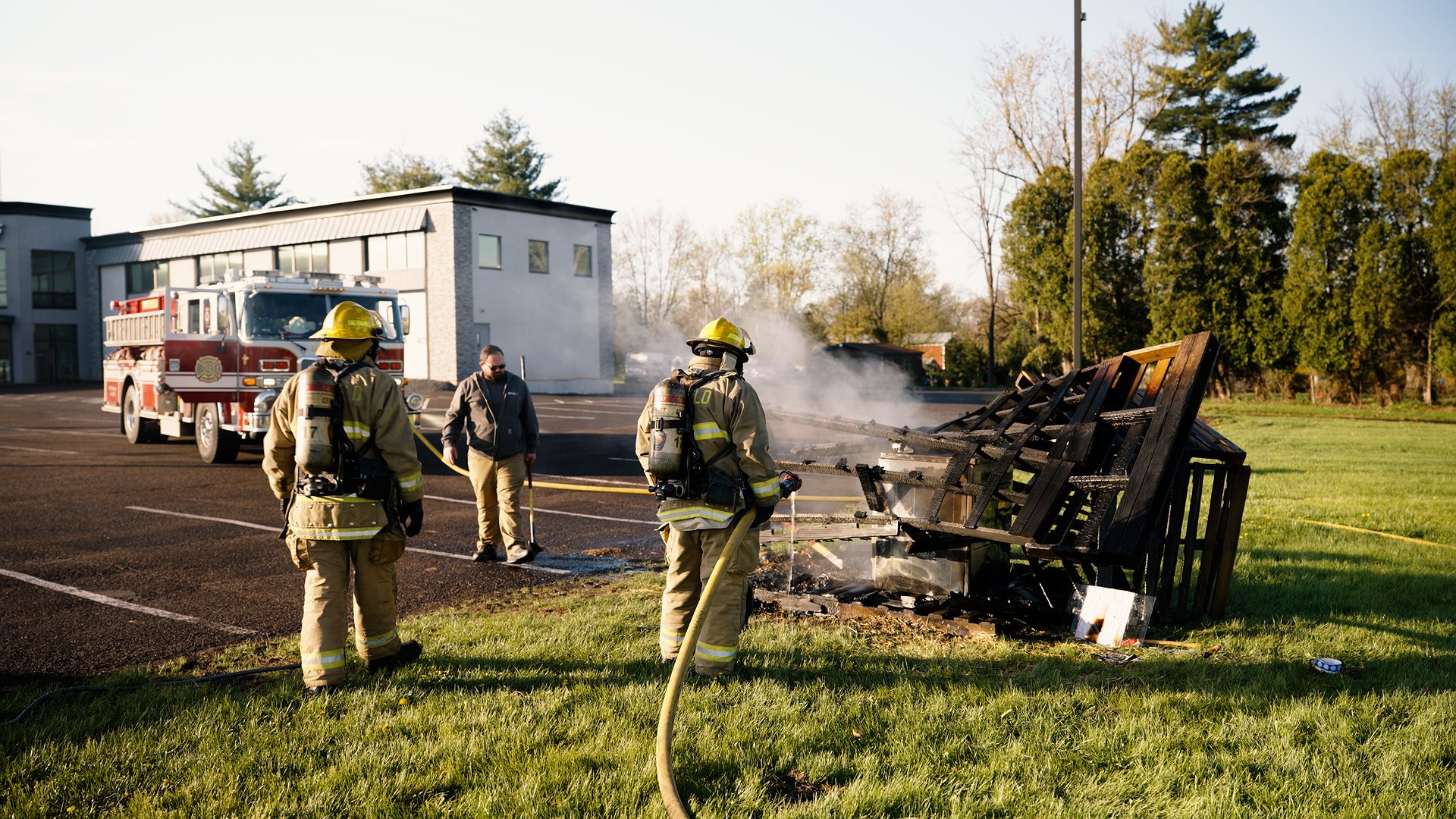
Enclosed inside a box made of wooden pallets, a clothes dryer was intentionally ignited before firefighters stepped in to extinguish the flames, giving attendees a front-row look at how rapidly conditions can escalate.
 (Credit: Bergey's Electric)
 (Credit: Bergey's Electric)
The demonstration was designed to bring attention to a largely preventable hazard. According to the National Fire Protection Association, failure to clean dryers accounts for thousands of residential fires each year — causing an estimated 4,470 home fires, $44 million in property damage, and several deaths annually.
Lint, a highly flammable material, can accumulate in dryer vents and exhaust ducts over time, restricting airflow and creating the perfect conditions for ignition.
Fire officials said the danger is often underestimated because the warning signs can be subtle. Longer drying times, overheating appliances, or a burning smell are all indicators that a dryer vent may be clogged. In many cases, fires start in hidden areas behind walls or within ductwork, making them especially dangerous by the time they are detected.
During the demonstration, firefighters emphasized the importance of regular maintenance, including cleaning lint traps after every load and periodically inspecting and clearing vent systems. Experts recommend a more thorough cleaning at least once a year, or more frequently for households with heavy dryer use.
For organizers, the goal was simple: make an invisible risk visible. By turning a common household appliance into a dramatic teaching tool, the event underscored how quickly neglect can turn into emergency — and how easily it can be prevented with routine care.