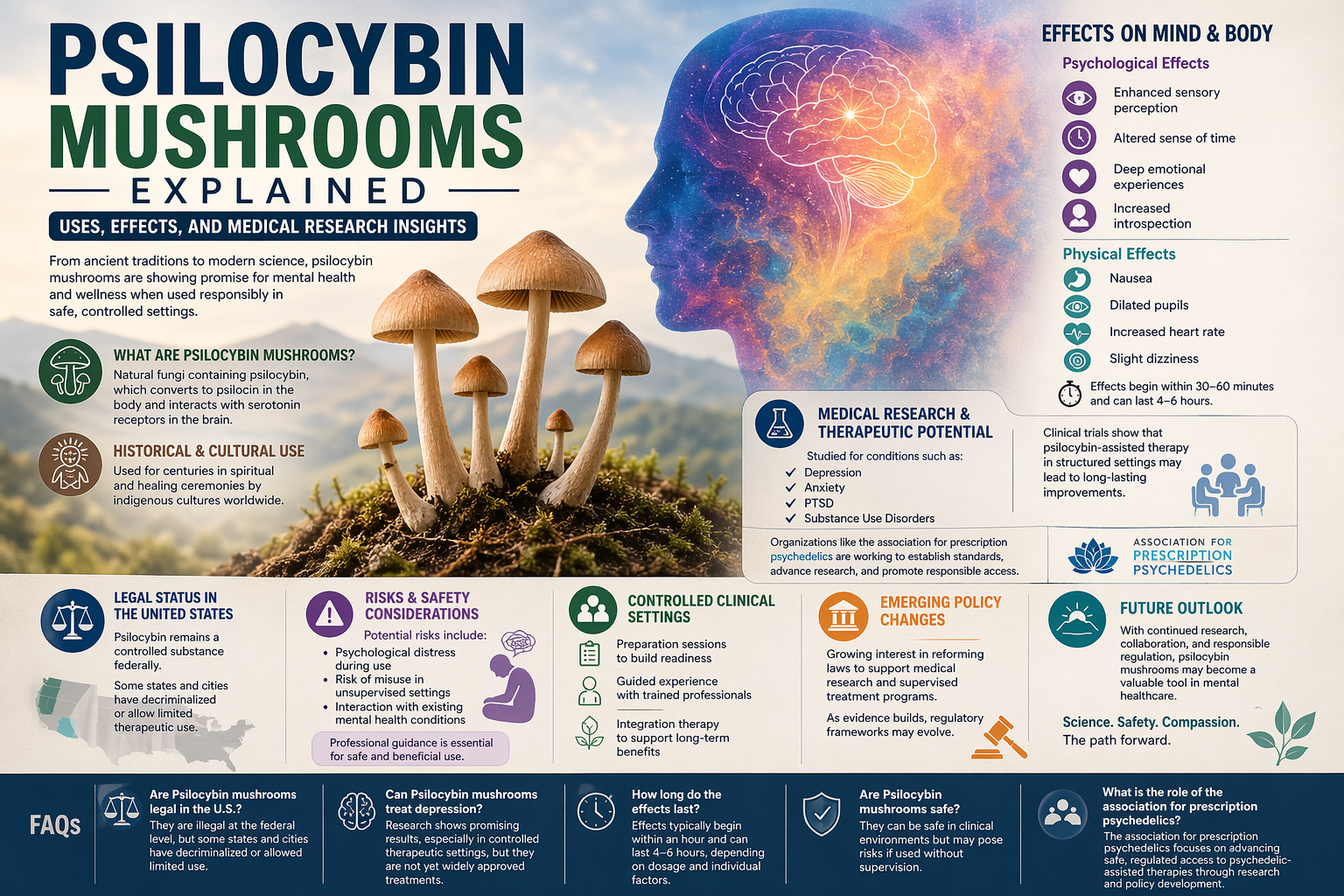
Psilocybin mushrooms have gained growing attention in recent years for their potential role in mental health and wellness. Often referred to as Psilocybin mushrooms, these naturally occurring fungi contain psychoactive compounds that influence perception, mood, and cognition. While once associated mainly with counterculture, they are now being studied seriously in clinical and therapeutic settings across the United States.
Psilocybin mushrooms are a group of fungi that contain psilocybin, a compound that converts into psilocin in the body. Psilocin interacts with serotonin receptors in the brain, which can alter thought patterns and sensory experiences.
These mushrooms grow naturally in various regions worldwide, including parts of North America. Despite their natural origin, their effects can be powerful and unpredictable, depending on dosage and individual sensitivity.
For centuries, indigenous cultures have used Psilocybin mushrooms in spiritual and healing ceremonies. These traditional uses have inspired modern research into their therapeutic potential, particularly for mental health conditions.
The most notable effects of Psilocybin mushrooms are psychological. Users often report:
In controlled environments, these effects can lead to meaningful personal insights. However, in uncontrolled settings, they may also cause anxiety or confusion.
Physical reactions tend to be mild but can include:
These effects usually appear within 30–60 minutes and can last several hours.
Recent studies in the U.S. suggest Psilocybin mushrooms may help treat conditions such as:
Clinical trials have shown that psilocybin-assisted therapy, when conducted under professional supervision, may lead to long-lasting improvements in mental health.
Researchers emphasize that benefits are most evident in structured environments. Patients typically undergo preparation sessions, guided experiences, and follow-up integration therapy.
Organizations like the association for prescription psychedelics are working to establish standards and advocate for responsible medical use. Their efforts aim to ensure safety, ethical practices, and accessibility in future treatments.
Psilocybin remains a controlled substance at the federal level. However, some states and cities have begun to decriminalize or allow limited therapeutic use.
There is growing interest in reforming laws to support medical research and supervised treatment programs. As evidence continues to build, regulatory frameworks may evolve.
While Psilocybin mushrooms show promise, they are not risk-free. Possible concerns include:
Experts strongly recommend avoiding recreational or unsupervised use, especially for individuals with a history of mental health disorders.
The future of Psilocybin mushrooms in medicine looks promising but still requires careful research and regulation. Continued collaboration between scientists, policymakers, and organizations like the association for prescription psychedelics will shape how these substances are integrated into healthcare.
Psilocybin mushrooms are transitioning from misunderstood substances to potential tools in modern medicine. With increasing scientific support and growing public interest, they may play a significant role in treating mental health conditions in the future. However, responsible use, proper regulation, and continued research remain essential to unlocking their full potential.
They are illegal at the federal level, but some states and cities have decriminalized or allowed limited use.
Research shows promising results, especially in controlled therapeutic settings, but they are not yet widely approved treatments.
Effects typically begin within an hour and can last 4–6 hours, depending on dosage and individual factors.
They can be safe in clinical environments but may pose risks if used without supervision.
The association for prescription psychedelics focuses on advancing safe, regulated access to psychedelic-assisted therapies through research and policy development.