People often look for retreats when life becomes noisy, but noise is not always external. It shows up as mental clutter, emotional fatigue, inner conflict, and the feeling that even rest has become shallow. Many people take time away, yet return home unchanged because they only changed location, not their way of being.
That is where a retreat based on Buddhist teaching becomes different from an ordinary holiday or a generic wellness program. Instead of offering distraction, it offers direction. Instead of helping people momentarily forget their lives, it helps them understand the patterns shaping those lives. This kind of retreat is not built around entertainment. It is built around inquiry, discipline, and the possibility of seeing more clearly.
For modern travelers, that clarity has become deeply valuable. Daily life moves fast. Most people absorb more information in a single day than they can process calmly. Reactions become automatic. Stress becomes normal. Attention becomes fragmented. Even people who are doing well outwardly may feel inwardly unstable, as if their minds are always responding but rarely resting.
A meditation retreat grounded in the Buddha’s teachings offers a real alternative. It slows experience down enough for observation to begin. Rather than providing constant stimulation, it invites people to sit with their thoughts, emotions, and habits directly. This may sound simple, but it is demanding in the best way. It asks for honesty. It asks for patience. It also offers something rare in return, which is insight.
The Buddha’s teachings remain relevant because they speak directly to the causes of suffering that still shape modern life. Craving, aversion, attachment, restlessness, and ignorance did not disappear with technology or modern comfort. In many ways, they intensified. People want more, fear more, compare more, and cling more. A retreat that helps people observe these tendencies in real time can be profoundly grounding.
This is one reason teaching-based meditation retreats resonate so strongly today. They are not built on vague inspiration. They are rooted in a practical path. Participants are not only encouraged to relax. They are encouraged to see how the mind works. They begin to notice reactivity, mental stories, emotional loops, and the constant search for control or distraction. Once these habits are seen clearly, they begin to loosen.
Pokhara is a particularly meaningful place for this kind of retreat because it naturally supports a contemplative rhythm. The landscape encourages spaciousness. The mountain environment softens mental pressure. The distance from urban overstimulation creates room for practice to become deeper. People do not need to force stillness in such a setting. The place itself begins to support it.
Nepal also carries spiritual resonance that adds depth to Buddhist retreat experiences. This is not just because the region is historically significant. It is because contemplation, pilgrimage, devotion, and spiritual practice still have cultural presence here. A teaching-based retreat in Nepal often feels more grounded because it exists within a wider spiritual atmosphere rather than inside a purely commercial wellness environment.
For many guests, the value of such a retreat lies in structure. Modern life often leaves people with freedom but little inner direction. A good retreat gives shape to the day. There is time for meditation, reflection, simple living, mindful meals, and rest. That rhythm becomes part of the teaching. It shows people how much unnecessary friction they carry in daily life.
This kind of structure is especially powerful for people going through a transition. Some arrive after burnout. Some come after grief, loss, or emotional confusion. Others are simply tired of feeling spiritually unfocused. A Buddhist meditation retreat does not promise to erase difficulty. What it can do is help people meet difficulties with more steadiness and less confusion. That alone can change the course of a person’s life.
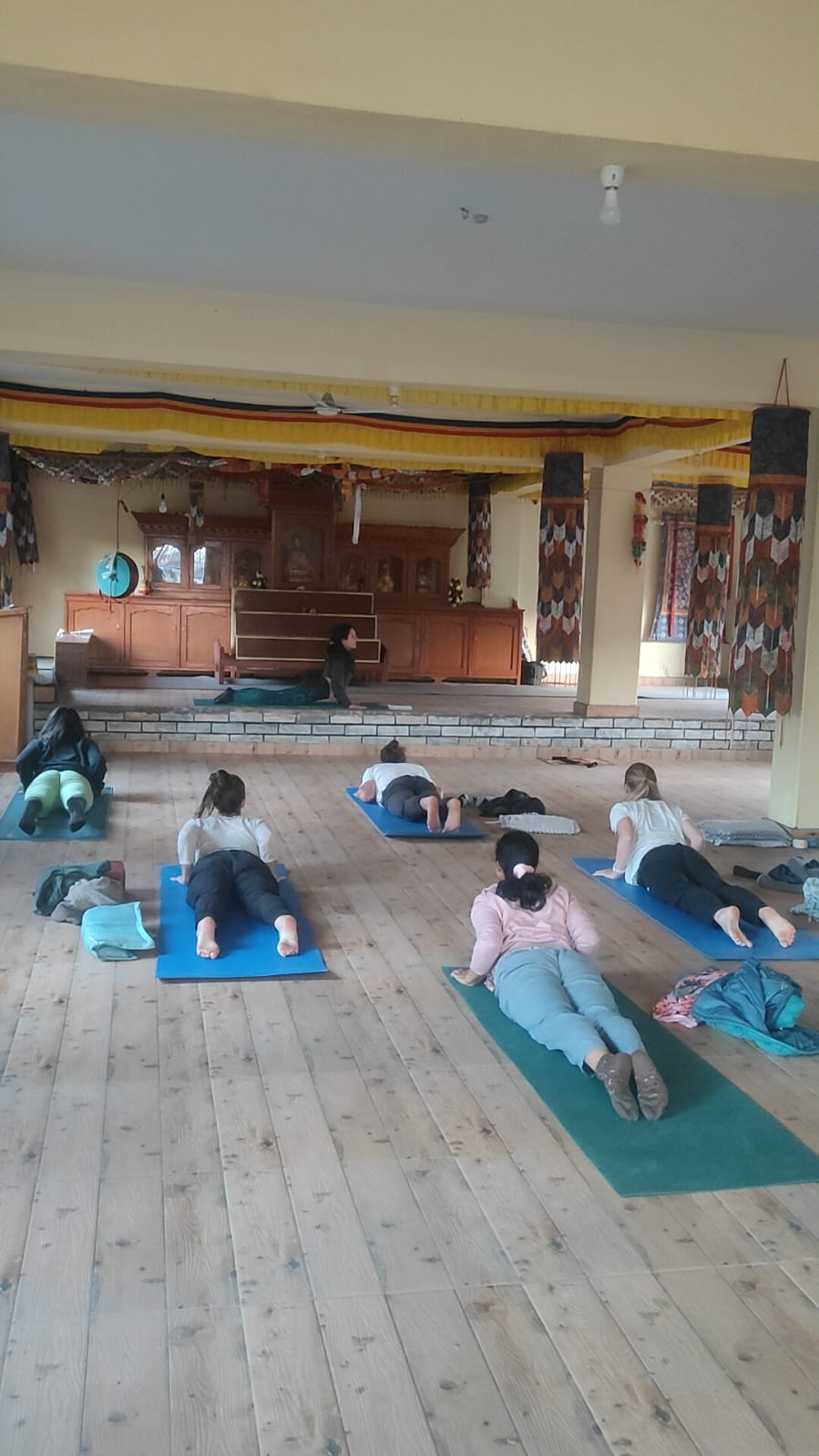
Travelers who begin searching for this experience often start broadly with terms like yoga in pokhara. But what many are actually seeking goes beyond yoga alone. They are looking for a place where inner work is taken seriously, where retreat is shaped by authentic practice, and where spiritual teachings are not reduced to decoration. The right ashram or retreat setting can provide that deeper layer of meaning.
One important strength of a teaching-based retreat is that it gives participants something they can carry home. The best retreats do not leave people dependent on the place. They leave them with methods of observation, reflection, and meditation that continue after the journey ends. A person may come for a week, but the real value is in how they begin to live afterward. They may react less quickly, listen more carefully, and become more aware of the thoughts that create suffering.
That is why retreats based on Buddhist teaching can be so much more than a temporary reset. They help shift perspective. Many people spend years trying to fix their lives externally without understanding the mental habits that keep recreating the same stress. When those habits become visible, a more meaningful kind of change becomes possible.
The environment of an ashram or retreat center also matters here. People learn not only through formal instruction but through simplicity. Waking early, eating mindfully, keeping silence at certain times, and participating in a daily routine all reinforce the teachings. These practices remind guests that peace is not created by endless consumption. It is cultivated through awareness and discipline.
Bodhidham’s Buddha’s Teaching Meditation Retreat reflects this direction well because it is centered on meditation, inner understanding, and the practical value of Buddhist wisdom in retreat life. For travelers who want a retreat with a clear contemplative purpose rather than a vague wellness promise, that kind of program makes strong sense.
A retreat like this can be meaningful for both beginners and experienced practitioners. Beginners benefit from entering a structured environment where meditation is held with guidance and context. More experienced practitioners benefit from the chance to deepen without the fragmentation of ordinary life. In both cases, the retreat becomes a mirror. It reflects the condition of the mind back to the participant with greater clarity.
That process can be challenging, but it is also compassionate. To see oneself clearly is not a punishment. It is the beginning of freedom. People often discover that much of their suffering is intensified by unconscious patterns. Once those patterns are noticed, even briefly, there is room for wiser action.
This is why Buddha’s teaching retreats remain so relevant in the present age. They do not compete with modern life by being louder or more impressive. They offer something better. They offer stillness, understanding, and a path of inquiry that speaks directly to human struggle. For people who feel overwhelmed by surface-level living, that depth is not a luxury. It is a necessity.
In Pokhara, with the right environment and the right guidance, such a retreat can become more than a restful trip. It can become the beginning of a more conscious relationship with the mind, with suffering, and with the possibility of genuine inner peace.