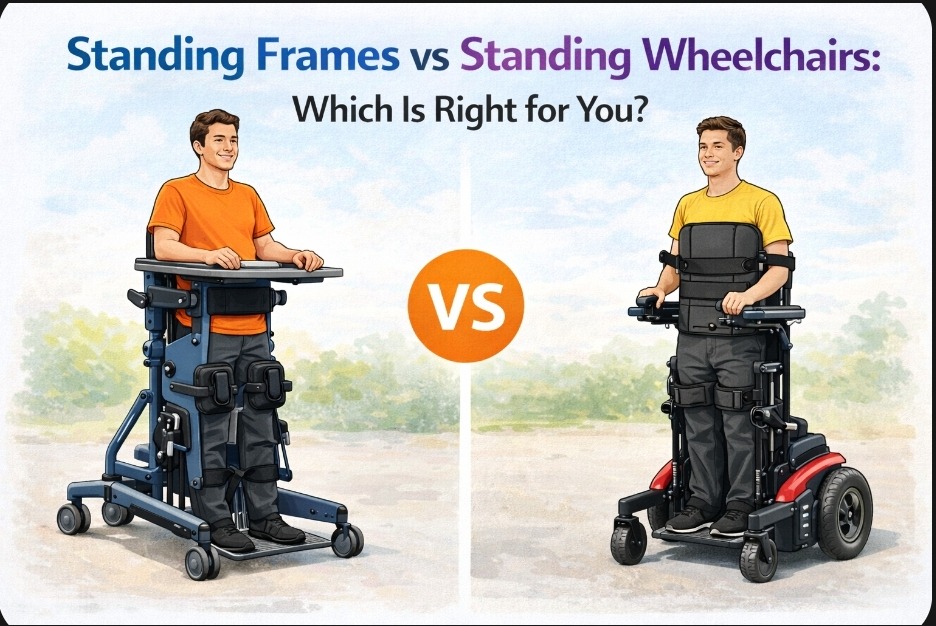
Choosing the right standing device is an important decision for anyone wanting to improve posture circulation independence and overall wellbeing. Both standing frames and standing wheelchairs provide the opportunity to stand safely and comfortably but they serve slightly different purposes. Understanding these differences can help you choose a solution that best supports your health lifestyle and mobility needs.
This guide explores how standing frames and standing wheelchairs work their benefits and limitations and the key factors to consider before deciding which option is right for you.
Understanding Standing Frames
A standing frame is a supportive device that enables a person to stand in an upright position. It holds the body securely while allowing weight bearing through the legs. Standing frames come in several forms including sit to stand frames prone frames and supine frames. While each style provides a different level of support the goal remains the same which is to allow safe and stable standing.
Standing frames are often used as part of therapy programs because they offer controlled positioning and can be adapted for different physical needs. They are commonly used in homes schools and rehabilitation settings especially for children and adults who need structured and predictable support.
One of the major advantages of a standing frame is its stability. Because the frame is stationary and solid it offers a very secure standing experience. This makes standing frames ideal for people who have limited trunk control or who need strong positioning aids to maintain alignment. A standing frame can also be beneficial for someone who wants to stand for longer periods without feeling unstable or fatigued.
Another benefit is the therapeutic value. Regular standing in a frame can improve bone density circulation digestion muscle tone and joint flexibility. It can also help reduce pressure areas which is especially valuable for people who spend many hours sitting each day. Standing can also contribute positively to mood and mental wellbeing because it allows users to experience the world from an upright viewpoint.
Although standing frames have many strengths they also have limitations. The biggest limitation is lack of mobility. A standing frame does not move with the user which means it is usually set up in one location. This can make it harder to incorporate standing into daily routines unless the frame is already placed in an area where the user spends time. Standing frames can also be large which may require adequate space in the home or therapy environment.
Understanding Standing Wheelchairs
A standing wheelchair is a mobility device that allows the user to move around like a typical wheelchair but also rise into a standing position using an integrated standing mechanism. Depending on the model the user may control the standing function manually or through powered controls. This dual function makes standing wheelchairs a strong choice for people who want both mobility and the physical benefits of standing.
Standing wheelchairs offer a level of independence that stationary frames cannot match. Users can move independently while seated and then transition to standing wherever they need to whether in the kitchen office classroom or outdoors. This flexibility promotes greater involvement in daily activities and increases opportunities for participation.
One of the biggest advantages of standing wheelchairs is that they support standing as part of everyday life rather than only during scheduled therapy sessions. For example a user may stand to reach cupboards to cook safely to work at a bench or to speak to someone at eye level. This can enhance social confidence and can also reduce the physical strain that comes from overreaching or bending from a seated position.
Standing wheelchairs also offer the same health benefits as standing frames. They encourage weight bearing improve circulation and pressure management support bone and joint health and can help with digestion and breathing. Because they are more mobile some users find that they stand more often which increases the long term health benefits.
Despite these advantages standing wheelchairs also come with challenges. These devices tend to be more expensive than standing frames because they combine mobility and standing support. Maintenance can also be more complex because of the mechanical components involved in the standing function especially in powered models. Transport may require a larger vehicle or specific modifications due to the size and weight of the wheelchair.
Standing wheelchairs also require adequate posture strength and cognitive ability to operate safely. While they provide stability users must still be able to control movement and position themselves appropriately.
Comparing Standing Frames and Standing Wheelchairs
Both standing frames and standing wheelchairs allow users to benefit from regular supported standing but the experience differs in several important ways. Understanding these differences will help you match your choice to your goals.
Standing frames provide structured therapeutic standing. They work best for people who need significant physical support or who want standing as part of a scheduled exercise routine. They are also a strong choice when a user has limited space for wheelchair manoeuvring or when mobility is already supported through another device.
Standing wheelchairs provide functional everyday standing. They are the best choice for people who want independence while also enjoying the health benefits of standing. They are ideal for people who want to reach higher surfaces participate more actively in daily tasks and enjoy more social confidence by standing at eye level.
Cost is another factor. Standing frames are generally more affordable and easier to maintain. Standing wheelchairs however provide far greater versatility which often justifies the higher investment for users who rely on a wheelchair for daily mobility.
Environment is also important. A standing wheelchair is perfect for active users who want to move around their home workplace or community independently. A standing frame can be excellent for users with limited space or those who only need standing support for therapy purposes.
Which Option Is Right for You
The right choice depends on your physical needs lifestyle preferences and goals.
A standing frame is likely right for you if you want a stable device for therapeutic standing if you need strong postural or trunk support or if you already use a wheelchair and only need standing during set times.
A standing wheelchair is likely right for you if you want the freedom to stand anywhere if you rely on a wheelchair throughout the day or if you want to increase independence productivity and participation while still gaining the health benefits of standing.
Before making a decision it is helpful to consult with an occupational therapist or physiotherapist who can assess your posture strength home layout and long term mobility needs. They can also help with trials of both devices which is often the best way to discover what feels comfortable safe and practical.
Standing devices are powerful tools for improving physical health emotional wellbeing and independence. Whether you choose a standing frame or a standing wheelchair the right equipment can open new opportunities and support a more active and fulfilling life.