The way properties are marketed before construction has changed permanently. A decade ago, developers relied on architectural drawings, physical scale models, and staged photography to attract buyers and investors. Today, the standard has shifted to photorealistic 3D visualization — and the reasons are practical, not just aesthetic.
For real estate professionals in Pennsylvania and across the Northeast, understanding how this technology works and when to use it has become part of the core development skillset.
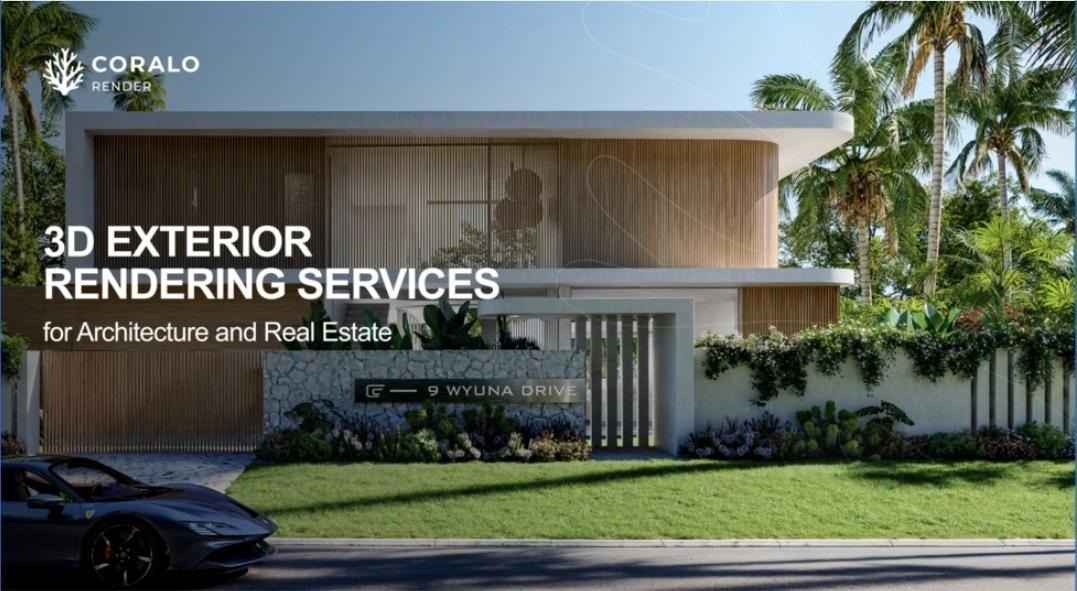
At its simplest, 3D rendering takes architectural drawings and turns them into photorealistic images of a building or space that doesn't yet exist. The finished image shows the facade materials, the landscaping, the lighting conditions, and the surrounding context — everything a buyer or investor needs to understand what they're committing to.
Professional 3d exterior rendering services studios work directly from CAD files, floor plans, and material specifications provided by the architect or developer. The output can be a single still image, a set of views from multiple angles, or a full animation walkthrough depending on the project's marketing needs.
For developers working in competitive markets, partnering with a reliable visualization studio like Coralo Render early in the project timeline means marketing materials are ready before the first unit goes on sale — not weeks after.
Traditional architectural photography has two fundamental limitations: the building has to exist before it can be photographed, and once photographed, changes are expensive.
3D rendering solves both problems. A render can be produced from approved drawings before groundbreaking, which means pre-sale campaigns can launch months earlier. And if the design changes — a facade material swap, a landscaping revision, a different roofline — the 3D model is updated and re-rendered without scheduling a new shoot.
For developers managing multiple projects simultaneously, this flexibility is significant. Marketing materials for a project in early design can be produced in parallel with construction on another, without waiting for physical completion.
Not every project needs the same level of visualization. The highest-impact applications tend to be:
Pre-construction residential sales. Buyers purchasing units before a building is complete need to see the finished product. A photorealistic exterior render showing the building in its site context — with accurate materials, mature landscaping, and realistic lighting — converts interest into commitment more effectively than any written description.
Investor presentations. Institutional investors and private equity partners evaluating a development opportunity want to understand the project visually. A strong set of exterior and interior renderings communicates scale, quality, and market positioning faster than a financial model alone.
Planning and zoning submissions. Many municipalities require visual representations of proposed developments as part of the approval process. Renderings that accurately show how a building will sit within its neighborhood context are more persuasive to review boards than technical drawings.
Broker and agent materials. Real estate professionals selling pre-construction units rely on visuals to drive buyer interest at listings, open houses, and marketing events. A photorealistic render of the finished exterior is often the centerpiece of these presentations.
The quality of a 3D render depends heavily on the studio producing it. For developers evaluating visualization partners, a few practical considerations matter more than price alone.
Portfolio relevance is the most important factor. A studio with experience across residential, commercial, and mixed-use project types will approach your project with the right visual language. A studio that primarily works in one segment may produce technically competent work that doesn't fit the context of your project type.
Turnaround time matters in development timelines. Marketing launches, investor meetings, and approval deadlines operate on fixed schedules. Confirm that the studio can deliver within your project's timeline before committing.
Revision process clarity protects your budget. Architectural visualization is iterative — designs change, clients have feedback, materials get swapped. Understanding what's included in the base scope and what triggers additional cost prevents surprises at the end of the project.
The cost of professional 3D rendering is a small fraction of a development project's total budget. Its impact on pre-sale performance, investor confidence, and approval timelines makes it one of the higher-return line items in marketing spend.
Developers who integrate visualization early — during design development rather than after construction documents are finalized — consistently report smoother pre-sale processes, stronger investor presentations, and fewer surprises at the approval stage.
As buyer expectations continue to rise and the pre-construction sales cycle continues to compress, architectural visualization has become a standard part of the development workflow rather than an optional enhancement.