How AI Video Is Reshaping Video Production for Small Businesses in 2026
In 2026, video is no longer optional for small businesses. It’s needed for ads, product pages, social posts, demos, and customer education. The challenge isn’t whether video works—it’s that traditional production is slow, expensive, and hard to scale.
AI changes this by lowering the cost of creating, testing, updating, and reusing video content. It doesn’t fully automate the process, but it makes production faster and more flexible.
As marketing starts to look more like the creator economy, small teams need more content with faster turnaround. AI video helps make that possible without the heavy production workflow.
Why video production has become harder for small businesses
A few years ago, many small businesses could survive with a simple website, a few static social posts, and occasional design work. That is not how most channels work now.
Today, small businesses are expected to produce:
- short social videos
- product explainers
- landing page visuals
- paid ad creatives
- customer education clips
- internal training videos
The content demand has gone up, but most teams have not added a full production department.
That creates a gap. The business needs video. The team does not have time, budget, or process for constant production.
More channels mean more content pressure
Every platform rewards speed and clear visuals. Video is often the fastest way to show what a product does and why it matters. For small businesses, one campaign now means multiple assets for different platforms.
Traditional production doesn’t scale well
The usual process—planning, filming, editing, revising, and resizing—is heavy. For small teams, delays, reshoots, or slow edits quickly become bottlenecks.
Small business marketing now looks like the creator economy
Brands compete in the same attention space as creators. Success now depends on frequent posts, quick experiments, and visual variety. Testing three video ideas fast often beats waiting for one perfect edit.
What AI video production really means in 2026
When I say “AI video production,” I do not mean pressing one button and getting a perfect campaign.
I mean using AI to reduce friction across the production process.
That can include:
- turning text into a draft video
- turning images into motion
- generating several ad variations quickly
- changing scenes without reshooting
- creating product demos without a camera setup
- building short clips from existing creative assets
The key difference is this:
Traditional video production treats every asset like a project. AI-assisted production treats content like a repeatable workflow. That change matters more than any single model or feature.
AI-assisted production is not the same as full automation
This part is important.
AI helps with speed and volume, but it does not replace:
- clear messaging
- audience understanding
- basic taste
- review and decision-making
The strongest use of AI is not “replacing humans.” It is “let small teams produce more useful content without adding more production overhead.”
How AI is changing video production for small businesses
The impact shows up in four practical ways.
1. Lower cost from concept to draft
The old way often required real filming before you could even see the concept.
Now a small business can generate a rough visual draft from a script, a product image, a mockup, a screenshot, or a short prompt.
That removes cost from the early stage of production.
Instead of paying for a full process before seeing the direction, the team can create options quickly and decide what is worth refining.
2. Easier ad testing
Paid ads need variation—different hooks, visuals, openings, CTAs, and formats. With traditional production, each new version adds cost.
AI makes variation cheaper, allowing small businesses to test more without treating every asset as a big investment.
3. Less reliance on agencies and freelancers for repeatable work
Agencies and freelancers still matter for larger campaigns or high-end creative work. But much of small business content—product clips, onboarding visuals, promo shorts, feature updates, and support videos—is repeatable. With AI handling drafts and variations, much of this work can move in-house.
4. Faster execution without adding headcount
This may be the most important point.
Small teams do not usually need infinite ideas. They need a realistic way to execute the ideas they already have. AI video gives them leverage.
The most useful AI video use cases for small businesses
Not every use case has the same value. Some are much more practical than others.
Paid social ad creatives
This is one of the best starting points.
Small businesses can use AI video to make:
- different ad openings
- visual hook variations
- alternative product scenes
- fast social ad concepts
The goal is not perfection. The goal is testing.
Product demos and explainers
Many products are easier to sell when people can see them in motion.
AI can help build:
- feature highlights
- visual product walk-throughs
- simple animated explainers
- short product demo clips
This is especially useful for SaaS, e-commerce, and digital tools.
Landing page videos
A short video on a landing page can explain a product faster than long text. Traditional production often makes this feel too expensive. AI lowers that barrier.
Email and sales support videos
A small business can use simple video clips to:
- explain offers
- support a launch
- answer common questions
- onboard users
- guide prospects
These do not need cinematic polish. They need clarity.
Social media and short-form clips
This is where speed matters most.
Small businesses can use AI to create:
- quick educational content
- product teaser
- trend-adapted clips
- fast promotional videos
Internal training and onboarding
Not glamorous, but very useful.
Teams can create onboarding explainers or process videos without filming a full live-action training session every time.
Why the creator economy model matters for small business marketing
I keep coming back to this because it explains the shift so clearly.
Small businesses now need creator-style speed.
That means faster production, more iterations, more formats, more testing, and less attachment to one “perfect” asset.
Creator workflows are built around repeatable output. Small business teams increasingly need the same thing. That is why AI fits so naturally here. It supports volume and adaptability without requiring a full studio mindset.
AI video production vs traditional video production
I do not think AI replaces traditional production across the board. That is too simplistic, but the tradeoffs are quite clear.
Cost
Traditional production costs more because it depends on more people, more time, and more fixed steps. AI-assisted production reduces cost by simplifying drafts, variations, and repeatable content.
Speed
Traditional production is slower. AI is much faster for common marketing formats.
Workflow
Traditional production works best for planned, polished assets. AI works best for fast-moving, repeatable, multi-format content.
Where traditional production still wins
Traditional production still makes sense for:
- major brand campaigns
- highly polished cinematic work
- premium live-action storytelling
- projects where manual control matters at every stage
But for everyday marketing content, AI often gives small businesses better economics.
What small businesses should look for in AI video tools
I would not choose an AI video platform just because it generates one impressive clip.
I would look at five things.
Speed and simplicity
Can the team go from idea to draft quickly?
Editing and refinement
Can small fixes happen inside the workflow, or does every change require a new tool?
Text-to-video and image-to-video flexibility
Some teams work from copy. Others work from mockups, screenshots, or product images. Good tools support more than one entry point.
That is one reason I like workflows built around both generation and conversion. If a team already has existing visual assets, an image to video workflow can be especially useful.
Workflow integration
This matters more than many people expect.
If one tool handles generation, another handles image creation, and a third handles editing, the team spends more time coordinating than creating.
All-in-one capability
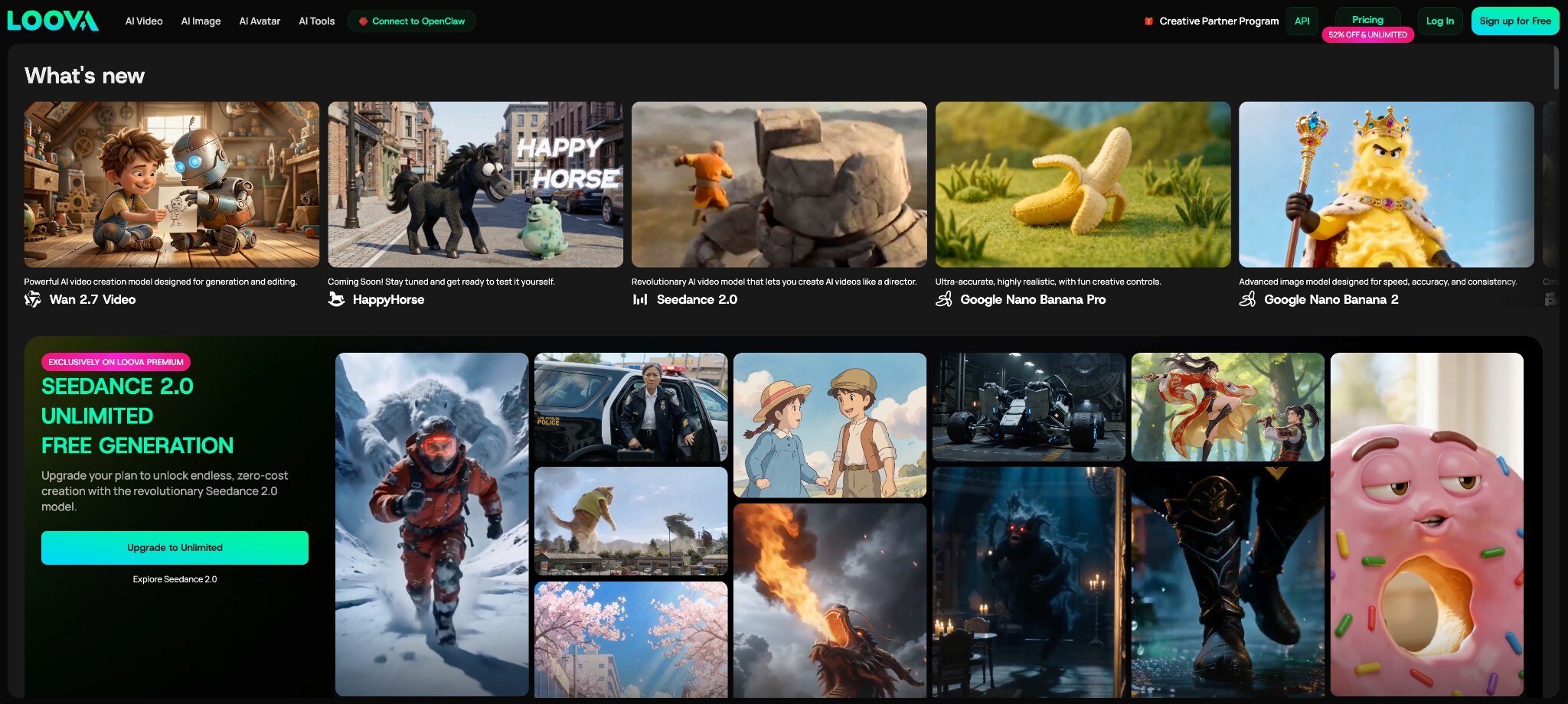
That is where unified platforms make sense. A platform like Loova is useful because it combines generation, editing, image tools, and workflow flexibility in one place. For a small team, reducing tool switching is a real operational advantage.
Building a practical AI video workflow for a small business
The goal is not to automate everything. The goal is to make the workflow lighter.
Here is the approach I would recommend.
Start with one repeatable format
Do not start with the biggest campaign. Start with something repeatable, like:
- ad variations
- product demo clips
- onboarding visuals
- landing page videos
That makes the test more practical.
Build templates and prompt systems
Once one format works, the team should save:
- prompts
- visual patterns
- script structures
- review rules
This turns AI from random generation into a workflow.
Keep approvals simple
AI speeds up output, but too many review steps will kill the benefit. Small teams should keep the review loop tight.
Test, learn, and scale
Start with one channel or one campaign. Measure time saved, cost reduced, number of variations created, and performance of the content.
Then scale from there.
Who benefits most from AI video production
Some business types get value faster than others.
E-commerce brands
They need a lot of product content, ad creatives, and social assets.
SaaS companies
They need demos, explainers, product updates, and onboarding videos.
Local service businesses
They can use AI video for offers, promotions, service explainers, and simple ads.
Solo founders and lean teams
They benefit because AI gives them output without hiring a full production team.
Agencies serving small business clients
They can use AI to deliver faster and cheaper repeatable content for clients.
What this means for small business growth beyond 2026
The real shift isn’t just that AI makes video cheaper—it makes fast testing normal. Businesses that can create, test, and improve videos quickly will grow faster than those stuck in slow production cycles. The key skill becomes building a system that moves smoothly from idea → asset → test → feedback → improvement.
Final thoughts
AI is changing video production for small businesses by making content more repeatable, more affordable, and easier to test.
If I were running a small business and wanted to start using AI video well, I would not try to transform everything at once. I would pick one repeatable use case, test it inside a unified system like Loova, and measure whether the team can move faster without losing clarity.
That is where the real benefit becomes obvious.
Frequently Asked Questions
How are small businesses using AI for video production?
Most small businesses use AI for repeatable marketing content such as paid social ads, product demos, landing page videos, onboarding clips, and short-form social content.
Can AI replace a video production team for a small business?
For many day-to-day marketing tasks, yes, at least partially. For high-end brand campaigns or highly custom productions, traditional creative support still matters.
What are the best AI video tools for small businesses in 2026?
The best tools are usually the ones that combine speed, flexibility, and workflow simplicity. Small teams often benefit most from integrated platforms rather than isolated single-purpose tools.
Is AI video production affordable for small businesses?
Yes. In many cases, it is much more affordable than traditional production because it reduces filming costs, revision overhead, and dependence on multiple freelancers or agencies.
What types of marketing videos can small businesses make with AI?
They can create ad creatives, explainers, product demos, landing page videos, onboarding clips, and social media content.
Does AI video work for local businesses or only online brands?
It works for both. Local businesses can use AI video for promotions, offer explainers, service videos, and local ad campaigns.
Is AI video production good enough for paid ads?
Yes, especially for testing. Paid ads often benefit more from speed, strong hooks, and variation than from expensive production polish.