In multifamily property management, the responsibilities never stop, but results often lag behind. Staff are handling maintenance requests, managing renovations, responding to tenants and keeping track of daily operations across multiple systems.
From the outside, it can appear as if everything is progressing as it should. Yet all this activity does not automatically translate into higher occupancy, stronger revenue, or improved property performance.
The reason is often small inefficiencies in daily operations, like scheduling issues, delayed maintenance or miscommunication between team members. Each may seem insignificant on its own, but together they slow unit turnover, increase costs and erode potential revenue.
These are the challenges Smart Management was designed to address. Created by experienced property owners, the AI-powered platform streamlines operations, automates workflows and guides teams through daily tasks to drive results.
In today’s multifamily market, inefficiencies are more costly than ever. Over the past three years, operators have faced rising insurance premiums, higher energy costs, increasing property taxes and elevated interest rates simultaneously.
Labor has become harder to find, and rising prices mean operating costs are climbing faster than wages. At the same time, more units are sitting empty, and more tenants are falling behind on rent.
In cities like Houston, Texas, population is even expected to shrink for the first time since the 1980s, and apartments are likely to feel the biggest impact.
In conditions like this, success is no longer measured by how much work gets done, but by how reliably daily operations deliver results. The difference between a property that just gets by and one that thrives lies in consistently executing tasks that improve occupancy, revenue, and overall performance.
With Smart Management, operations are optimized to produce tangible results, ensuring that every step moves the property in a better direction.
When Managing Work Becomes the Work Itself
Many property management tasks still rely on manual coordination and are spread across various tools, spreadsheets and systems.
Teams must decide what to prioritize, track timelines and keep track of what needs to happen next. As new issues arise, attention shifts and priorities are adjusted throughout the day.
Even experienced teams can spend an excessive amount of time organizing work rather than completing it. When each step of a project must be managed individually, delays and complications are more likely.
Many property management models are built around volume, where teams are responsible for a large number of properties. This divides attention and makes it harder to keep things running well at the individual property level.
As a result, there is often a disconnect between how much work is being done and how much progress is actually achieved.
Smart Management removes that burden by automating decision-making and guiding execution in real time. Instead of relying on individuals to track every step, the system prompts what needs to happen next, ensuring that work continues advancing without interruption.
Building a Smarter System
Smart Management grew out of more than 15 years of experience managing large-scale multifamily properties through Legacy Wealth Holdings. During that time, the team oversaw a portfolio that once exceeded 6,000 units and today includes more than 3,000 units across multiple markets.
Working at that scale exposed the flaws of traditional property management, which relied more on activity than results — leading to bloated timelines, escalating costs, and inconsistent execution.
“Traditional property management does a lot to achieve very little,” a company spokesperson said.
At Legacy Wealth Holdings, the focus has always been on repositioning distressed multifamily properties. This includes improving both the physical condition of the properties and their financial performance, while also strengthening the surrounding communities and creating places where residents are proud to live.
As the portfolio grew, however, keeping leasing, construction, maintenance and finances aligned across hundreds of properties became increasingly difficult.
Different approaches were tested, including third-party property management companies, but the same issues persisted. Projects were delayed, costs increased and execution remained inconsistent.
Eventually, an in-house property management team was built within the portfolio. While that improved visibility into operations, it did not fully solve the problem.
The limitation came from the tools. Traditional software could track tasks, but still depended on people to keep them moving. As operations became more complex, that approach broke down.
Tracking was not enough. What was needed was a system that could ensure work consistently moved forward from one step to the next.
That need led directly to the development of Smart Management.
Engineered to Work the Way Teams Do
To develop Smart Management, the team needed more than just property management expertise. They needed a system that could eliminate the obstacles slowing down progress.
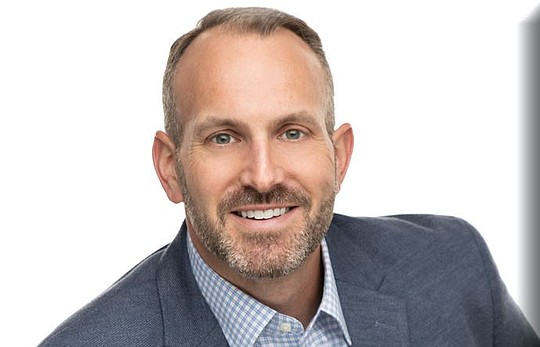
Brian Fast, CEO of the company, brought that capability. With a doctorate in engineering and extensive experience building systems for companies like Northrop Grumman and Rockwell Automation, his work in automation and software engineering had already driven over $100 million in financial impact.
Together with the operations team, Fast helped design a system that would eliminate delays, ensuring that each task was completed without the need for constant follow-ups.
After 4.5 years of development, they created a fully integrated system built to operate in real multifamily environments at scale.
Smart Management includes the main tools property teams already expect. Teams can manage tenants, track maintenance requests and collect rent all within a single platform.
The difference is what happens after activity is entered into the system. The platform uses AI co-pilots, automated workflows and built-in standard operating procedures to guide each task from start to finish.
When a task is created, the system automatically prompts the next step based on what is happening in real time. Teams are guided through the process without needing to monitor every detail manually.
This keeps processes moving predictably, preventing idle tasks and stalled projects. Smart Management also provides real-time visibility into performance. Live reconciliations and automated alerts ensure teams are working with current information.
Instead of reacting to problems after they happen, teams can identify issues early through forecasting, renewals and task prioritization. That has a direct impact on results.
Faster project timelines help units return to service sooner, and fewer delays reduce unnecessary costs. Over time, those improvements support stronger net operating income and increased property value.
By bringing operations into one system, Smart Management simplifies daily workflows and can reduce software costs by up to 50% while improving overall efficiency.
How Better Workflows Boost the Bottom Line
Before introducing Smart Management to external users, the team first tested it within their own portfolio. The platform was used during day-to-day operations, including leasing, maintenance and renovations, to make sure it could perform in real working conditions.
Legacy Wealth Holdings was able to measure the effectiveness of the system, seeing results such as:
These outcomes proved that the system could consistently improve daily operations while keeping properties aligned with their financial goals. It also showed that it could work well across different properties and situations.
With that foundation in place, Smart Management has moved into its next phase. External onboarding is now underway, beginning with members of the Legacy Family mastermind, a network of owner-operators across multiple countries.
Making Property Management Easier for Everyone
As Smart Management continues to expand, new features are being introduced to support more areas of property operations. Upcoming enhancements include tools for investor and vendor management, along with features for reputation tracking and employee location monitoring.
Construction tools are also in development, including submittals and project timelines. Additional innovations, including 360-degree photos, floor plans and digital staging will further improve visibility and decision-making.
The goal is to bring every property management function into one place so teams do not have to switch between different systems to get their work done.
The onboarding process is designed with that same focus on continuity. Each customer is paired with a dedicated Customer Success Specialist for setup and training, followed by ongoing support from a Customer Service Manager. Workloads are limited to ensure each customer receives consistent, high-quality attention.
Getting started is intended to be quick and effortless. Rather than relying on manual data entry, teams can upload existing reports to instantly populate the system, reducing onboarding from several days to just minutes.
Looking ahead, Smart Management aims to become the preferred operating system for property owners, operators, and investors, delivering transparency, automation and measurable results at scale.
As adoption grows, the platform is positioned not merely as another software solution, but as a new standard for how multifamily operations are managed and optimized. Ultimately, the team envisions offering it at no cost, enabling more operators to elevate their performance and raise the bar across the industry as a whole.