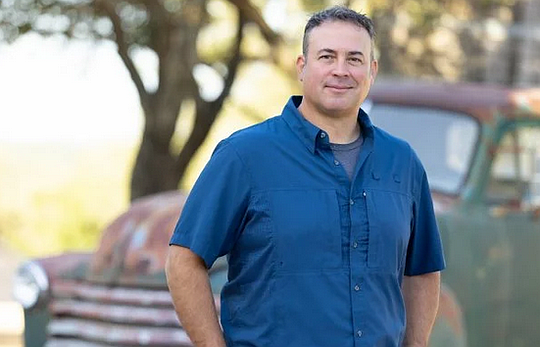
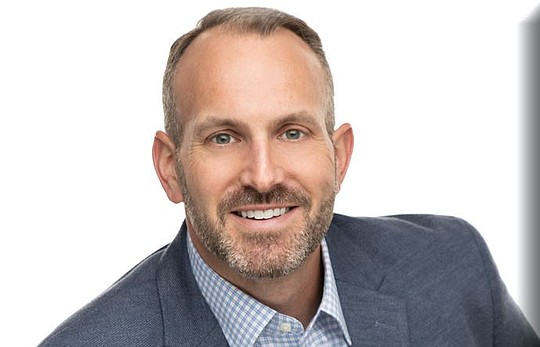
Phil Klima does not fit the mold of a traditional dealership operator or a conventional real estate investor. His career has been defined by a consistent ability to identify inefficiencies in mature industries and scale operations by tightening execution rather than chasing trends.
Over more than two decades, Klima has quietly built two businesses that reinforce each other: a top-performing independent automotive dealership in Ohio and a real estate portfolio approaching $75 million in value. Both share the same foundation. Discipline in operations, a bias toward value, and a refusal to rely on outside capital.
The operation was small, selling roughly 20 to 30 units per month. But it offered something Klima would continue to refine over time: a hands-on understanding of every layer of the business. He learned reconditioning, pricing, and customer expectations from the ground up.
That early exposure shaped a strategy that would later scale. Instead of competing on brand or location, Klima focused on three levers that were still underdeveloped at the time: digital marketing, aggressive pricing, and inventory presentation.
As online car sales began to emerge, Klima recognized that independent dealers could compete with larger franchises if they controlled how vehicles were presented and priced online. High-quality photos, transparent descriptions, and competitive pricing became the core of the model.
The results were immediate. Within a few years, the dealership expanded to a 140-car footprint, pushing monthly sales to 80 to 100 units.
Growth accelerated after Klima acquired a former Nissan dealership in Brunswick, Ohio. The larger facility allowed inventory to exceed 200 vehicles, and monthly sales climbed past 160 units.
What stands out during this period is not just the growth, but how it was managed. Klima retained direct oversight of marketing, financial controls, and day-to-day operations. This was not a passive ownership model. It was operational immersion at scale.
That approach paid off again in 2016 when he acquired a 10-acre former Lincoln Mercury dealership across the street from his existing location. The move was less about expansion for its own sake and more about operational efficiency.
By consolidating and optimizing reconditioning processes, Klima increased throughput without proportionally increasing overhead. Monthly sales surpassed 180 units and, in peak periods, exceeded 200.
At that level, KDK Auto Brokers was no longer just competitive. It was outperforming nearly every independent dealer in its county and the majority of both new and used car dealerships across Ohio.
Klima’s business philosophy avoids the clichés often associated with dealership marketing. His definition of customer-first is operational, not rhetorical.
It starts with pricing vehicles below market value. It extends to transparency in listings and continues through the in-store experience. Internally, the company emphasizes integrity and a “servant mindset,” which Klima views as essential to building long-term customer relationships and repeat business.
This focus on trust has translated into measurable outcomes, including a sustained A rating with the Better Business Bureau and consistent recognition for sales performance.
But Klima places equal weight on internal culture. He has deliberately structured working hours to be more sustainable than the traditional dealership model, which is known for long and demanding schedules. The goal is retention and long-term team stability rather than short-term output.
What differentiates Klima from many operators in the automotive space is how he has deployed capital generated from the dealership.
Instead of diversifying into unrelated ventures, he built a vertically integrated real estate platform through PJK Holdings. The strategy mirrors his dealership approach: acquire underperforming assets, improve operations, and hold for long-term cash flow.
By 2017, Klima shifted from flipping properties to building a rental portfolio. That decision marked a turning point. Today, his holdings include nearly 800 units, ranging from single-family homes to large apartment complexes.
The scale is notable, but the structure is more revealing. Klima and his team self-manage the portfolio, overseeing property management, renovations, and leasing internally. This level of control allows for tighter margins and faster execution.
One recent example illustrates the model. A 46-unit apartment building acquired vacant required significant renovation. Within a year, it was fully rehabbed, leased at market rates, and generated more than $1.5 million in equity.
Another acquisition, a 192-unit portfolio in Mississippi, was purchased at a discount due to extensive renovation needs. Once completed, the project is expected to create approximately $7 million in value while delivering long-term cash flow.
A key element of Klima’s growth strategy is his partnership with his father, John Klima.
John brings decades of experience from the franchised dealership world, where he achieved national recognition in sales and leasing. He also serves as a financial backer for real estate acquisitions, allowing the business to scale without external investors.
This structure is unusual in an era where syndication and institutional capital dominate real estate. Klima has deliberately avoided those routes, maintaining full control over decision-making and asset management.
The result is a portfolio approaching $60 million in value, built without reliance on outside capital or complex investment structures.
Across both automotive and real estate, Klima’s approach is consistent.
He prioritizes:
This is not a strategy built on rapid exits or speculative bets. It is built on compounding operational improvements over time.
Even his entry into real estate reflects lessons learned in the dealership business. Understanding pricing inefficiencies, managing physical assets, and optimizing processes are transferable skills. Klima has applied them across industries with similar results.
Despite the scale of his operations, Klima remains locally anchored. His businesses support community initiatives, including schools and charitable organizations in the Cleveland area.
He is also involved in coaching youth athletics, reflecting a broader focus on long-term impact beyond financial metrics.
When asked how he measures success, Klima does not point first to revenue or portfolio size. He emphasizes the “net positive influence” on customers and employees as a more meaningful indicator at this stage of his career.
Phil Klima’s career offers a clear answer to a question many operators face: how do you scale without losing control?
His answer is to avoid shortcuts.
He did not rely on outside capital to accelerate growth.
He did not chase high-risk expansion strategies.
He did not separate ownership from operations.
Instead, he built systems that could scale because they were grounded in execution. Whether selling cars or repositioning apartment buildings, the underlying principle remains the same. Control the process, and the outcomes will follow.
That discipline has allowed him to build two high-performing businesses in parallel, each reinforcing the other.
In an industry often driven by volume at any cost or growth fueled by leverage, Klima’s model stands out for its restraint. It is a reminder that scale, when built methodically, can be both durable and highly profitable.