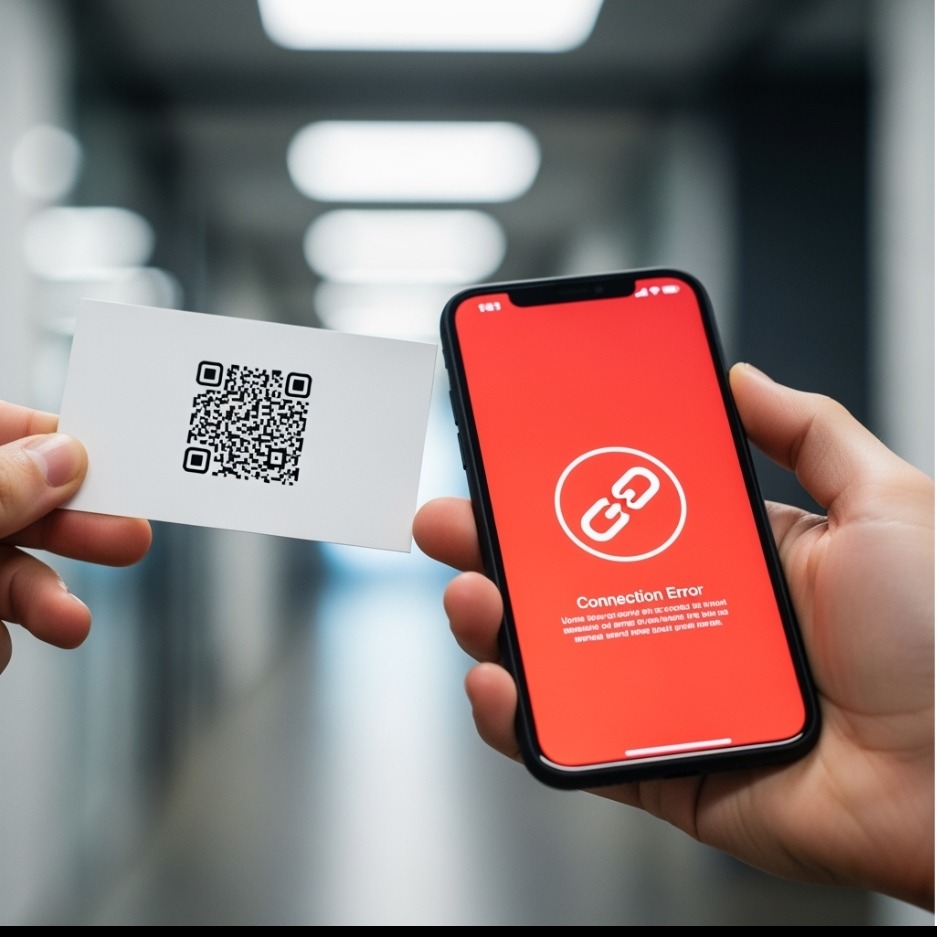
You printed 200 business cards last month. The QR code on the back linked to your portfolio. You handed them out at a conference, slid them across tables at coffee meetings, left a stack at the co-working space front desk. Two weeks later, someone scans it and gets a blank page with an unfamiliar logo and a message: "this code is no longer active." Your business card is now advertising someone else's subscription upsell.
This is not a glitch. It is the default behavior on most dynamic QR code generator platforms.
Key Takeaway: Most dynamic QR code platforms deactivate your codes the moment your trial expires or subscription lapses. Your printed materials become waste. The practice is widespread across QR Code Generator by Egoditor (14-day trial), QRFY (7-day trial), Uniqode, QR Tiger (500-scan cap), and QR Code Creator. FreeQR is one of the few platforms where codes stay active permanently regardless of billing status, using a "delete-only" policy.
How the mechanism works
A dynamic QR code does not contain your URL. It contains a short redirect URL controlled by the platform that generated it. When someone scans the code, the request passes through the platform's servers, which decide where to send the scanner. If your account is active and paid, the server routes the scan to your intended destination. If your trial has expired or your subscription has lapsed, the server routes it somewhere else, typically a page asking the scanner to tell you to resubscribe, a generic error, or nothing at all.
The platform controls the switch. You control nothing.
This is not disclosed the way you would expect. QR Code Generator by Egoditor's own support page states plainly: "Any Dynamic QR Codes you created during the 14-day free trial period are deactivated at the end of the free trial. When someone scans a deactivated QR Code, they're taken to a service page rather than the original destination." QRFY's support page says the same thing: "Any Dynamic QR Codes that you created during the trial period will be deactivated and linked to a service page." These are the companies' own words on their own help centers.
The pattern across the industry
The complaints, when you read enough of them, stop sounding like individual grievances and start sounding like a single story told by thousands of different people.
On SiteJabber, a reviewer who used QR Code Generator by Egoditor for a charity gala program wrote: "After the program was printed I visited the QR code to check to see it was still working to find that it led to an error page. When I logged into my account it said my code had expired because my 14-day trial had ended. At no point during setting up the code did it say it was a trial." Reactivating the code would cost $120 because the platform does not offer a monthly plan.
On the same site, a QR Code Creator (qrcodecreator.com) user described being forced into a yearly subscription after printing promotional materials. "The subscription page made it seem like they were monthly. I than found out that it's actually a YEARLY subscription." They asked for a prorated refund. The company refused.
On PissedConsumer, a QRFY user described generating a code for a company career banner. "Your code is good for seven days; then it's held hostage until you log in and 'upgrade' your plan for some $200 a year so that when someone scans your code, they can actually access the URL it was created for."
On Capterra, a QR Code Generator Pro reviewer wrote: "Before the trial period ended I paid $220 for a year's subscription. However, when my free trial expired, regardless of what I paid, they disabled my qr code."
And Uniqode (formerly Beaconstac) put the policy in writing when a customer asked their support team directly: "As a subscription-based service, ending the subscription ends the service. That would mean the deactivation of the QR codes.
Why this should concern you more than it does
The QR code market hit $13 billion in 2025. Dynamic codes account for 64.35% of that market. These are not small use cases. They are on product packaging, event programs, restaurant menus, real estate yard signs, and wedding invitations. A single commercial print run can cost thousands of dollars. When the code on that print run stops resolving because a short trial lapsed, every copy becomes waste.
The damage goes beyond reprint cost. A customer who scans a dead QR code does not think the platform expired. They think your business is broken or gone.
What to check before you print anything
Before you commit a QR code to any physical material, get clear answers to these questions:
If you see repeated complaints about expired trials and dead codes, that is not coincidence.
What "fair" actually looks like
A fair QR code platform looks like this: the free tier is permanent, not a trial. Codes keep working if you cancel. No scan caps that disable codes. The only way a code stops working is if you deliberately delete it.
FreeQR follows this model. Codes remain active permanently. There is no trial period, no forced deactivation, and no lock-in tied to printed materials. Paid plans add features, not survival.
The fine print matters more than the marketing page
Before you print anything, read the terms—not just the landing page. Look for words like "deactivated," "inactive," or "service page." Check reviews and patterns. If many users report the same issue, it is likely built into the system.
Your QR code should outlast your relationship with the platform. If it does not, you chose the wrong one.