Lower Frederick moves quickly toward data center ordinance amid statewide concerns
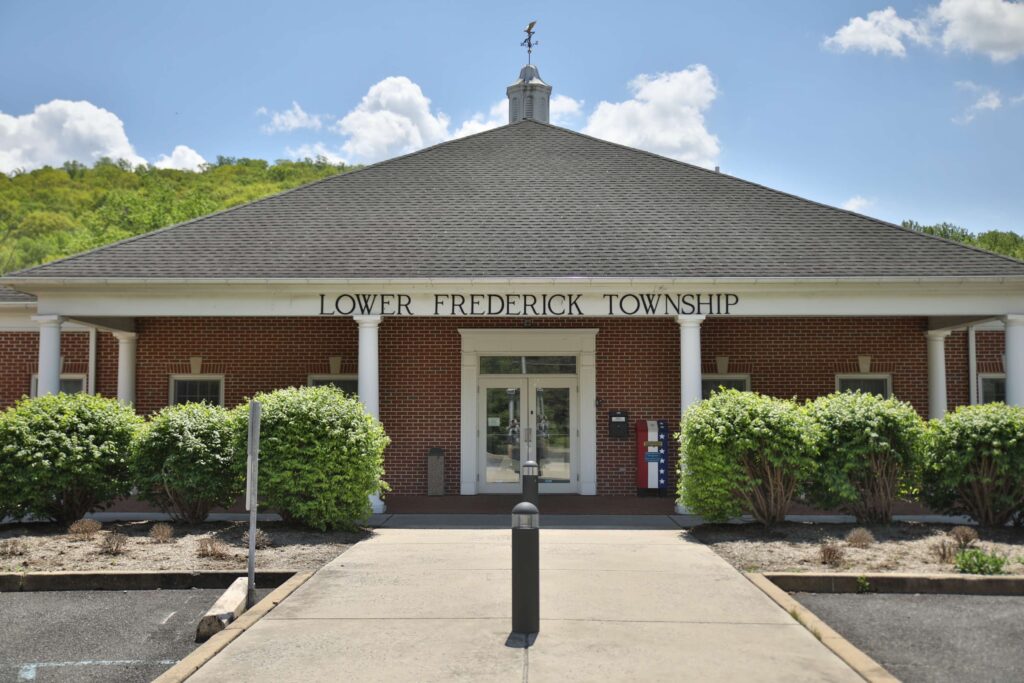
Lower Frederick Township officials are moving swiftly to craft regulations governing potential data center development, as supervisors and consultants warned during an April 28 meeting that municipalities across Pennsylvania are racing to protect themselves from the rapidly growing industry.
Township supervisors stressed repeatedly during the meeting that no data center application has been filed in Lower Frederick and that the discussion centered entirely on preparing an ordinance before any proposal emerges.
“We are only discussing an ordinance,” Chair Noelle Halter said. “We have not received an application. We have no intentions of seeing a data center within Lower Frederick’s borders anytime soon, if at all. But this is just to protect us going forward.”
The topic gained urgency after several township officials attended the Pennsylvania State Association of Township Supervisors conference, where data centers dominated conversations among municipalities statewide.
“The number one topic there was data centers,” Supervisor Marla Hexter said. “The message from everybody was run, don’t walk, and get your ordinance approved.”
Officials discussed a wide range of potential concerns associated with large-scale data centers, including noise, water consumption, emergency response, thermal pollution, decommissioning requirements and long-term impacts on neighboring wells.
Hexter said any ordinance should establish where facilities could be located, likely within industrial zoning districts, while also imposing substantial setbacks and operational safeguards.
“We need to stipulate where they can go,” Hexter said. “We need to have some serious setbacks from the neighbors. We can stipulate things like sound studies, having an EMS agreement if there’s a fire at one of these places. It’s not just like your backyard barbecue. It’s a much bigger deal.”
Township solicitor Peter Nelson walked supervisors through a sample ordinance modeled largely after regulations being considered elsewhere in Pennsylvania, including Bedminster Township, while emphasizing the need to tailor provisions specifically for Lower Frederick.
Among the biggest concerns discussed Monday night was water usage. Officials noted that modern data centers can consume enormous quantities of water for cooling operations, potentially impacting nearby private wells.
“If it’s a good-sized data center, it would be the biggest well in the township by far,” Nelson said.
Nelson explained the ordinance could require extensive hydrogeological studies and place the burden on developers if nearby residential wells run dry or become contaminated.
“By enacting this ordinance, we shift the burden onto the data center,” he said. “If someone’s well goes dry or the water quality goes bad … it’s up to the data center to prove, ‘Hey, it’s not our fault.’”
The proposed ordinance would also require developers to provide financial security deposits that could be tapped by the township if operators fail to address issues involving noise violations, well damage or eventual site decommissioning.
Noise from cooling systems became another major topic of discussion. Supervisors referenced complaints from residents living near facilities in other communities and debated requirements for both initial and ongoing sound studies.
“Neighbors would complain about the sound level from these systems,” Supervisor Dan Orfe during the discussion.
Nelson said the ordinance would likely require developers to conduct pre-construction noise studies and allow the township to require future testing if complaints arise.
“If they don’t meet what their noise study says, they have to change things around so they do meet it,” Nelson said.
Supervisors also debated dimensional standards, with some members pushing for larger setbacks than those included in the draft sample ordinance.
“I’m not asking for a ridiculous setback, but I think 100 feet setback from a street … seems a little slim to me,” Nelson said.
He cautioned against creating standards so restrictive that data centers become technically permitted in the township but practically impossible to build, which could create legal vulnerabilities.
“You don’t want to make a setback that’s so great that while we have an ordinance that says this use is allowed in the township, practically speaking it can’t be put anywhere in the township,” he said.
Supervisors additionally raised concerns about emerging technologies and cooling chemicals used inside some modern facilities, including dielectric fluids used to immerse servers.
“This dielectric fluid is like a water. It’s non-toxic to begin with,” Supervisor Cristal Gerena said. “When it is replaced … if not disposed of properly, it can be highly toxic.”
Nelson responded that state and federal environmental regulations already govern many hazardous materials but said the township ordinance could reinforce compliance requirements.
Discussion also turned to the township’s limited industrial acreage. Officials estimated Lower Frederick has roughly 43 acres of remaining industrial land, making it unlikely the township could host the massive 100-plus-acre hyperscale facilities now being built elsewhere.
Gerena suggested Lower Frederick would more likely attract a smaller backup or hybrid data center operation rather than a full-scale artificial intelligence campus.
Township officials repeatedly emphasized the importance of acting before developers begin “sniffing around,” with Nelson warning that municipalities lacking proper zoning language can face legal challenges that allow unwanted projects to proceed with fewer restrictions.
“If anyone hears of a data center sniffing around, please come talk to us,” he said.
Nelson said he plans to prepare a Lower Frederick-specific version of the ordinance ahead of the township’s next work session in May, with supervisors hoping to move toward formal adoption later this summer.