If you live in the United States and you have ever felt uneasy about handing your real cell number to yet another sign-up page, you are not alone. The average American mobile number now sits in dozens of databases. It receives spam calls almost daily and political texts during election season. People are looking for ways to keep their personal number a little more personal. Temporary phone numbers are one of the cleanest answers.
But there is a lot of confusion about how they work, what they are good for, and what they are not. This guide answers the questions people actually ask.
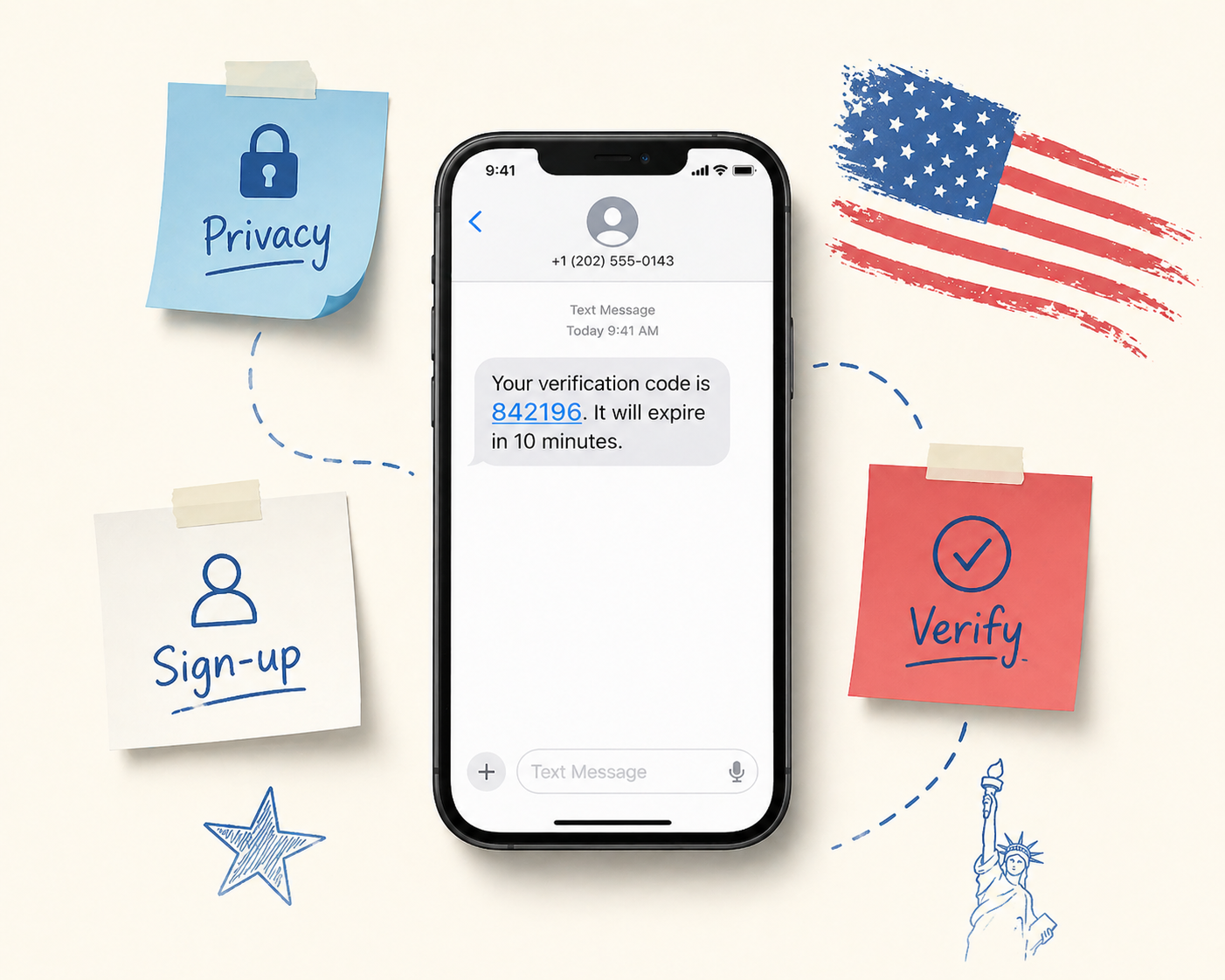
A temporary US number is a real, working phone number with a US area code that you rent for a short period. It can receive text messages, including verification codes from apps and websites. You access the messages through a dashboard or an API rather than through a SIM card.
It is not a fake number. The platform sending the code sees a normal US mobile line. The difference is that the line is not tied to your personal identity. You did not show your driver's license to get it. You are not on a contract for it. It exists for as long as you need it and then goes back to the pool.
There are a few honest reasons that have nothing to do with hiding from anyone.
Privacy on free trials is the big one. You want to try a new app, but you do not want your real number going into yet another marketing list that will eventually leak. You sign up with a temp number, you receive the verification code, and you use the trial. Your real number stays out of it.
Buying and selling on classified sites is another. People meeting strangers to sell a couch on a marketplace site do not need to share a permanent phone number. A temp number gets the job done and disappears when the couch is gone.
Account separation is a third. Some Americans keep their work life and personal life on different numbers without paying for a second SIM. The temp number handles the freelancing side, the LinkedIn alerts, the gig platforms, the contractor portals.
Plenty of guides recommend using 1001SMS.com or similar services for these everyday cases.
Yes. Renting a virtual phone number for personal use is legal in the United States. The numbers come from regulated telecom providers. Using one to sign up for legitimate services and receive your own verification codes is no different from using a Google Voice number.
What is not legal is using one to commit fraud, harass other people, or impersonate someone. That is true of any phone number, virtual or not. The legal status of the number does not change the legal status of what you do with it.
Sometimes, but less often than people expect. Major banks and identity-tied services usually want a number that matches your real name. They will reject a virtual number. That is fine. You should be using your real number for those anyway.
Most consumer apps, AI tools, marketplace sites, dating platforms, fitness apps, and free trials accept virtual numbers without trouble. The trick is using a quality provider whose numbers are not already burned out from heavy reuse.
AI tools are an interesting case. Many AI services now require phone verification to limit abuse. People who already have an account on multiple AI tools sometimes use a separate number for each one to keep their usage clean. A standalone account for an assistant might use a Claude Temp Number to keep it isolated from a Google account or a personal email cluster.
Rental periods vary. Some are good for ten minutes, just long enough to receive one code. Some last hours. Some last weeks. The price tracks the duration and the type of number.
For one-off verifications, the short rental is the right choice. For an account you plan to keep using, a longer rental or a number-keeping option makes more sense. Once you release a short-rental number, it eventually returns to the pool, and someone else might rent it later. If you log into the original account from a new device, the platform might re-verify and you would not receive the code.
Be careful here. Using a temporary number to receive an initial sign-up code is fine. Using a temporary number as your permanent two-factor authentication for an important account is risky. If the rental ends and someone else gets the number, your account security could weaken.
The cleaner pattern is: verify with the temporary number, then immediately switch the account to an authenticator app like Authy or Google Authenticator. The number was only ever a doorway. The lock should be something more permanent.
Do not use the same temp number for ten different accounts. If one of them gets compromised, the others are exposed too. Use a new number for each meaningful account.
Do not use a temp number for anything tied to money you cannot afford to lose. Banking, primary email, government services, and tax accounts should always use a real number you control long-term.
Do not assume the SMS will arrive in two seconds. US delivery is fast but not always instant. Wait at least a minute before clicking resend, because pressing resend too soon sometimes triggers a soft block on the sending platform.
Look for a provider that is upfront about pricing, has live availability so you can see if a number actually exists before you pay, and offers customer support that responds when something goes wrong. Cheap unmaintained services hand out numbers that have been hammered by other users. Quality providers manage the pool actively.
If you can, start with a one-off rental for a low-stakes verification. If the experience is smooth, you have found a provider you can trust for bigger tasks.
A temporary US phone number is one of those small tools that quietly improves your digital hygiene. Used sensibly, it keeps your real number out of marketing databases, protects your inbox from junk, and lets you try new services without committing your identity to them.
Used carelessly, it can leave you locked out of important accounts. Match the number's stability to the importance of the account, and you get all of the upside with none of the risk.