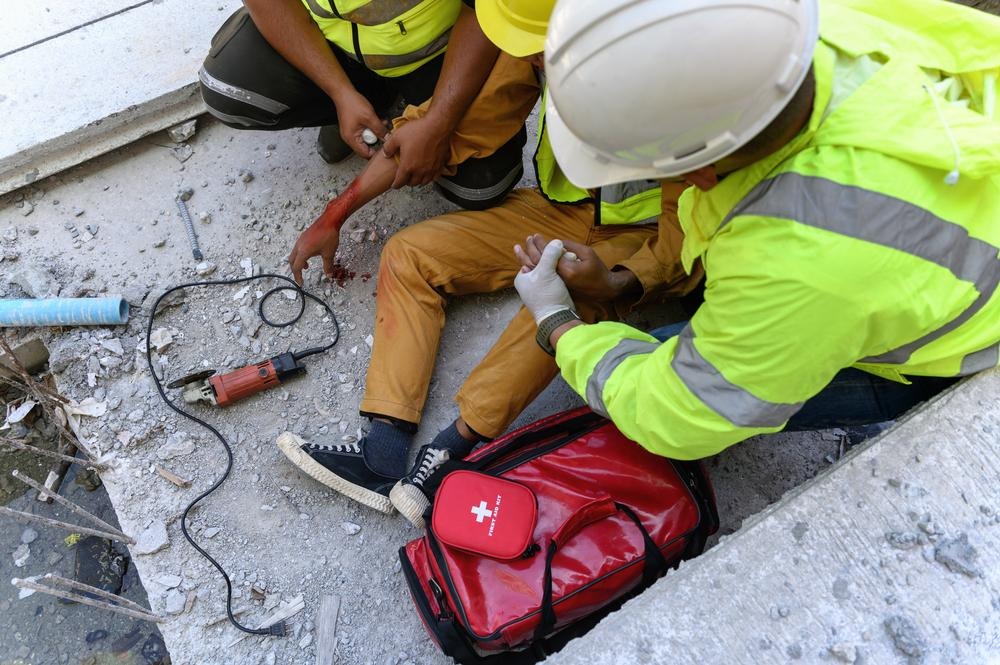
Construction sites are places where progress is measured in motion. Materials are lifted, structures take shape, crews overlap, and deadlines keep everything moving at a fast pace. But that same environment can also create serious hazards. When a construction accident happens, the physical injuries are only part of the aftermath. Another important question quickly follows: who is legally responsible for what went wrong?
The answer is not always obvious. Construction projects often involve several parties working at the same time, each with different duties and levels of control. That is one reason an injured worker may consider speaking with a construction accident injury lawyer after a serious incident. Understanding how liability is determined can help workers and families make better sense of a situation that often feels chaotic from the start.
Unlike many ordinary accident cases, construction accidents rarely involve just one person or one company. A single job site may include a property owner, a general contractor, subcontractors, site supervisors, equipment suppliers, and outside vendors. Each of these parties may play a different role in how work is planned, supervised, and performed.
Because of this, liability is usually determined by looking closely at who controlled the work, who created the dangerous condition, and who had a duty to fix or prevent it. A worker may be injured by a falling object, unstable scaffolding, exposed wiring, or malfunctioning machinery, but the deeper legal question is often about the responsibility behind the hazard. The party closest to the accident is not always the only one who may be held accountable.
One of the main ways liability is evaluated in construction accident cases is through negligence. In simple terms, negligence means someone failed to use reasonable care under the circumstances. On a construction site, that failure can take many forms.
A contractor may ignore known safety risks. A supervisor may fail to provide proper training. Equipment may not be inspected or maintained. Safety gear may be missing, damaged, or never provided at all. Scaffolding may be set up incorrectly. Work areas may be left cluttered or poorly marked. Each of these failures can contribute to an accident that could have been prevented.
To determine negligence, investigators often look at whether the risk was foreseeable and whether reasonable steps were taken to reduce it. If a party knew, or should have known, that a dangerous condition existed and failed to address it, that can become an important part of the liability analysis.
Construction work is heavily shaped by safety rules. These may come from workplace regulations, site-specific safety policies, equipment instructions, or legal standards designed to protect workers. When those rules are ignored, it can strongly affect how liability is viewed.
For example, if guardrails were required but never installed, or if workers were expected to use defective ladders or harnesses, those details may help show that the accident was not simply bad luck. Instead, it may point to a failure to follow basic safety obligations. Violations involving fall protection, electrical safety, machinery operation, or falling debris often become central issues in construction injury cases.
These facts matter because liability is not only about what happened but also about what should have been done to prevent it.
Construction sites change quickly. Debris gets removed, equipment gets moved, and crews return to work. Because of that, evidence can become one of the most important parts of determining liability. The earlier the facts are documented, the easier it may be to understand how the accident happened.
Useful evidence may include photographs of the scene, witness statements, incident reports, safety logs, inspection records, equipment maintenance records, and any available video footage. In some cases, contracts and worksite communications may also help show which party had responsibility over a certain task or area.
This is another reason some injured workers seek advice from a construction accident injury lawyer early in the process. Important information can disappear quickly on an active job site, and early investigation may help preserve details that later become essential to proving fault.
Construction accident cases are often more complicated because fault may be shared. One company may have created the hazard, while another had the duty to inspect it, and another still may have failed to warn workers about it. In these situations, liability is not always assigned to a single party.
For example, a subcontractor may have installed unsafe equipment, while a general contractor failed to correct the problem, and a property owner may have allowed dangerous conditions to continue. When multiple failures overlap, the legal analysis usually focuses on how each party contributed to the accident.
This shared-responsibility issue is one of the reasons construction cases are often more complex than they appear at first glance.
A construction accident can feel like everything happened in one terrible instant, but liability is usually determined by looking at everything that happened before that moment. Who controlled the site, who ignored the risk, what safety rules applied, and what evidence remains all shape the answer. These cases are rarely simple because construction work itself is rarely simple. But when the facts are carefully examined, patterns of responsibility begin to emerge. For injured workers, understanding that process can be an important step toward protecting their rights and making sense of what comes next.