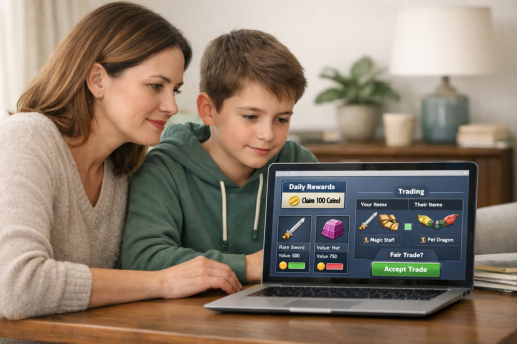
Many parents still see video games mainly as entertainment, and that part is still true, but in many online games today there is much more happening on the screen than just playing a match or finishing a mission.
Children may be collecting virtual items, following limited rewards, comparing what other players own, and even trying to understand what a digital item is worth inside a game community. From the outside, that can look confusing or even unnecessary, yet for young players these systems feel normal and are often part of daily play.
That is why it helps families to understand the basics of how these game systems work. A child may not only be logging in for fun. They may also be reacting to reward loops, trying to avoid missing out, or making decisions around trading and virtual items that feel important to them in the moment.
When parents understand this side of gaming, it becomes easier to ask better questions, spot risky habits earlier, and talk about online choices in a way that does not feel disconnected.
Reward systems are designed to keep players coming back. Daily bonuses, event rewards, limited items, and timed offers all create a reason to check in again.
Some of these systems are harmless on their own, but they can still change how children think about time and urgency in a game. A player may feel they need to log in right away. They may worry about missing something. They may keep following game updates more closely than parents realize.
This is also why many children search outside the game for extra information. In some games, players look for updates, reward lists, or Redeem Codes bonuses before they even begin a session.
That habit shows how reward hunting has become part of normal gameplay culture for many younger users. Families do not need to panic over that, but it is useful to know that the game often continues beyond the screen through videos, websites, and community discussion.
Many games do not clearly explain the worth of items inside the game itself, so players naturally turn to community sources. They watch videos. They read guides. They visit fan pages. They ask other players what something is worth. In games where trading matters, that outside information becomes part of the decision making process.
For example, in some Roblox games, including Blox Fruits, players may check a blox fruits value calculator before agreeing to a trade, because item values can shift based on player demand and community opinion.
That kind of behavior may seem strange to adults at first, but it is really just a sign that game systems have become more social and information driven than many families expect.
The more useful takeaway for parents is not that they need to learn every chart or website. The better takeaway is that children are making real decisions inside digital spaces, and those decisions are often shaped by outside sources that may or may not be trustworthy.
A lot of popular games are no longer built around gameplay alone. They are also built around progress systems, rewards, and virtual ownership. A player may finish a task and receive an item. They may return each day because there is a login reward.
They may want a rare cosmetic because friends or creators are talking about it. In other words, the game is not only asking the player to play well. It is also asking them to pay attention to timing, status, and perceived value.
This matters because children do not always separate these layers the way adults do. To a parent, a virtual item may look like a small picture on a screen.
To a child, that same item may represent progress, rarity, effort, or social standing inside the game. That does not mean families need to treat every digital item like a major issue, but it does mean these systems deserve a little more understanding than they sometimes get.
Some games also include trading systems where players exchange items with each other. That can sound harmless at first, but for children it can create fast decisions and emotional reactions. The item being traded may not have real world ownership in the same way a physical object does, but to the child it can still feel valuable because of demand, rarity, or effort spent getting it.
The tricky part is that item worth is not always obvious. In many games, value comes from community opinion as much as from the game itself.
One item may become popular because creators talk about it. Another may seem less important even if it is harder to get. Younger players may trust another player too quickly or agree to a trade without fully understanding what they are giving away.
That is why it helps when families understand that virtual trading is not always random fun. It also involves trust, judgment, and outside influence. A child who feels upset after losing a digital item is not always overreacting. In their mind, they may feel they lost progress or made a mistake in front of other players.
Many games do not clearly explain the worth of items inside the game itself, so players naturally turn to community sources. They watch videos. They read guides. They visit fan pages. They ask other players what something is worth. In games where trading matters, that outside information becomes part of the decision making process.
For example, in some Roblox games, including Blox Fruits, players may check a blox fruits value calculator before agreeing to a trade, because item values can shift based on player demand and community opinion.
That kind of behavior may seem strange to adults at first, but it is really just a sign that game systems have become more social and information driven than many families expect.
The more useful takeaway for parents is not that they need to learn every chart or website. The better takeaway is that children are making real decisions inside digital spaces, and those decisions are often shaped by outside sources that may or may not be trustworthy.
A helpful conversation does not need to begin with criticism. In fact, many children shut down quickly if they feel a parent is mocking the game or treating the interest as silly.
A better approach is to ask calm questions. You can ask what the item actually does, why players want it, whether the game includes trading, and how they decide what is fair.
That kind of curiosity opens the door to better discussions about online trust. It becomes easier to ask where they got the information from, whether they know which websites are reliable, and whether they feel pressure from other players to act fast. Those are useful conversations because they move beyond gaming and into digital judgment, which matters in many parts of online life.
Families do not need to become experts in every online game, and most parents will never want to keep up with every item, update, or trend. Still, a basic understanding goes a long way.
Virtual items may look small from an adult point of view, but they can carry real emotional weight for children because of the time, effort, and meaning attached to them.
The goal is not to make these interests seem bigger than they are, but it is also not helpful to dismiss them completely.
A healthier approach is to treat gaming as one more place where children are learning how to handle value, urgency, trust, and social influence. When families understand that, they can guide those choices more calmly and more effectively.
Online games today involve much more than just play. They include rewards, virtual items, trading systems, and fast moving online advice that shape how children think and act during a session. When families understand these patterns, they do not need to fear them, but they can respond to them with more awareness. That usually leads to better conversations at home, better digital judgment for kids, and a more realistic understanding of what modern gaming actually looks like.