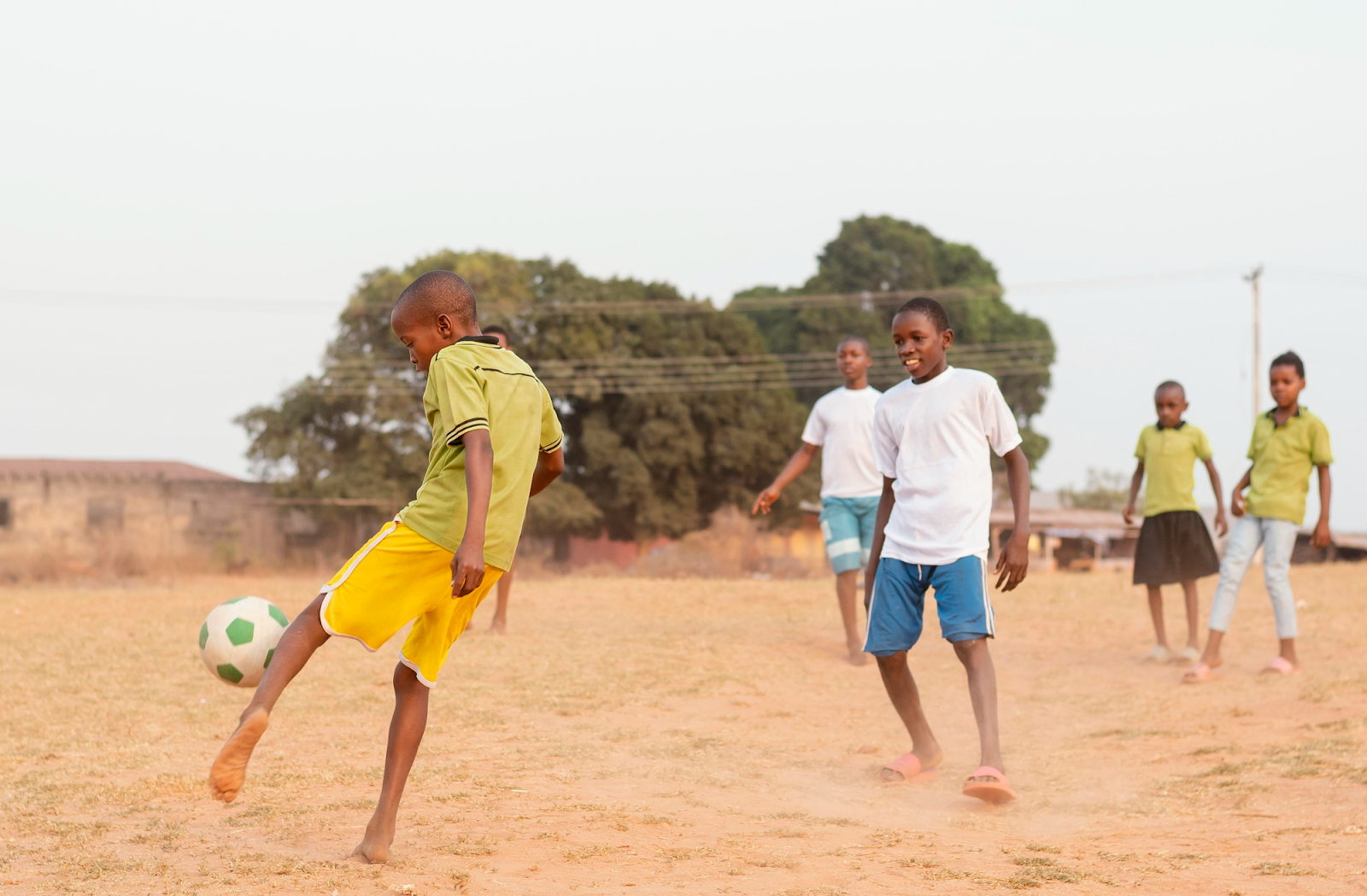
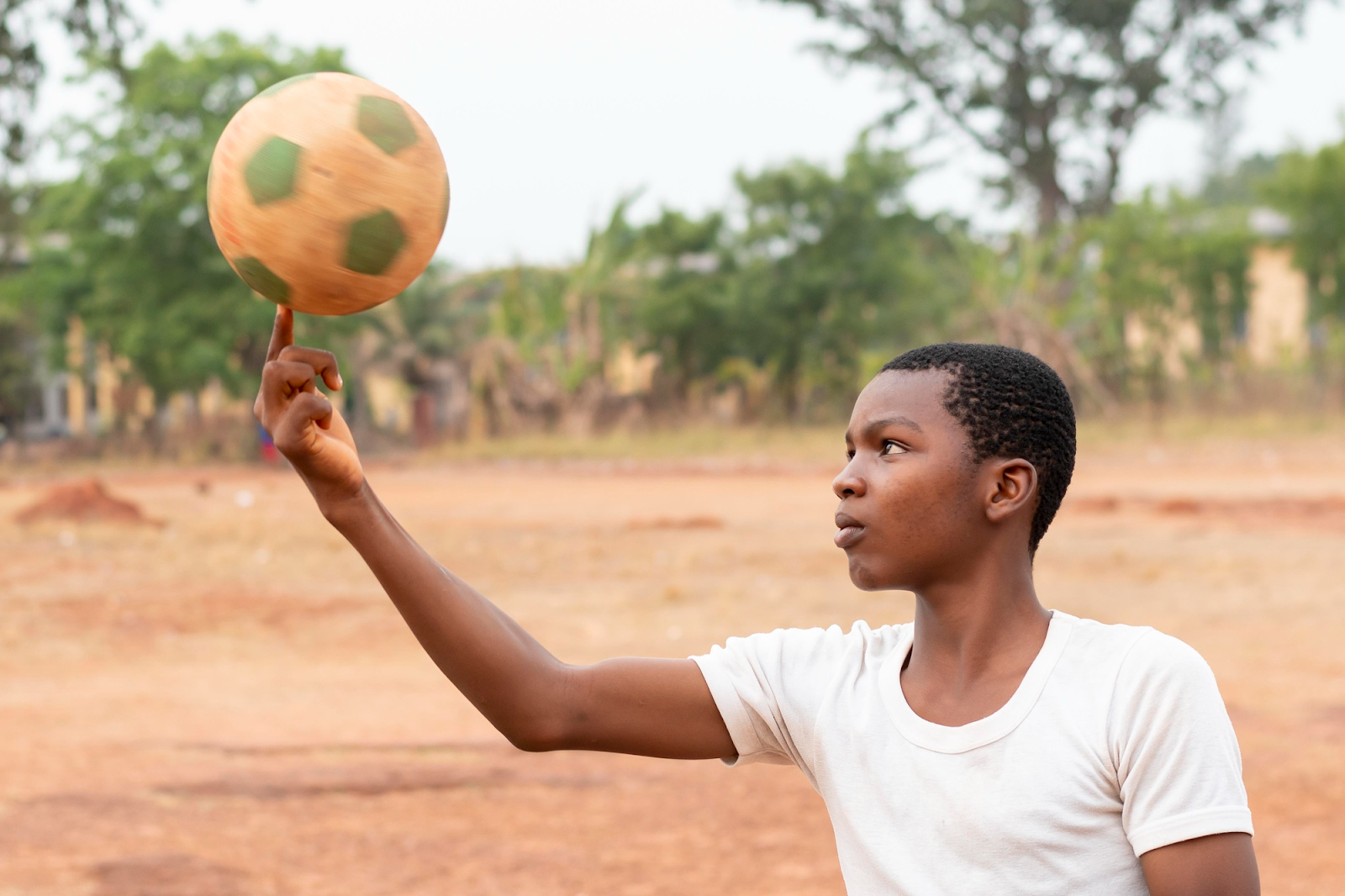
Wrestling in the sand and wrestling in dirt, at night without commercials (ads), is the beginning of sports in Africa. People in the highlands of Ethiopia and people in Senegal's villages have wrestled for generations. Wrestlers in the villages wrestle for enjoyment, and the highland wrestlers wrestled to develop their endurance generation after generation. The highland wrestlers did not wrestle to be recognized but for the spiritual connection and the feeling of community. Even to this day, many of the stadiums from Cairo to Johannesburg still retain many of the same traditional characteristics of wrestling as the wrestlers did so long ago. If you wish to truly comprehend sports in Africa today, I recommend researching how indigenous physical contests are conducted in the rural villages prior to visiting the modern-day venues.
Almost all of the traditional sports, in Africa and around the world, have always emphasized competition for victory. However, there is an ever-growing number of fans who follow the events they watch by MelBet registration. Using a single account allows fans to access past game schedules, live statistics during each event, and information about tournaments and other upcoming games.
Laamb wrestling, in Senegal, was primarily used to identify cultural heroes whose virtues, contributed to the development of their communities. Cultural heroes, through Laamb wrestling, provided a basis of both strength and unity to their communities. Although the focus on winning was less important than the pride of identity and the community solidarity with the wrestlers, it was still an integral part of the culture.
The European countries established the current global sport structure during the end of the nineteenth century and beginning of the twentieth century. European powers created organized sports to be played at school, at ports, and at military installations and eliminated the informal extracurricular activity that existed before this time.
Some of these examples include:
All of these structures had formalities such as set rules, specific areas where the game would take place, and a ranking or "league" table. As a result, local players began to claim ownership of the sports, and especially football, and turn the colonial recreation activity into an activity of large numbers of people participating in it. This transition from colonial administrative recreation to identity in the post-colonial era was a major shift.
In the 1950s and 1960s, African States that were freed from colonial rule utilized their stadium capitals to demonstrate their independence and international athletic competitions post-colonialism. Colonial sporting activities that were previously leisure and diversionary became tools for demonstrating national identity and competing with other nations. Many of the newly formed independent African States established national federation organizations and competitions from colonial sporting facilities; the newly independent African States built new stadiums and placed an increased focus on regional competitions, specifically the Africa Cup of Nations (which began in 1957 with 3 countries) and grew throughout the entire continent. International participation in the Olympics has also been a major focus of the African governments; using international sports to visually display their independence and presence globally. The establishment of the Africa Cup of Nations and the increase in Olympic participation has enabled international sport to be a visible platform for the newly formed independent African States, as well as those previously under colonial control, to compete on the global level and achieve success.
Football became a powerful instrument of unity across Africa. The Africa Cup of Nations, launched in 1957, evolved into a continental spectacle, drawing record television audiences and filling host cities with cross-border supporters, while MelBet Instagram Syria shares quick match updates and highlights for fans. Egypt’s multiple titles and Cameroon’s golden generations strengthened rivalries while reinforcing shared identity. Success on that stage helped build a sense of belonging that extended beyond national flags.
Club achievements deepened that connection. Al Ahly and TP Mazembe’s triumphs in the CAF Champions League gave domestic fans international relevance. Football turned into a common language across regions and cultures. Competitive rivalries between independent states gradually replaced colonial divisions, helping reshape continental identity through the rhythm of the game.
Altitude, discipline, and tradition gave East Africa the first dominant global athletic power. East African runners, Kenyans and Ethiopians, began taking hold of the Olympic and other international long-distance running events in the 1960s.
Remarkable achievements in distance running include:
These distance running achievements shifted the global views of African sports and created an economic opportunity for the African continent that fused running with culture. Winning races became an enduring form of national pride.
Even before the days of commercialized sports, there were forms of sports that were enjoyed by members of the community, and that created a strong sense of community. In the West African country of Senegal, for example, the traditional sport of Laamb associates music with athletic contests and draws large crowds. In Ethiopia, there is a Christmas celebration game called Genna, where players use sticks and balls. South Africa participates in an indigenous sport of stick fighting that is a form of traditional rite of passage for boys.
As of today, federations and cultural ministries are formalizing these contests, establishing rules, and organizing regional tournaments to ensure that they do not disappear. Universities are also studying indigenous sport systems as a component of cultural preservation.
Revival is not nostalgia. It is structured preservation tied to identity and tourism growth.
African domestic leagues are shifting toward structured, commercially driven models. Morocco’s Botola Pro introduced club licensing, financial audits, and mandatory youth academies to meet CAF benchmarks. In South Africa, the Premier Soccer League secured long-term broadcast deals, giving clubs more stable revenue and improving salary planning. Centralized marketing and clearer calendars have also reduced fixture congestion and administrative confusion.
Investment is becoming more consistent. New stadium projects in Tanzania and the Ivory Coast, tied to continental tournaments, have upgraded safety standards and matchday conditions. Clubs increasingly hire performance analysts, licensed coaches, and medical staff instead of relying on volunteers. Although wage gaps remain, governance reforms are narrowing the divide between ambition and execution, turning professionalism from rhetoric into policy.
It's a defining experience for children of immigrant parents from the Maghreb who decide to play football (soccer) for Senegal, Ghana or Algeria, rather than France, England or Belgium. Today, many African countries have their international football teams comprised of many dual nationality players. The successful blend of French football academy discipline with European tactics by the Algerian team that won the 2019 Africa Cup of Nations has set new expectations and increased technical levels throughout Africa.
However, the diasporas influence is much broader than the playing field. Many former professional international footballers are investing in youth academies; sponsoring training camps and helping to develop the infrastructure of grassroots football in their homeland. The global connections of the diaspora allow access to sponsorship opportunities and scouting channels that were previously unavailable. For young players in developing nations, this can also lead to easier cultural transition as they prepare to move overseas. Modern sport allows an athletes identity to follow them regardless of which passport they hold.
Sport in Africa is rarely isolated. It is combined with elements of music, dance, and performance. In the last few decades, African countries such as Ghana, Kenya, and Mali have hosted annual festivals that integrate athletics with traditional celebratory performances. These festivals build and strengthen the local community through competitive participation. Community Sport is the first layer upon which elite sport is built. Their informal and traditional system provides the neurons of the community and the direct emotional links of the community long before the contracts are signed professionally.