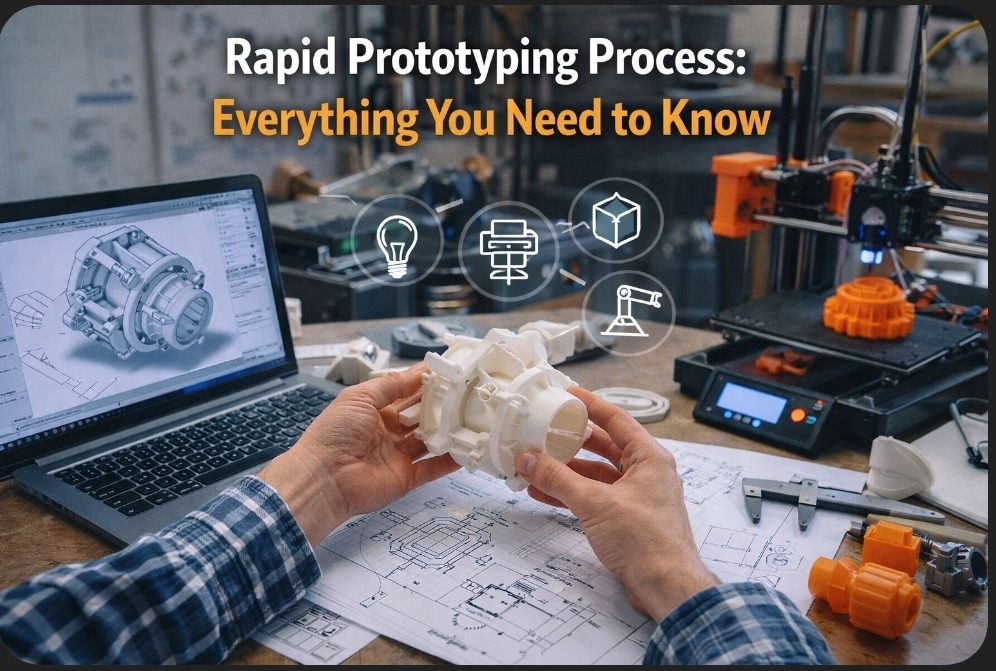
Speed matters in modern product development. Companies cannot wait months to test an idea. They need fast validation, quick design changes, and efficient production planning. This is where the Rapid Prototyping Process becomes essential. It allows teams to turn digital designs into physical models quickly and affordably.
The Rapid Prototyping Process is a method used to create early versions of a product. These versions help designers test form, function, and usability before full-scale production begins. Instead of relying only on drawings or simulations, businesses can hold and test a real model. This reduces risk and improves decision-making.
The Rapid Prototyping Process involves converting a digital design into a physical prototype using advanced manufacturing technologies. Most workflows start with a 3D CAD model. Engineers then choose a suitable production method based on the product’s purpose, material needs, and budget.
Common technologies include:
Each method serves a different stage of development. The right choice depends on how the prototype will be tested.
Every product begins with an idea. Designers create sketches and digital models to define structure, dimensions, and features.
Engineers build a precise CAD model. This file guides machines during fabrication and ensures accuracy.
Material choice affects durability, flexibility, weight, and cost. Plastics, resins, and metals are common options.
The selected technology produces the physical model. This stage is fast compared to traditional manufacturing.
Teams test the prototype for performance, safety, and usability. Weak points become clear during this step.
Feedback leads to design improvements. The model is updated and reproduced until it meets expectations.
This cycle may repeat several times. Each loop improves the product and reduces costly errors.
The Rapid Prototyping Process shortens development time. Companies can move from idea to testing in days instead of months. Faster testing means faster innovation.
It also reduces costs. Early problem detection prevents expensive redesigns during mass production. Small adjustments made early save large investments later.
Another major benefit is better communication. Physical prototypes help teams, investors, and clients understand the product clearly. Visual and hands-on reviews are more effective than digital presentations.
Many businesses now rely on Rapid Prototyping & Low-Volume Manufacturing Services to streamline product development. These services support both early testing and small-batch production.
They are ideal for:
Low-volume production allows companies to sell limited quantities while refining their designs. This creates revenue earlier and reduces financial pressure.
The Rapid Prototyping Process supports many sectors:
Any industry that values speed, accuracy, and innovation benefits from rapid prototyping.
The Rapid Prototyping Process is no longer optional. It is a core strategy in modern manufacturing. It helps businesses innovate faster, reduce risk, and control costs.
By combining smart design tools with Rapid Prototyping & Low-Volume Manufacturing Services, companies can move from concept to market with confidence. Faster development leads to stronger products and better competitive advantage.