The way we consume television has changed more in the past five years than in the previous five decades. Satellite dishes are coming down from rooftops. Cable subscriptions are being cancelled in record numbers. In their place, a growing number of households are turning to internet-delivered television, and the technology powering that shift is more sophisticated than most people realise.
IPTV, or Internet Protocol Television, is no longer a niche workaround for tech enthusiasts. It has become a mainstream delivery mechanism for live TV, sports, films, and on-demand content. The range of iptv providers available today varies enormously in quality, and understanding the infrastructure behind the technology helps explain exactly why.
What IPTV Actually Is, and Is Not
The term gets thrown around loosely, but IPTV has a precise technical meaning. Rather than broadcasting content over satellite frequencies or coaxial cables, IPTV encodes video into data packets and delivers them over internet protocol networks, the same underlying architecture that powers web browsing and video calling.
This distinction matters because it fundamentally changes the relationship between the content provider and the viewer. Traditional broadcast TV is a one-to-many transmission: the same signal goes to every receiver simultaneously regardless of whether anyone is watching. IPTV is unicast by default, meaning each stream is delivered individually to each viewer on demand. This creates enormous scalability challenges on the provider side, and it is precisely where technology separates the excellent from the mediocre.
The Server Infrastructure Question
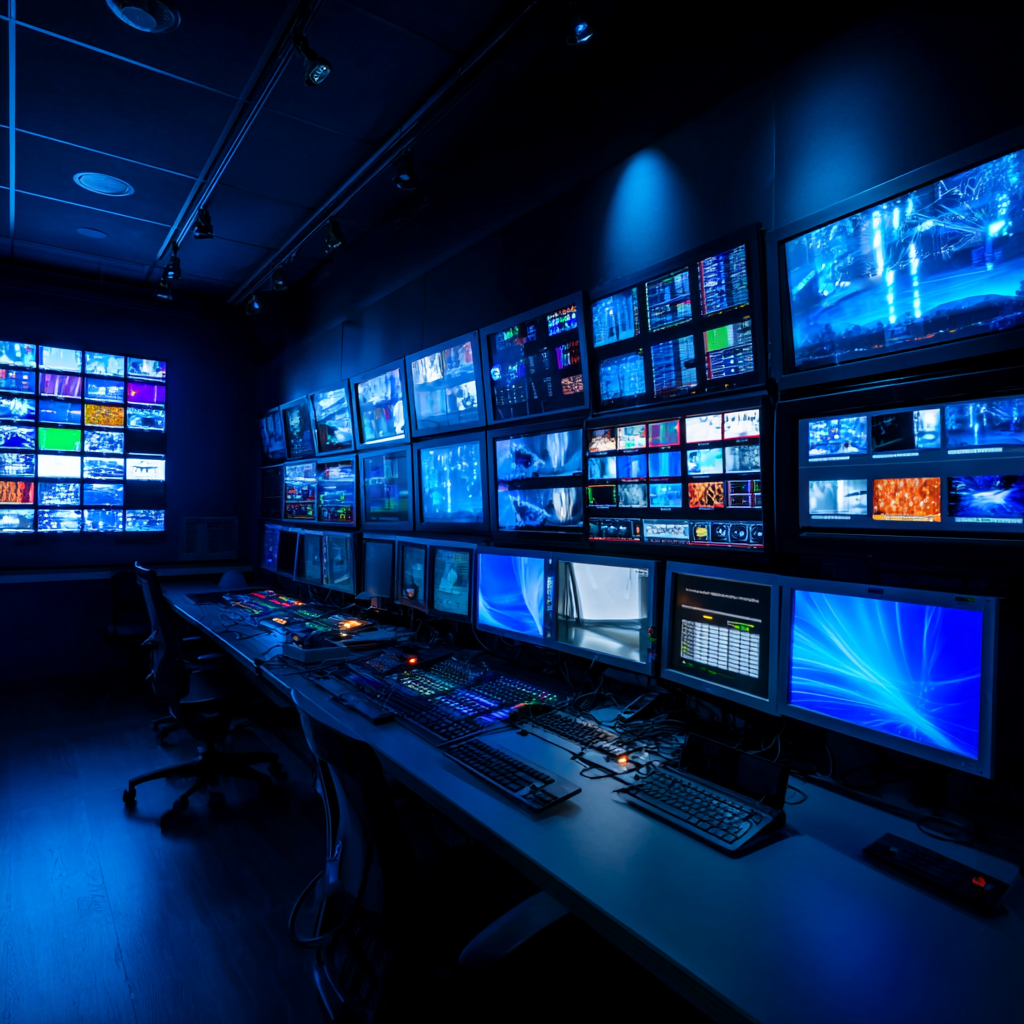
The most important factor in IPTV performance is one that users never see: server infrastructure. Every channel a viewer watches must be ingested from a source, transcoded into the appropriate format, stored or cached, and then streamed outward to potentially thousands of simultaneous viewers.
This process requires substantial computing power, reliable bandwidth, and geographic distribution. Providers who invest in dedicated server farms with redundant connections can maintain stable streams even during peak demand, a Premier League Saturday afternoon being the obvious stress test for any UK-focused service.
Providers who cut corners on infrastructure tend to rely on overloaded shared hosting or underpowered servers that buckle when viewer numbers spike. The result is the buffering and freezing that gives IPTV a bad reputation among users who have encountered lower-quality services. Server infrastructure is the single most important technical factor and also the hardest to assess from the outside without actually testing the service.
Content Delivery Networks and Geographic Latency
A content delivery network, or CDN, is the architecture that physically distributes streaming data across multiple server locations worldwide. Rather than routing every stream through a single origin server, which would create enormous latency for geographically distant viewers, a CDN places copies of content at edge nodes positioned close to end users.
For a UK-based IPTV service, this means having edge servers located within the UK or at minimum within Europe, so that data does not need to travel across the Atlantic or further before reaching a viewer's device. Latency in streaming is measured in milliseconds, but those milliseconds accumulate. A stream routed through servers in Asia before reaching a viewer in Manchester will exhibit noticeably higher buffering rates than one served from an edge node in London.
The best providers maintain their own CDN infrastructure or partner with established CDN operators like Akamai, Cloudflare, or AWS CloudFront. This investment is significant, which is one reason why genuinely high-quality IPTV services tend to cost more than their bargain-tier counterparts, though still considerably less than traditional cable or satellite packages.
Transcoding, Codec Technology, and Adaptive Bitrate Streaming
Raw broadcast video arrives at an IPTV provider's ingest servers at extremely high bitrates, often in formats unsuitable for internet delivery. Transcoding is the process of converting this source material into web-optimised formats at multiple quality levels simultaneously.
Modern providers encode streams in H.264, H.265 (HEVC), or the increasingly adopted AV1 codec. H.265 is particularly significant for 4K content delivery because it achieves comparable visual quality to H.264 at roughly half the bitrate, dramatically reducing the bandwidth requirements for ultra-high-definition streaming.
Alongside codec selection, adaptive bitrate streaming (ABR) is the technology that allows a stream to intelligently adjust quality based on a viewer's available bandwidth in real time. Rather than locking a viewer into a fixed resolution, ABR continuously monitors connection speed and switches between quality tiers, from 4K down to 720p if necessary, without interrupting playback. This is the technology responsible for the seamless experience on well-engineered streaming services, and it requires sophisticated server-side logic to implement correctly.
Electronic Programme Guide Synchronisation
An often overlooked but technically demanding component of IPTV delivery is the Electronic Programme Guide, or EPG. This is the scheduling grid that tells a viewer what is currently playing and what is coming next across potentially thousands of channels.
Maintaining an accurate, real-time EPG requires continuous data feeds from broadcasters, normalisation of scheduling data across multiple international sources, and synchronisation with the viewer's local timezone. Providers serving UK audiences need EPG data that reflects BST and GMT shifts, handles irregular programming changes for live events, and updates without causing channel list refreshes that interrupt active streams.
EPG quality is one of the clearest indicators of how seriously a provider takes their technical infrastructure. A well-maintained guide with accurate scheduling suggests investment in the backend systems needed to keep it current. A blank or perpetually inaccurate guide suggests the opposite.
Multi-Device Support and Application Layer Technology
Contemporary viewers do not watch television on a single device. They move between smart TVs, tablets, smartphones, streaming sticks, and dedicated media players throughout the day. Supporting this behaviour requires IPTV providers to maintain compatibility with a diverse ecosystem of hardware and operating systems.
At the application layer, this means building or supporting apps across Android TV, Amazon Fire OS, iOS, Tizen (Samsung), webOS (LG), and standard web browsers, each with different technical constraints and certification requirements. Providers who support IPTV Smarters Pro, TiviMate, and XCIPTV are leveraging established third-party applications that handle much of this cross-platform complexity, allowing them to focus investment on backend infrastructure rather than frontend development.
The quality of the viewing experience on any given device often comes down to how well the application handles buffering logic, handles authentication token refresh, and manages background data processes without draining device resources.
Security, Authentication, and Anti-Piracy Technology
Legitimate IPTV providers implement multi-layered authentication systems to ensure that only paying subscribers can access content. This typically involves token-based authentication at stream initiation, periodic re-validation during active sessions, and device fingerprinting to prevent credential sharing at scale.
On the content security side, providers increasingly deploy DRM (Digital Rights Management) systems to satisfy content licensing requirements from broadcasters and studios. Widevine, PlayReady, and FairPlay are the three dominant DRM frameworks in use, each tied to specific device ecosystems.
This is also where the technology landscape becomes legally complex. The infrastructure described here is entirely legitimate, the same technology stack used by Netflix, Disney+, and BBC iPlayer. What determines legality is not the technology but the content licensing agreements held by the provider. When choosing between iptv providers, understanding whether a service holds appropriate broadcasting rights for the content they deliver is as important as evaluating their technical performance.
What This Means for Consumers
For the average viewer, the technology discussed here manifests as a simple binary: the stream either works reliably or it does not. But understanding what sits behind that reliability helps explain why the market varies so dramatically in quality.
The providers who invest in purpose-built server infrastructure, genuine CDN distribution, professional transcoding pipelines, and proper authentication systems are the ones capable of delivering a consistent experience across thousands of concurrent viewers during peak hours. Those who do not are the ones responsible for the buffering horror stories that still give some people pause about switching from traditional television.
As internet infrastructure continues to mature and broadband penetration in the UK approaches saturation, the technical barriers to delivering high-quality IPTV are lower than they have ever been. The result is a market that is growing rapidly, becoming more competitive, and increasingly capable of replacing broadcast television entirely for a significant portion of the UK viewing population.