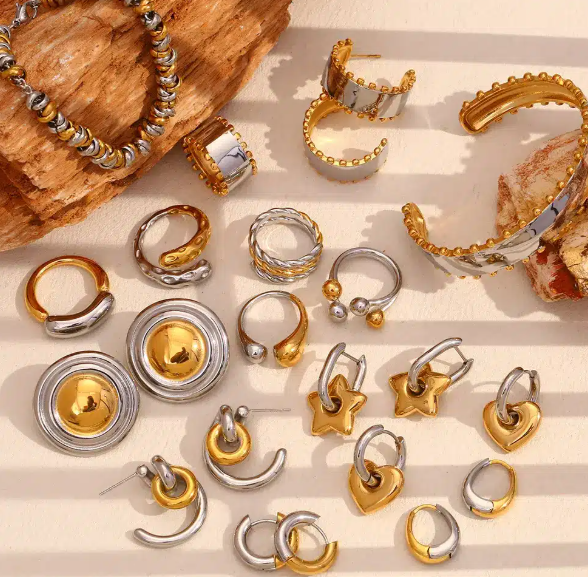
If you look at jewelry today, you will notice stainless steel is everywhere. It was not always like this. Earlier, people mostly focused on gold, silver, or platinum. Now stainless steel is getting just as much attention, and honestly, it makes sense.
It is strong, it does not rust easily, and it is more affordable. That is why many brands now work with a stainless steel jewelry manufacturer or even a custom jewelry manufacturer to create stainless steel collections.
But the process behind it is not something most people think about. It is a bit more detailed than it looks.
Stainless steel has some advantages that make it stand out.
Because of this, many brands now prefer working with custom stainless steel jewelry manufacturers when building everyday collections.
Even basic custom stainless steel jewelry pieces can handle daily wear without losing their look.
The process starts with the material itself. Not all stainless steel is the same. Some types are more resistant to corrosion, and some are lighter. While some feel more premium.
A good stainless steel jewelry factory will help choose the right grade depending on the design. Also, many stainless steel jewelry manufacturers use 304 or 316L steel. 316L is usually better for high-quality pieces.
This is where things start to take form. Laser cutting is used to cut steel sheets into specific shapes. It is very precise and saves time.
A lot of modern designs depend on this step. Even a custom jewelry manufacturer relies on this process for accuracy. The machine follows a digital design and cuts exactly where needed. That makes production faster compared to older methods.
After cutting some pieces, go through a corrosion process. This step is used to add patterns or texture to the surface. It is done using chemical solutions that react with the surface.
Many custom stainless steel jewelry manufacturers use this method to add character to otherwise simple designs.
Not all jewelry is flat. Some pieces need depth or 3D structure. That is where casting comes in. Molten metal is poured into molds and then cooled.
A Titanium jewelry manufacturer like, Honho Jewelry, may use similar methods, but stainless steel casting is more common for fashion pieces. Some brands even combine casting with other methods to get better results.
At this stage, the piece still looks rough. Polishing is what gives it that final shine. This can be done by machine or by hand. Hand polishing usually gives better results but takes more time.
Even when working with custom stainless steel jewelry, polishing plays a big role in how premium the piece looks.
Most of the time, one process is not enough. Manufacturers combine different steps.
This is how a simple idea turns into a finished product. A good jewelry manufacturer knows how to balance all these steps.
Even though stainless steel is popular, many brands still mix materials. Some work with a Gold Plated jewelry manufacturer to add a gold finish on top of steel.
A reliable jewelry manufacturer can turn a basic steel piece into something that looks more premium. Others use brass for certain designs. A brass jewelry manufacturer can create warmer-looking pieces.
At the same time, a brass jewelry supplier provides the base material needed for production. Working with the reliable ones together helps maintain quality across designs.
For brands, understanding this process helps a lot. It is not just about design. It is about knowing how things are made.
Whether you are working with a custom jewelry manufacturer or a stainless steel jewelry factory, knowing the process helps you make better decisions.
Stainless steel jewelry might look simple, but the process behind it is not. From cutting to polishing, every step matters. Small mistakes can affect the final result.
That is why choosing the right partner matters. Whether it is custom stainless steel jewelry manufacturers, a Titanium jewelry manufacturer, or even a Gold Plated jewelry manufacturer for finishing touches.
At the end of the day, it is not just about the metal. It is about how well the process is handled. That is what turns raw material into something people actually want to wear.