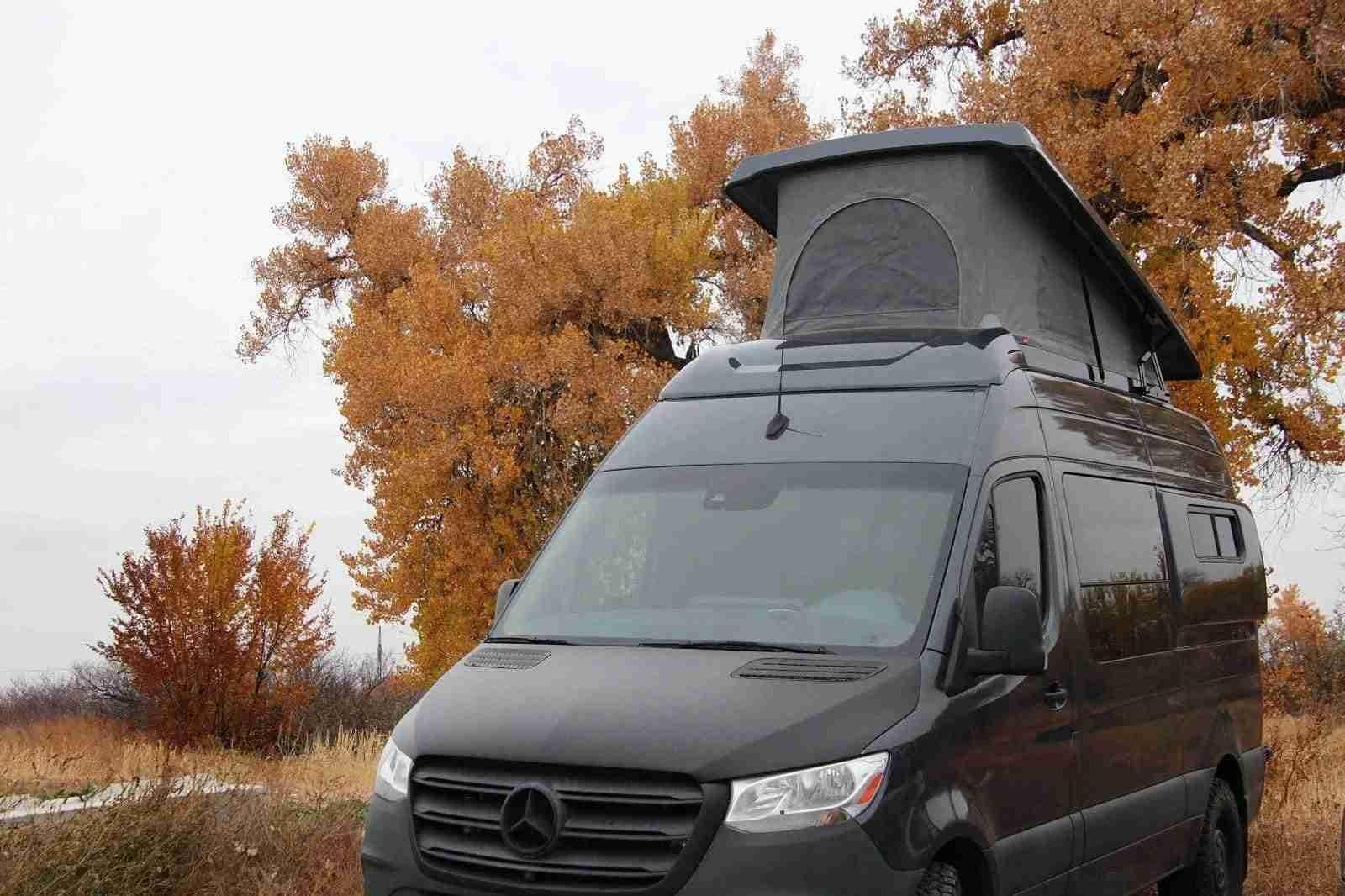
For many people planning a pop top van conversion or choosing a pop top campervan, the roof system becomes one of the most important decisions in the build. A pop top can add significant living space, ventilation, and even extra sleeping room — all while preserving the van’s drivability and stealthier profile on the road.
That said, pop tops are not without trade‑offs. They bring added cost, potential insulation challenges, and maintenance considerations that aren’t always obvious at first glance. This guide breaks down what pop tops are, why people choose them, the cost implications, and how to decide whether a pop top is the right choice for your camper build.
A pop top campervan is characterized by a roof section that can be raised when parked, increasing interior headroom and often providing space for an additional bed platform. When lowered for travel, the roof returns to a compact profile that helps preserve clearance under bridges, improves fuel economy compared with a fixed high roof, and allows for easier parking.
Originally popularized on European vans, pop tops have grown in popularity across larger platforms like Sprinter, Transit, and ProMaster builds because they deliver extra space without committing to a tall, permanent roof.
Pop tops go beyond novelty. They address several real functional challenges in camper design:
Greater Interior Headroom
A raised pop top creates standing room inside the campervan, making daily tasks like cooking, dressing, and organizing gear more comfortable.
Additional Sleeping Space
Many pop tops include a built‑in sleeping area, effectively expanding a standard 2‑berth van into a 3‑ or 4‑berth configuration without rigid expansions of the van body.
Better On‑Road Performance
With the top closed, a pop top maintains a lower height than a full high roof. This means improved aerodynamics and better fuel economy compared with taller camper builds.
Stealth Camper Benefits
Pop tops can make converted vans look more like everyday vehicles when closed, which some travelers prefer for stealth parking in urban or crowded environments.
Pop tops are convenient, but they also come with compromises:
Insulation Challenges
Because most pop top walls are fabric or soft materials rather than solid panels, insulation performance can be weaker compared with high‑roof vans. Temperature control in extreme weather becomes more dependent on supplemental heating or cooling.
Cost and Installation
Pop top systems and professional installation are not inexpensive. Modifying the roof requires structural reinforcement, specialized hardware, and often interior adjustments.
Maintenance Needs
Moving parts, seals, zippers, and fabric panels all require inspection and occasional maintenance over the life of the van.
Added Weight at the Roof
Installing a pop top adds weight above the vehicle’s center of gravity. Depending on the build, this may require suspension upgrades or careful weight distribution planning.
One of the biggest considerations for any van builder is price. Pop top conversions range depending on the system type, complexity of install, and the van platform.
A professional installation typically adds the bulk of the cost, especially when the installer needs to cut the roof, reinforce structural components, and modify interior systems to integrate the pop top.
There are a few major categories of pop tops you’ll encounter:
Soft Pop Tops
Canvas or fabric walls with a lift frame. They are lighter and generally less expensive, but insulation and weather resistance are limited.
Hard Shell Pop Tops
Rigid panels with gas struts that offer better insulation and durability. These tend to cost more upfront but provide a more finished experience.
Electric or Assisted Lift Systems
Motorized or spring‑assisted systems that raise the top at the push of a button. These add convenience but also increased complexity and cost.
Choosing the right pop top system often comes down to trusted suppliers and installers who can match the roof design to your van platform and travel needs.
If you’re still comparing setups, it can help to look at The Vansmith's pop-top conversions to see how different layouts approach space and usability.
Exploring a provider’s offerings early in the design process can help you decide if a pop top aligns with your priorities for comfort, insulation, and budget.
Not every campervan is the same, and confusing a good pop top choice can lead to regrets later in the build. Consider these key factors:
Even after deciding a pop top is right for you, there are a few logistical things to think through:
Pop top materials vary significantly in terms of thermal performance. While this article does not promote specific products, reputable research on insulation and thermal behavior of building materials is published by the U.S. Department of Energy.
Understanding how different fabrics and structural materials perform can help you plan heating, ventilation, and insulation systems around a pop top.
People who benefit the most from a pop top van conversion often share common travel goals:
Pop tops can dramatically improve livability while maintaining the road manners and parking flexibility of a standard van.