A Practical Way to Think About Lease-End Decisions

Lease end has a way of sneaking up on you. One week you’re fine, the next you’re staring at a deadline, a mileage number, and a pile of “maybe” choices that all sound expensive.

Here’s the good news: most lease-end decisions get easier when you stop thinking in terms of “What should I do?” and start with “What’s my car worth compared to my contract?” That’s the math part. The same framework applies whether you’re evaluating a Toyota lease buyout or any other brand’s end-of-lease option. 

Then you add real life, your budget, your commute, and how much you like the car.

This guide gives you a simple framework for the four main options, return, buy, trade, or lease new, plus one pressure valve that buys time: a short lease extension.

With the global vehicle leasing market size expected to grow to over $1 trillion by 2033, with a CAGR of 6.78%, this is an industry you want to be able to navigate well.

Start with the one number that makes the decision easier: your equity (or lack of it)

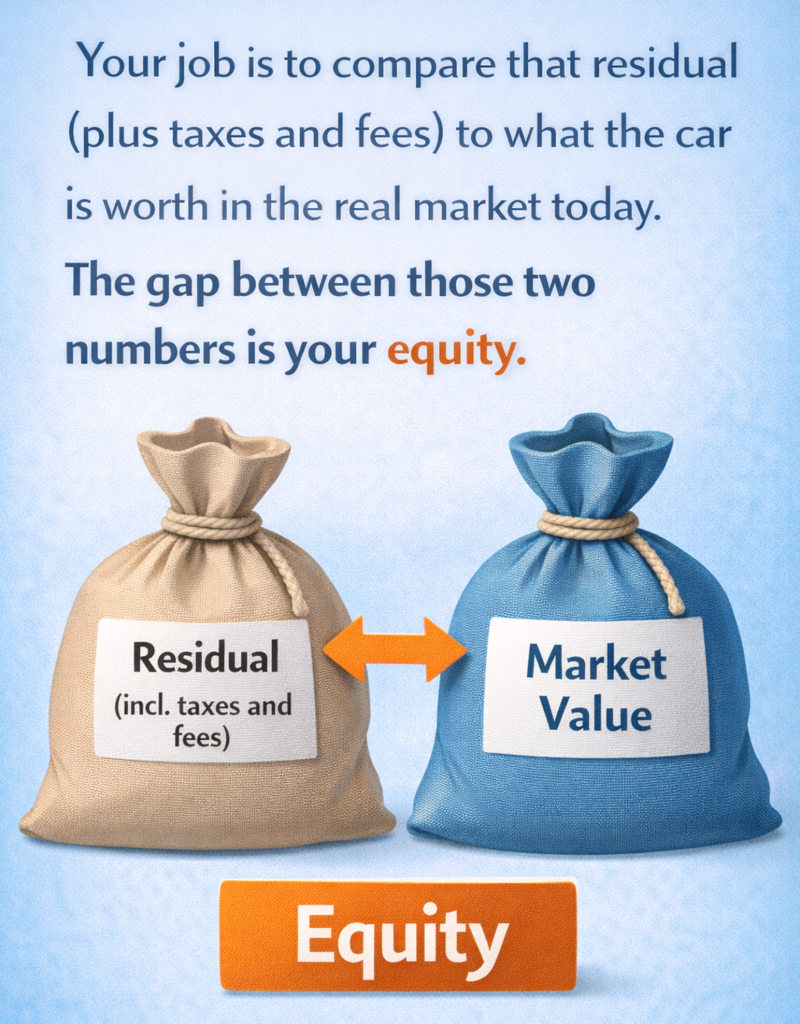
At lease end, you’re not guessing. Your contract already includes a price to buy the car. That number is the residual value, basically the bank’s pre-set “end price” for the vehicle.

Here’s a practical way to run it in 10 minutes:

  1. Find your residual value in your lease paperwork (it’s usually on the contract page with payment details).

  2. Get 2 to 3 market value offers (real offers, not just a “range”).

  3. Call the lessor for the exact buyout quote, which can include taxes, a purchase option fee, and any other required amounts.

  4. Compare market value vs. total buyout.

  5. If your market value is higher than the total buyout, you have positive equity.

  6. If your market value is lower, you have negative equity.

How to get a real market value number, not a guess

You want offers that reflect what someone will actually pay, not a hopeful estimate.

Start with an online instant offer, then get a written appraisal from a local dealer. If you can, add one more quote from another dealer or used-car buyer. 

Condition changes the number fast. Tires close to replacement, a cracked windshield, or a deep scrape can pull your offer down. A clean interior, both keys, and service records can push it up. 

Add the hidden costs before you decide

Lease-end math goes sideways when you forget the add-ons. Before you choose a path, list the costs that could show up on your final bill. Looking at large expenses through a structured lens helps, whether you’re pricing a vehicle transition or comparing projections like how much long-term care costs..

Common ones include:

  • Disposition fee (often $300 to $500) if you return the car

  • Excess mileage charges (often about $0.15 to $0.25 per mile)

  • Wear-and-tear charges for dents, glass, wheels, interior damage, or bald tires

  • Sales tax on a buyout, plus registration and title fees if you purchase

  • Inspection fees if your lease uses a third-party inspection process

Match your equity result to the right lease-end option

Once you know whether you have positive or negative equity, the best lease-end choice usually becomes obvious. It’s less about preference and more about protecting your money.

In early 2026, used car prices have shown mild upward movement at wholesale auctions (about 2.4% to start the year), and many popular gas and hybrid models have held value well. That can mean more lease-end positive equity than people expect. 

EVs are a different story; more off-lease EV supply has pushed many used EV prices down, so the contract buyout is more likely to be higher than market value on some EV leases.

Here’s how the main options tend to line up.

Returning the car: when walking away is actually the smart move

Pros:

  • You’re done. No resale work, no buyer questions, no loan paperwork.

  • It avoids paying a buyout price that’s higher than market value.

  • It can be the least painful choice if the car has high miles or damage.

Watch-outs:

  • Disposition fees and mileage charges can sting.

  • Wear-and-tear rules are strict, and “normal” is defined by the lease, not by your neighbor.

  • Missing items (second key, cargo cover, floor mats) can cause extra charges to trigger.

Best for: cars with negative equity, high miles, or issues you don’t want to fix.

Buying it out or trading it in: how to keep the value you paid for

If you have positive equity, you should think twice before returning the car. You might be handing value back to the bank.

Buying it out (then keeping it):

  • Pros: You know the car’s history, you avoid shopping stress, and the buyout can be cheaper than replacing the car if used prices are still firm in your area.

  • Watch-outs: You’ll pay sales tax and registration, and you’ll want a plan for future repairs once the warranty ends. It’s also smart to review your care insurance coverage, since ownership changes can affect premiums, deductibles, or required coverage levels.

  • Best for: people who like the car, trust it, and want payment stability.

Buying it out (then selling it)

  • Pros: You can capture equity if the market value is higher than your total buyout.

  • Watch-outs: It takes time, and you may need to pay the buyout before you can sell, depending on your lease rules and state process.

  • Best for: drivers with clear positive equity and the patience for a few extra steps.

Trading it in (often into another lease or purchase)

  • Pros: It’s the fastest way to use equity as credit on your next deal, and it can reduce what you finance.

  • Watch-outs: Don’t roll negative equity into a new lease unless you’re fully aware of the long-term cost, it can raise payments and trap you in the next contract.

Best for: shoppers who want a different vehicle and want the dealer to handle the swap.


author

Chris Bates

"All content within the News from our Partners section is provided by an outside company and may not reflect the views of Fideri News Network. Interested in placing an article on our network? Reach out to [email protected] for more information and opportunities."

FROM OUR PARTNERS


STEWARTVILLE

LATEST NEWS

JERSEY SHORE WEEKEND

Events

March

S M T W T F S
22 23 24 25 26 27 28
1 2 3 4 5 6 7
8 9 10 11 12 13 14
15 16 17 18 19 20 21
22 23 24 25 26 27 28
29 30 31 1 2 3 4

To Submit an Event Sign in first

Today's Events

No calendar events have been scheduled for today.