Hydraulic cylinder rebuilds demand precision, control, and a work area that can handle weight without slowing the technician down. In many shops, the process still begins on improvised surfaces, crowded bays, or general-purpose tables that were never designed for this kind of work. That setup can turn a demanding repair into a slower, more physically taxing job.
A hydraulic cylinder needs to be held securely during disassembly, inspection, seal replacement, and reassembly. When the unit is large, worn, or difficult to position, each step takes more effort. Mechanics often have to manage heavy components, keep parts organized, and maintain clear access to the rod, gland, and barrel throughout the rebuild. Even small inefficiencies can add up over the course of a busy day, especially in shops that handle multiple repair orders at once.
The issue goes beyond speed. Poor positioning can create unnecessary strain during teardown, reduce accuracy, and disrupt the repair flow. It can also make routine steps feel harder than they should, particularly when a technician has to stop repeatedly to stabilize the cylinder or clear space around the work area. For shops that rebuild hydraulic cylinders regularly, the workbench itself directly affects consistency, control, and overall workflow.
Heavy equipment depends on hydraulic cylinders for lifting, pushing, steering, and other essential functions. Excavators, loaders, agricultural machinery, utility trucks, and industrial attachments all rely on these components to perform reliably under pressure. When a cylinder begins to leak, lose pressure, or show signs of internal wear, the machine it powers can quickly become unusable.
Repair shops ocylindersith cylinders that are large, heavy, and awkward to maneuver. Disassembly requires careful positioning to safely remove seals, rods, and internal components without wasting time on constant adjustments. When the workspace is not built for this kind of task, the repair process becomes slower and more difficult than it needs to be. That lost time can affect the shop as much as it affects the customer waiting for the repair.
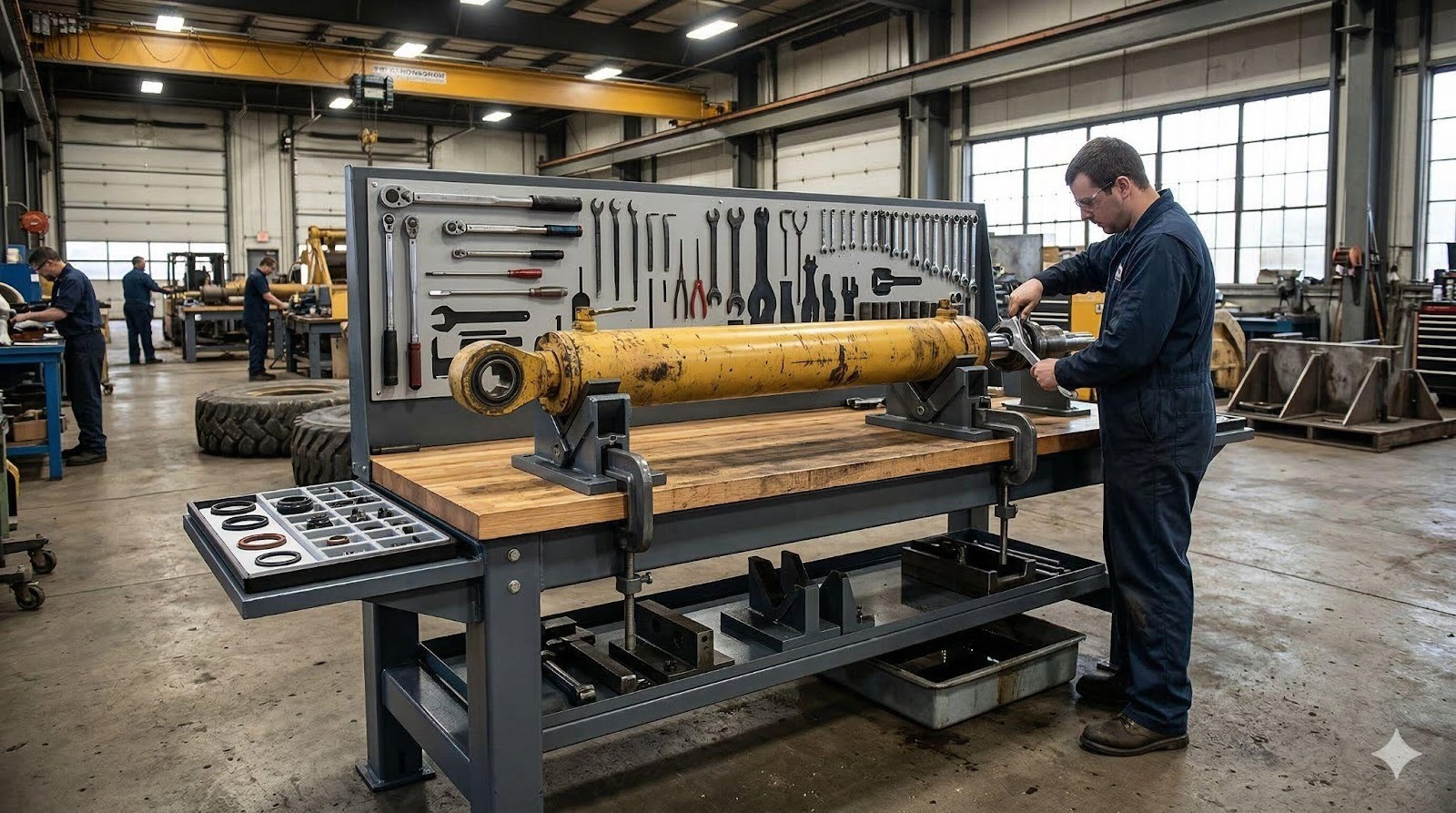
That is why many shops are turning to an efficient hydraulic repair bench to support cylinder teardown and reassembly. With a stable platform and improved positioning control, technicians can focus on the repair itself rather than fighting the setup. The result is a smoother process, better access to key components, and more consistent handling of demanding rebuilds.
In a busy service environment, those improvements matter. Faster setup and better cylinder support can help technicians move from one stage of the rebuild to the next with fewer delays. That kind of efficiency is especially valuable when the shop is handling urgent repairs for customers who need equipment back in service quickly.
Hydraulic cylinder repair involves several stages that depend on stability and clear access to the component. During disassembly, technicians must remove the rod, gland, seals, and other internal components while keeping the cylinder secure. If the unit shifts or rolls, the work stops until it can be repositioned, which slows the entire job and breaks concentration.
A dedicated repair bench creates a more controlled environment. Instead of relying on blocks, clamps, or makeshift supports, mechanics can position the cylinder securely and work with greater precision. That stability supports more accurate seal replacement, closer inspection of internal surfaces, and better alignment during reassembly.
Accessibility is another major advantage. When the cylinder is positioned correctly, technicians can reach different sections without repeatedly lifting or rotating it by hand. Fewer interruptions keep the repair moving and reduce the physical effort required. It also becomes easier to inspect wear patterns, identify damaged parts, and complete each step in a more logical sequence.
Organization improves as well. Tools, seals, and removed parts can stay arranged within reach instead of being scattered across the workspace. A more orderly setup helps technicians maintain focus and reduces the chance of losing track of important components during the rebuild. Over time, that level of organization can support a more repeatable repair process across the entire shop.
Handling hydraulic cylinders requires more than technical skill. These components are often heavy, awkward, and difficult to stabilize without the right support. Lifting, rotating, or holding them in place manually can put unnecessary strain on technicians and increase the risk of mistakes.
A purpose-built repair bench helps reduce that strain by keeping the cylinder secure throughout the rebuild. With the component held in place, technicians can work with better control while removing or installing internal parts. A stable setup also supports greater accuracy when inspecting cylinder walls, replacing seals, and aligning parts during reassembly.
Safety matters in every mechanical workspace, especially when heavy components and precision tasks are involved. Following established workshop safety guidelines can help shops create safer conditions and reduce avoidable risks during repair work.
A safer setup also benefits the shop in practical ways. When technicians work in a more controlled environment, they are less likely to encounter preventable slowdowns caused by unstable parts, awkward lifting, or workspace congestion. That creates a repair process that feels steadier, more predictable, and easier to manage from start to finish.
Equipment downtime creates real problems for contractors, fleet operators, and maintenance teams. When a hydraulic cylinder fails, the machine it supports may be sidelined until the repair is completed. For businesses that depend on heavy equipment every day, delays can affect schedules, labor efficiency, and jobsite productivity.
Repair shops play a central role in reducing that downtime. The faster a cylinder can be inspected, rebuilt, and returned to service, the sooner the equipment can get back to work. A dedicated repair bench supports that goal by making teardown and reassembly more organized and less disruptive.
Efficiency also helps shops manage workload. Contractors, agricultural operators, and municipal fleets often rely on local repair facilities when hydraulic components wear out. Shops that can perform rebuilds in a structured workspace are better positioned to handle more jobs without sacrificing quality. For readers interested in broader equipment industry insights, local business coverage often shows how workflow improvements and better shop practices help keep essential operations moving.
There is also a business advantage in consistency. When technicians follow a cleaner, more organized repair process, it becomes easier for the shop to maintain standards across different jobs and different team members. That consistency can improve turnaround times, reduce avoidable setbacks, and help build trust with customers who depend on reliable hydraulic repair work.
Hydraulic repair shops continue to adapt as equipment becomes larger, heavier, and more demanding. Technicians need workspaces that support accurate repairs without adding unnecessary effort to the job. A well-designed repair bench gives them a more dependable way to handle cylinders from teardown through final assembly.
As shops look for practical ways to improve productivity, purpose-built repair equipment is becoming a more important part of the conversation. Better support, better access, and better control all contribute to a stronger rebuild process. In shops where hydraulic cylinder work is a regular part of the day, the workstation is no longer a minor detail. It shapes how efficiently repairs move, how safely technicians work, and how consistently rebuilds are completed.
For operations focused on quality and turnaround time, such improvement can make a meaningful difference in day-to-day performance.