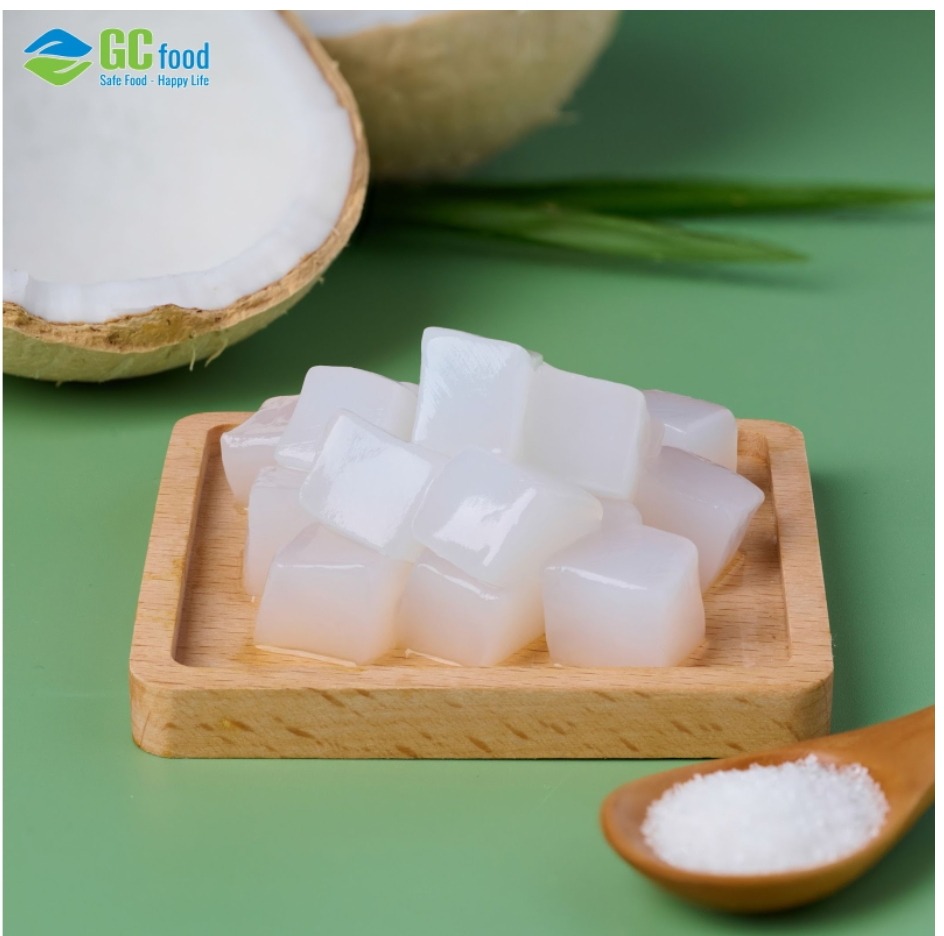
Vietnamese coconut jelly is a light, chewy dessert that many people around the world enjoy. From traditional family desserts to modern drinks, this jelly has become a familiar and popular ingredient. Whether served on its own or mixed into sweet soups and beverages, it always delivers a refreshing experience.
Vietnamese coconut jelly comes in several forms, each with its own texture and use. The two most common types are Nata de Coco and coconut agar jelly, along with newer modern variations.
Nata de Coco is the most well-known and widely consumed type of Vietnamese coconut jelly. It is made through a traditional fermentation process using carefully aged coconut water. During fermentation, beneficial bacteria form a natural cellulose layer, which becomes the chewy jelly people love. After fermentation, the jelly is washed, cut into small cubes, and soaked in sugar water. The final product is clear, chewy, and mildly sweet.
In Vietnam, Nata de Coco is often added to sweet soups, fruit salads, yogurt, bubble tea, and refreshing drinks. It is low in calories, almost fat-free, and high in fiber, making it a popular choice for those who prefer light desserts. However, because of its fiber content, it is best enjoyed in moderate amounts to avoid digestive discomfort.
Nata de Coco is a chewy Vietnamese coconut jelly made from fermented coconut water, lightly sweet, low in calories, and perfect for drinks and desserts.
Unlike Nata de Coco, coconut agar jelly is cooked rather than naturally fermented during production. It is made from coconut water, coconut milk, and agar powder as key ingredients. This jelly usually has two layers: a clear coconut water layer and a creamy coconut milk layer.
Its texture is softer and smoother, with a gentle coconut aroma and mild sweetness. Coconut agar jelly is commonly served at family gatherings, restaurants, and celebrations across Vietnam.
Nata de coco is mainly made from aged coconut water cooked with sugar and a small amount of ammonium sulfate. After cooling, acetic acid is added to adjust the pH, and Acetobacter xylinum bacteria are introduced to ferment the mixture for one to two weeks, forming raw coconut jelly.
The jelly is then washed, cut, boiled, and soaked in sugar water to remove sourness, add mild sweetness, and extend shelf life. The final product is clear, crisp, and chewy, usually cut into small cubes, which have become the standard shape for this topping.
Many people enjoy Nata de Coco not only for its taste but also for its nutritional benefits:
Choosing products with moderate sugar levels helps keep this dessert healthy and balanced.
G.C Food Joint Stock Company (GC Food) is one of the leading producers of Vietnamese coconut jelly, supplying both domestic and international markets. The company operates a fully integrated production chain, from sourcing coconut water to finished products.
Its Vinacoco factory in Dong Nai produces coconut jelly made from Ben Tre coconuts, meeting the standards of markets such as the U.S., Japan, South Korea, and the Middle East.
GC Food is a leading producer of Vietnamese coconut jelly, delivering high-quality products from Ben Tre coconuts to markets worldwide.
GC Food provides raw coconut jelly for food manufacturers and F&B businesses, including:
For consumers, GC Food offers ready-to-eat Vietnamese coconut jelly in cans, pouches, and plastic jars, suitable for daily use or food service.
Vietnamese coconut jelly is a simple yet enjoyable dessert that reflects the richness of coconut-based traditions. From traditional Nata de Coco to modern flavored versions, it continues to win hearts around the world. Whether you choose to make it at home or enjoy ready-to-eat products, this refreshing jelly remains a timeless favorite for all ages.