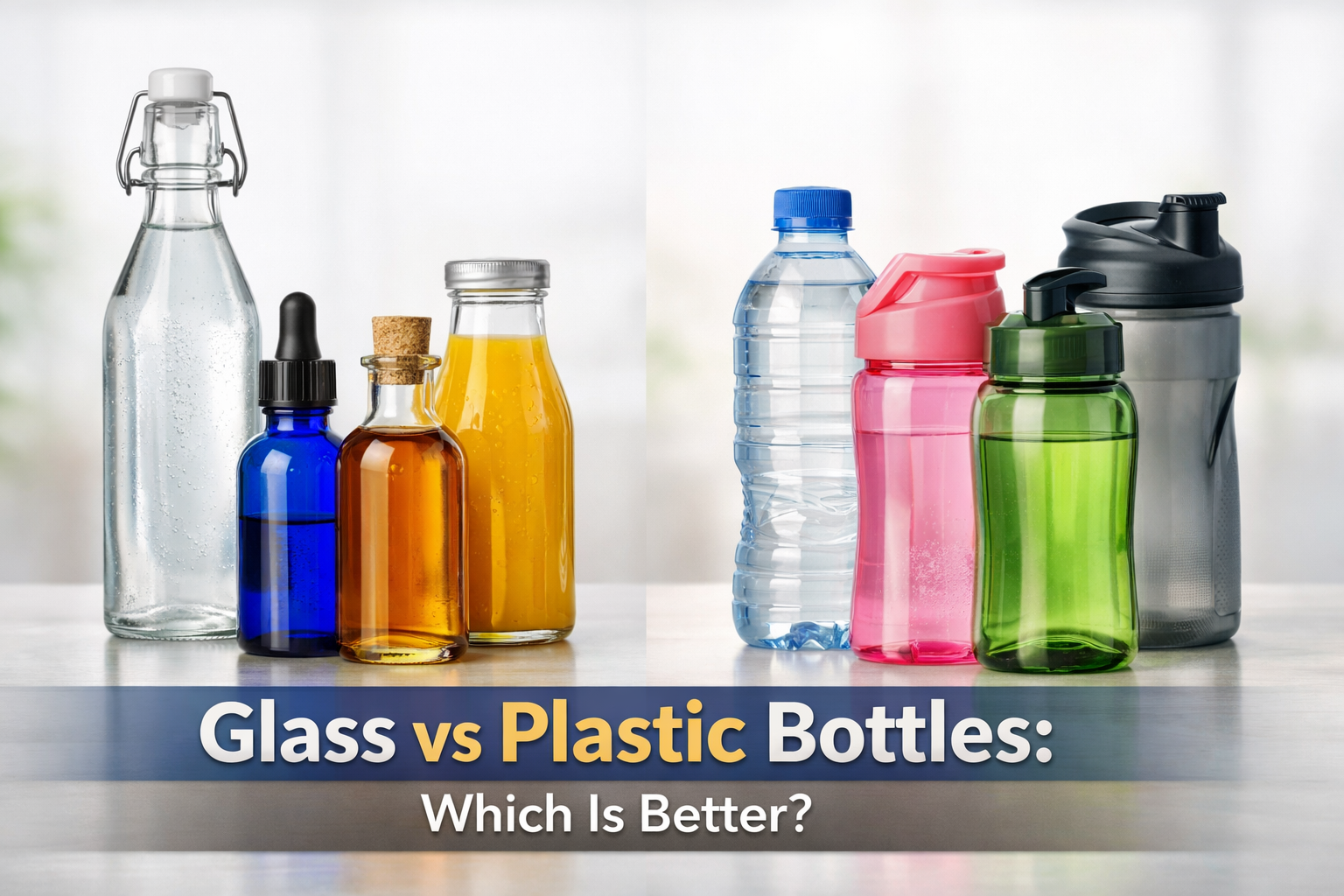
Many people face a common dilemma when choosing bottles for drinks, baby products, or even lab and cosmetic use: glass or plastic? Both materials are widely available, but each comes with its own advantages and drawbacks. Making the right choice can affect safety, taste, convenience, and even the environment.
This article will help you understand the differences between glass and plastic bottles. You’ll learn about their health implications, environmental impact, cost, and best use cases. By the end, you’ll know which type of bottle suits your needs the best.
Whether you’re a parent, a business owner, or just someone who wants a safe and eco-friendly option, this guide will give you the information you need to make a confident choice.
Glass bottles are made from natural materials like sand, soda ash, and limestone. They are chemically stable, which means they do not react with liquids stored inside. This makes glass bottles ideal for beverages, oils, baby products, and even some lab or cosmetic uses.
Some of the main benefits of glass bottles include:
However, glass bottles do have some downsides:
Overall, glass bottles are often chosen for safety, quality, and eco-friendliness, even if they require careful handling.
Plastic bottles are lightweight containers made from materials like PET, HDPE, or BPA-free plastics. They are extremely popular due to their durability and convenience. Plastic bottles are widely used for water, soft drinks, sports beverages, and disposable packaging.
Key advantages of plastic bottles include:
Plastic bottles also come with some drawbacks:
Plastic bottles are generally chosen for convenience, low cost, and portability, but careful selection (like BPA-free options) is important for safety and health.
When it comes to health and safety, the choice between glass and plastic bottles can make a big difference. Glass bottles are chemically stable, so they do not release harmful substances into liquids. This makes them safer for storing water, juices, baby products, and oils.
Plastic bottles, on the other hand, can sometimes leach chemicals if they are not BPA-free or are exposed to heat. Microplastics may also develop over time, which can affect the safety of consumable liquids. For baby bottles and other sensitive uses, glass is usually the safer option.
Glass and plastic bottles also differ greatly in environmental impact. Glass is 100% recyclable and can be reused many times without losing quality. Recycling glass reduces waste and conserves natural resources. However, glass production uses more energy initially, though it pays off over repeated reuse.
Plastic bottles are lighter and easier to transport, which can reduce emissions during shipping. Yet, plastic recycling is limited, and many bottles end up in landfills or oceans. Recycled plastic often becomes a lower-quality product instead of being reused fully.
Key points to consider:
Choosing between glass and plastic bottles often comes down to how you plan to use them. Both have situations where they shine.
Tips for using bottles effectively:
Glass offers safety and quality, while plastic provides lightness and portability. The right choice depends on your priorities.
Cost and availability are practical factors to consider when choosing bottles. Glass bottles usually cost more upfront but last longer if reused properly. Plastic bottles are cheaper, easier to buy in bulk, and widely available.
Picking the right bottle depends on several key factors. Considering these points can make your choice easier and more practical.
Checklist to decide:
Making a list of priorities helps ensure the bottle meets your health, convenience, and sustainability goals.
Both glass and plastic bottles have their strengths and weaknesses. Glass is safer, reusable, and eco-friendly, while plastic is lightweight, durable, and cost-effective. The best choice depends on your needs, whether it’s health, portability, environmental concern, or budget.
By weighing these factors, you can choose the bottle that fits your lifestyle or business. Glass is ideal for premium products and safety-focused uses. Plastic is practical for everyday convenience and travel. Making an informed decision ensures your bottle choice serves its purpose efficiently and safely.
1. Are glass bottles safer than plastic for storing beverages?
Yes. Glass is chemically inert, so it does not leach chemicals into liquids, unlike some plastics.
2. Can plastic bottles release harmful chemicals?
Yes, certain plastics can release BPA or microplastics, especially if heated or reused frequently.
3. Which bottle is better for baby feeding?
Glass is generally preferred for baby bottles due to safety and chemical-free properties. BPA-free plastics are an alternative.
4. Are glass bottles fully recyclable?
Yes. Glass can be recycled indefinitely without losing quality.
5. How do glass and plastic compare in environmental impact?
Glass has a higher initial production energy but is fully reusable and recyclable. Plastic is lighter but less eco-friendly and often downcycled.
6. Which bottle type is more durable for travel?
Plastic is more durable for travel since it does not break easily, whereas glass is fragile.
7. Can glass or plastic affect taste?
Glass does not affect taste. Plastic may sometimes alter flavor slightly, especially with prolonged storage.