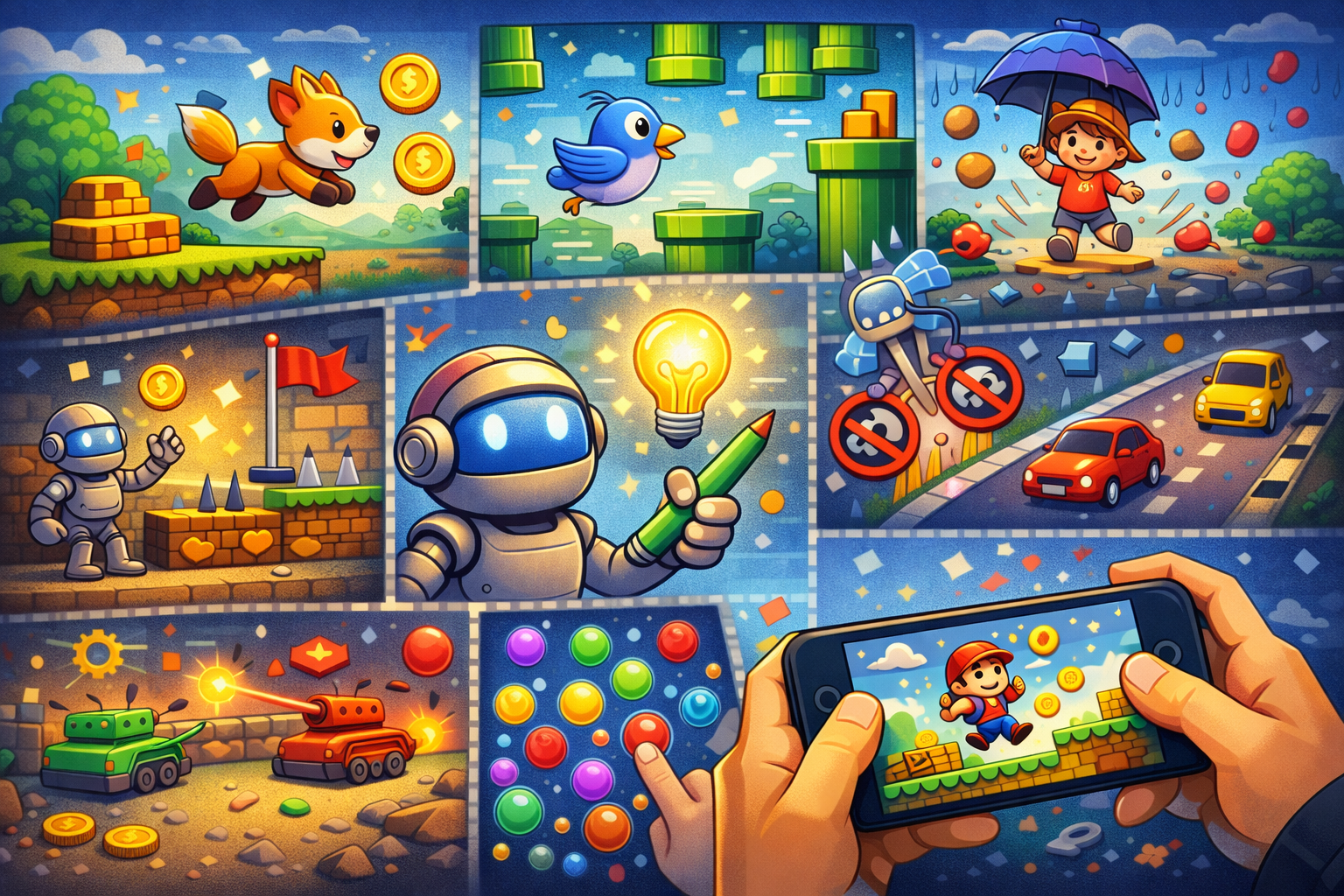
Many people want to make their first game, but don’t know where to start. They worry the idea will be too hard, take too long, or end up boring. The truth is, the best first games are small, clear, and fun to play in under a minute. These simple ideas let you focus on learning how the tool works instead of getting stuck on big stories or complex rules. You describe the game in plain words, generate it, play it, and make small changes until it feels good. This approach gives you quick wins and real results in 15 to 45 minutes.
Starting small removes fear and builds confidence. When your game has only one main action jump, shoot, dodge, the tool can build it cleanly and fast. You see results immediately, which makes the whole process exciting instead of stressful. Simple games are also easier to test, fix, and share with friends. Most beginners who start with big ideas get frustrated and quit. Those who pick one clear mechanic finish their first game and feel proud. This guide gives you ready-to-use ideas plus practical steps so you can create something playable today.
These ideas are perfect because they need only one or two main actions and work great with simple descriptions:
Pick any one of these for your first try. They all feel complete, even when kept very basic.
Create a simple retro-style arcade game. A pixel spaceship moves forward automatically. Player presses space or taps to shoot incoming asteroids and collect star power-ups. Black starfield background with neon graphics, space synth music, display score, and lives at the top. Make a basic version, then tweak one thing at a time, slower speed or bigger bullets, until it feels good. You can even draw inspiration from classic titles on the AI game maker platform to shape the look and controls. Start, play, refine, then save and publish when you can finish a full run without getting bored.
Even good ideas can turn out weak if you fall into these traps:
Spotting these early saves time. Fix one at a time by updating your description and generating again.
Add these touches to turn a basic game into something friends actually enjoy:
These small details create the feeling of just one more try.
Testing is the fastest way to make your game better:
On platforms like Astrocade, you can edit the description and regenerate in seconds, which makes testing very quick and easy.
A great example of a simple arena-style game that started as a basic idea is Tankor Arena. You control a tank, move around a small area, rotate, and shoot enemy tanks that appear. It has clear controls, quick rounds, and satisfying shooting action, exactly the kind of game beginners can finish in one short session and feel proud of. Check it out and play Tankor Arena. Notice how simple the core loop is (move + shoot + survive). Use this as inspiration for your own arena idea.
Once it feels good, publish it to get a public link. Send the link to friends and family through messages or social media. Ask them to play and tell you what they liked or what felt confusing. Many beginners are surprised by how much fun their simple game becomes for others. Some even get requests for small changes that make the next version even better.
Your first game does not need to be perfect or complicated. Pick one simple idea from the list, write a clear description, generate it, and enjoy the process. Every small fix you make teaches you more and makes the game better. In less than an hour, you can have something real that you created yourself. That feeling of “I made this,s and people are playing it” is one of the best parts of starting with simple games. Open the tool right now, choose one idea, and type your first description. You will have a playable game sooner than you think. Start small, have fun, and keep creating. Your second game will be even better because of what you learn from the first one.