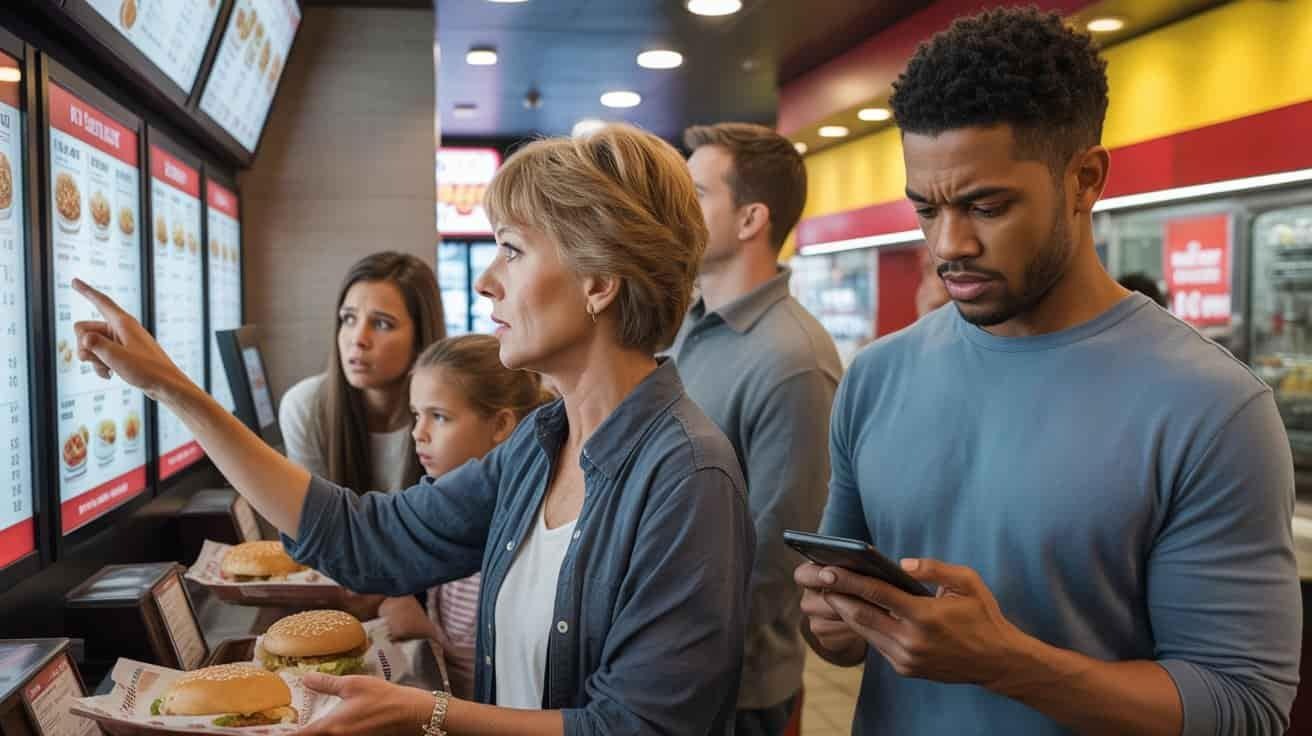
Fast food used to be the easy answer when you didn't want to cook and didn't want to spend much. That deal still exists—but it's under serious pressure. In 2026, millions of Americans are standing at drive-thru windows, looking at prices that have quietly crept up year after year, and asking themselves a question that once felt absurd: is this still worth it?
The short answer is that consumers haven't stopped loving fast food. They've just stopped accepting it on any terms other than their own. Value, transparency, and affordability are no longer nice-to-haves—they're the baseline expectations that determine where people spend their money. More people than ever are checking what's on the menu and what it costs before they even leave the house. And the industry is scrambling to keep up.
The economic pressure on American households didn't appear overnight. Rising rent, childcare costs, grocery inflation, and economic uncertainty have stretched budgets thin—especially for lower- and middle-income earners. When discretionary spending gets squeezed, restaurant spending is one of the first things to go.
Fast food, which built its entire identity on being the affordable option, suddenly finds itself in a difficult position. A combo meal at a major chain can now run close to $15 in many markets. The perceived value gap—what customers feel they're getting versus what they're paying—has widened considerably, and consumers are responding by visiting less frequently or switching to cheaper alternatives entirely.
According to restaurant industry research, a meaningful portion of American consumers who plan to cut back on dining out intend to reduce both how often they go and how much they spend per visit. Rather than switching chains entirely, most prefer to trade down within their usual restaurant—using more promotions, skipping add-ons, or choosing cheaper menu items.
The industry's response has been swift and loud. Value is the word of the year across virtually every major fast food chain in 2026, and the meal deals being rolled out are more aggressive than anything seen in years.
Wendy's launched new $4, $6, and $8 value menus, letting customers mix and match their meal. KFC introduced a $5 offering. Arby's brought out a Meat & 3 value box for under $8. McDonald's re-introduced Extra Value Meals and doubled down on making franchisees accountable for pricing that keeps customers coming back.
This isn't charity from fast food brands—it's a survival strategy. When consumers began spending more carefully, chains like Chili's and Applebee's moved aggressively into the $10–$12 price point, suddenly competing directly with fast food for the same budget-conscious customer. That competitive shift changed the landscape entirely and forced quick-service brands to rethink their pricing from the ground up.
It's important to understand that what people want in 2026 isn't the cheapest food possible. What they want is food that feels worth it. There's a significant difference. A $7 meal that's filling, tasty, and consistent will win over a $5 meal that leaves someone hungry and disappointed every time.
McKinsey research from late 2025 found that poor quality and small portions were the top factors keeping consumers away from fast food restaurants—not just price alone. This is why smart chains aren't simply discounting. They're bundling, improving quality signals, and making sure the core menu items that represent everyday value are consistently excellent.
For a large segment of working Americans—commuters, shift workers, parents managing hectic schedules—fast food isn't a treat. It's routine. And for a routine, affordability needs to be sustainable, not just a one-time promotional gimmick.
One of the clearest signs of the value shift is what's happening at breakfast. Morning meals have become one of the most competitive and price-sensitive categories in the entire fast food market in 2026.
Why breakfast? Because it's the meal most tightly tied to daily routine. A commuter who grabs a breakfast sandwich every workday is making a spending decision five times a week. If that item creeps even a dollar or two above what feels reasonable, it quietly gets replaced—by a gas station coffee and a granola bar, or by something made at home.
Chains have recognized this and responded by keeping breakfast staples accessible. Classic egg sandwiches, simple combos, and coffee deals have become anchor promotions designed to lock in habit and frequency. Getting someone in the door for a $3 breakfast can translate to a higher-ticket lunch or dinner visit later in the week.
Something unusual is happening in the restaurant space that wouldn't have been imaginable five years ago: casual dining and fast food are now competing for the same customer at the same price point.
Chili's, which executed one of the most talked-about restaurant turnarounds in recent memory, leaned hard into a $10 value positioning and saw same-store sales growth that left most of the industry stunned. Applebee's followed with bundled deals, ending a years-long streak of declining sales. These full-service brands—with servers, sit-down dining, and broader menus—are now price-competitive with McDonald's and Taco Bell.
That's the new reality. It's no longer enough for fast food to be cheaper than a sit-down restaurant. It has to justify itself against every other option a consumer has, including cooking at home, grabbing a grocery store meal deal, or stopping at a convenience store. Consumers are making these comparisons more actively than ever before.
The brands winning in 2026 aren't just slashing prices—they're building what industry analysts call "holistic value." That means the right price, the right portion, a consistent product, and a frictionless experience.
McDonald's "Better Burger Initiative" is one example: improving ingredient quality and preparation standards as a complement to value pricing. The idea is that a customer who feels genuinely satisfied with a $6 meal is more valuable long-term than one who feels underwhelmed by a $4 meal. Shake Shack took a different route, running campaigns centered on transparency and cooking quality to justify its pricing and build loyalty through trust.
Loyalty apps and digital rewards programs have also become critical tools. Exclusive app deals, personalized offers, and points-based rewards help chains retain budget-conscious customers without publicly discounting across the board. The consumer gets savings; the brand avoids eroding its price positioning.
One behavioral shift that's directly tied to the value movement is the explosion of pre-visit menu research. Before heading out, a growing number of American consumers check menus, prices, and deals online first. Nobody wants to arrive at a counter, look at prices, and feel surprised or disappointed.
For chains known for bold, flavor-forward food at accessible price points, the value proposition is central to their appeal. Dave's Hot Chicken is a strong example: a brand that has grown from a $900 parking lot pop-up to a $1 billion national chain by delivering a genuinely exciting experience at prices that don't feel punishing. You can explore their full pricing and options through the Dave's Hot Chicken menu guide, which reflects exactly the kind of fast food that resonates when consumers are looking for both quality and value.
What Younger Consumers Are Actually Looking For
Gen Z and millennial consumers are navigating this value landscape a little differently than older generations. They're more likely to research before spending, more influenced by social media and peer reviews, and more focused on whether a dining experience feels worth sharing—not just worth eating.
But even for these younger, more trend-driven consumers, price sensitivity is real in 2026. With student loan pressures and a challenging entry-level job market, discretionary spending decisions are made carefully. A viral Dave's Hot Chicken spice challenge might bring someone through the door once—but value keeps them coming back weekly.
What younger consumers don't want is to feel like they're compromising. The most successful brands are threading this needle by making affordable meals feel genuinely premium—better ingredients, more interesting flavors, cleaner packaging, and an experience that photographs well without charging extra for it.
The Road Ahead: Value Will Define the Winners
The fast food brands that thrive through the rest of 2026 and beyond will be the ones that understand a fundamental truth: consumers are not asking for less. They're asking for more—more transparency, more quality, more reason to feel good about what they're spending.
Value doesn't mean cheap. It means fair. It means a meal that leaves someone satisfied, not just full. It means prices that feel honest. And increasingly, it means an experience that makes it easy to come back tomorrow.
The brands leaning into this—through smart pricing, loyalty programs, quality signals, and accessible menus—are already pulling ahead. The ones treating value as a temporary promotional strategy are learning, one empty drive-thru at a time, that American consumers in 2026 have more options than ever and are using all of them.