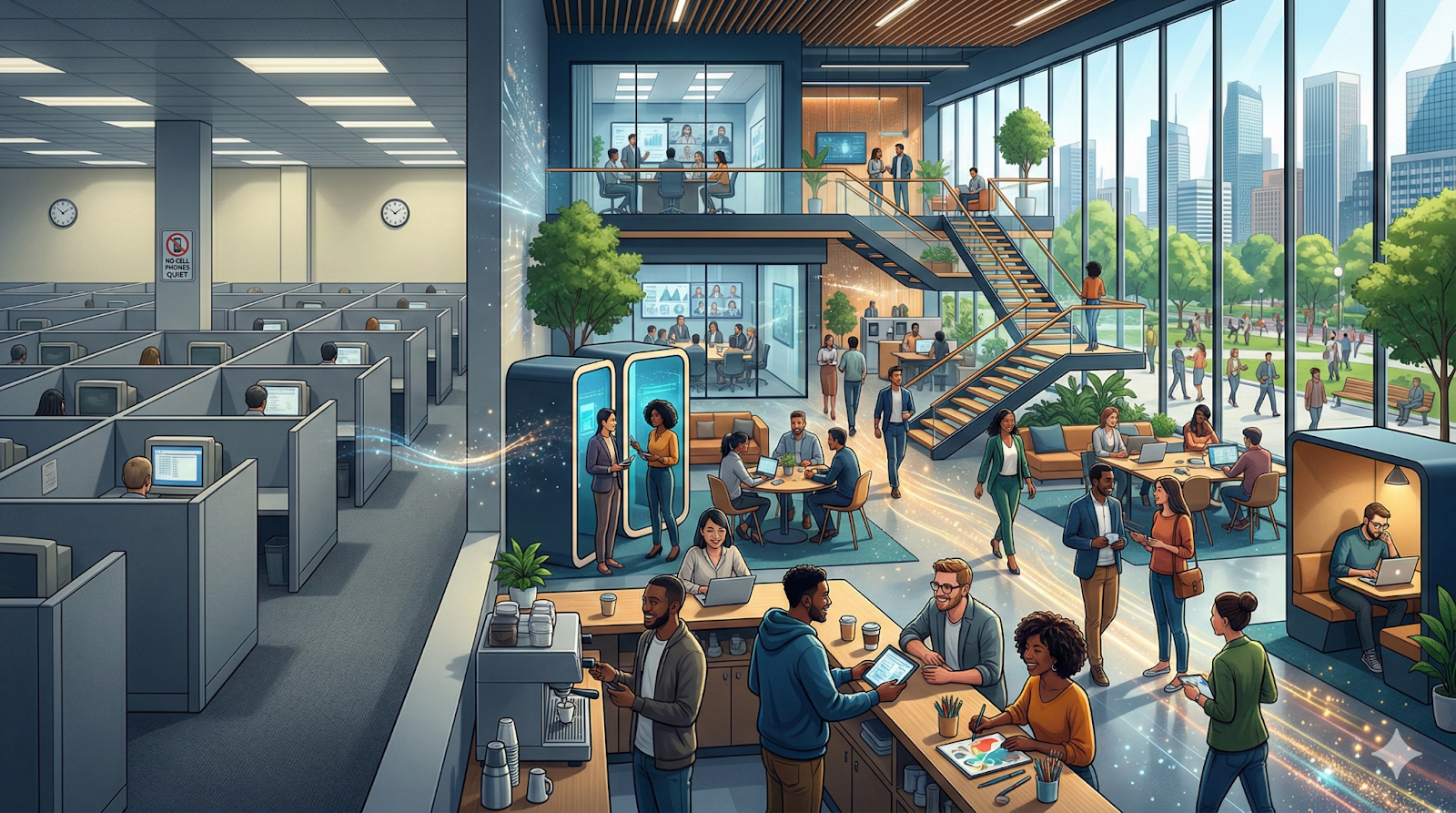
Traditional offices often felt like sterile boxes where ideas went to die in quiet cubicles. The rigid walls kept departments separated and restricted the natural flow of energy that drives progress. People spent years looking at the same grey partitions without ever meeting someone new.
Those closed doors created a ceiling on creativity that many professionals eventually found unbearable. The modern workforce needs more than just a place to sit and stare at a screen for eight hours. Movement and social friction are now the primary drivers of professional satisfaction.
Transitioning into a high energy coworking space changes the entire trajectory of a career. These shared environments replace isolation with a vibrant community of thinkers who push boundaries every single day. Growth happens faster when the surrounding culture values collaboration over lonely competition and silence.
Innovation rarely happens in a vacuum where everyone thinks exactly the same way. When a graphic designer sits next to a software engineer or a data analyst, the resulting conversations often lead to breakthroughs that neither could have achieved alone. It is about the magic of proximity.
These random encounters break down the walls of niche industries and encourage a broader perspective on problem solving. Someone might mention a struggle with user interfaces while grabbing coffee and find the perfect solution from a stranger. This type of cross pollination is the engine of modern business growth.
Success in this environment relies on a willingness to engage with the unknown and embrace the friction of different ideas. Instead of staying stuck in a familiar bubble, companies find themselves evolving through constant exposure to new methodologies. The physical layout makes these vital connections nearly impossible to avoid.
Scaling a business used to require a massive upfront investment in hardware and long-term real estate contracts. Modern shared offices remove those barriers by providing high-grade technology as a standard feature. Small teams can now access tools that were once reserved for global corporations with huge budgets.
Reliable fiber optic internet and soundproof meeting rooms allow a two-person startup to project an image of total professional stability. There is no need to worry about fixing the printer or managing utility bills when those details are handled by expert staff. This freedom lets leaders focus on strategy.
Access to private pods and sophisticated conference technology ensures that every pitch deck looks as impressive as possible. It creates a level playing field where the quality of the idea matters more than the size of the bank account. Infrastructure is no longer a hurdle but a competitive advantage for all.
Working from home sounds ideal until the distractions of domestic life begin to erode productivity and focus. The psychological boundary between rest and work often disappears when the kitchen table becomes the desk. Without a clear physical separation, the mind struggles to fully engage in high-stakes professional tasks.
Entering a dedicated professional environment signals to the brain that it is time to perform at a higher level. The surrounding collective focus acts as a powerful motivator that keeps individuals on track during difficult projects. There is a specific kind of energy that comes from seeing others work hard.
This third space offers the perfect balance between the rigidity of a corporate office and the chaos of a living room. It provides a structured atmosphere that reduces burnout by allowing people to truly leave work behind at the end of the day. Mental clarity becomes much easier to maintain.
High-level networking has moved away from stiff boardrooms and formal cocktail hours toward more organic interactions. Some of the most significant seed funding rounds begin with a simple question about a shared charging cable or a recommendation for lunch. These low-pressure moments build genuine trust between founders.
Investors are increasingly looking for companies that are immersed in active hubs of activity and talent. Being present in the right room at the right time is often the difference between a struggling project and a funded venture. Casual proximity provides a constant stream of opportunities for high-stakes introductions.
Strategic partnerships form when diverse professionals realize their goals align while waiting for the elevator or sharing a snack. The lack of formality encourages a faster exchange of ideas and resources that would take months through official channels. These environments turn everyday social habits into serious business development tools.
Future career success depends on more than just technical skills or a quiet place to type on a laptop. It requires being part of a larger ecosystem that provides constant inspiration and support. The value of a workspace is now measured by the quality of the network it contains.
Moving beyond the traditional desk means embracing a lifestyle where professional growth is a communal experience. The silos of the past are disappearing in favor of dynamic spaces that prioritize human connection and rapid innovation. Those who adapt to this shift will find themselves ahead of the curve.
Investing in the right environment is the most direct path to sustainable progress in a competitive global market. A desk is just a surface, but a community is a catalyst for greatness. True success happens when the walls come down and the real work of collaboration begins for everyone.