
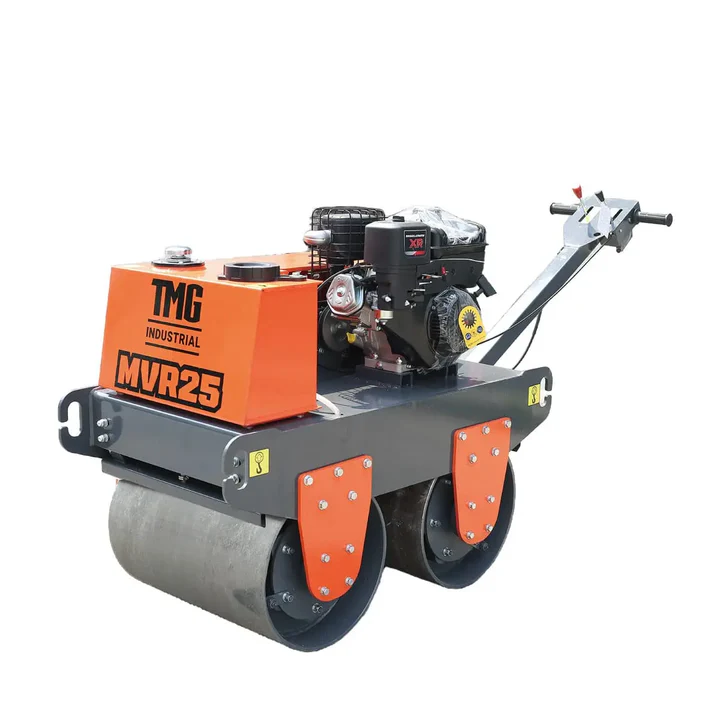
In the daily operations of warehouses, logistics centers, and industrial facilities, the stability and evenness of ground surfaces—whether gravel, asphalt, or compacted soil—are critical for safety and efficiency. Uneven or poorly compacted areas lead to water pooling, potholes, and unstable footing for forklifts and heavy trucks. While large rideon rollers are effective for major projects, they are often impractical for smaller, confined areas such as loading docks, pathways, or utility trenches. The 10 HP double wheel vibratory roller offers a compact, maneuverable solution that delivers professional compaction results in tight spaces. This article examines its technical features, safety considerations, and operational benefits for Canadian industrial environments.
An example of this equipment category can be referenced here:
· Yard and parking lot maintenance – recompacting gravel after grading, repairing potholes, or preparing base for new pavement.
· Utility trench backfill – achieving specified density in trenches for water, gas, or electrical lines.
· Sidewalk and pathway installation – compacting soil or granular base for pedestrian walkways and cycle paths.
· Landscaping and erosion control – stabilizing slopes, embankments, and retaining wall backfill.
· Foundation preparation – compacting subbase for small buildings, equipment pads, or light poles.
Inadequate compaction leads to settlement, rutting, and surface failure, which create tripping hazards, accelerate vehicle wear, and increase maintenance costs. For logistics operations, uneven surfaces can damage forklift tires, disrupt load stability, and cause spills. A vibratory roller like the 10 HP model allows one operator to achieve required density quickly, often in a few passes. The walkbehind design provides excellent visibility of the compaction area and allows precise control near edges and obstacles. Moreover, uniform compaction improves drainage, reducing standing water and ice formation in winter—a critical safety factor in Canadian climates. By completing compaction tasks efficiently, facilities can minimize downtime and extend the lifespan of paved and unpaved surfaces.
The roller is powered by a 10horsepower gasoline engine, compliant with EPA emissions standards for clean operation. The engine drives a hydrostatic transmission, providing smooth, variable speed control forward and reverse. This allows the operator to match travel speed to material type and compaction requirements, ensuring optimal results.
The machine features two drums, each 24 inches wide and 17 inches in diameter. Both drums are equipped with vibration, delivering a dynamic force that effectively densifies granular soils, asphalt, and base materials. The dualdrum design ensures uniform compaction across the entire width, reducing the number of passes needed. The vibration system can be engaged or disengaged independently, allowing static operation when working near sensitive structures.
The walkbehind design includes an adjustable handlebar with intuitive controls for speed, direction, and vibration. An emergency stop bar ensures immediate shutdown if needed. The roller’s low center of gravity and wide drums provide stability, while the water sprinkler system (optional) prevents asphalt from sticking during hot weather.
· Material type and moisture content – optimal compaction requires the right moisture level; too dry or too wet reduces effectiveness.
· Lift thickness – the layer being compacted should not exceed the roller’s capability (typically 48 inches for this class).
· Number of passes – multiple passes may be needed to achieve target density; operator experience is key.
· Vibration settings – using vibration on thin asphalt overlays can cause cracking; static mode should be selected.
· Maintenance of drums and engine – worn scraper bars, low oil, or dirty air filters reduce performance and can lead to breakdowns.
Before each shift, inspect the roller for fluid leaks, tire pressure (if applicable), and drum condition. Ensure all guards and emergency stops are functional. Clear the work area of debris, large rocks, and personnel. When operating on slopes, travel up and down rather than across to prevent tipping. Engage vibration only when the roller is moving to avoid damaging the surface. Always maintain a safe distance from edges and excavations. Use hearing protection due to noise levels. After use, park on level ground, engage the parking brake, and remove the key.
· Rideon rollers (e.g., 13.5 HP models) – higher productivity but larger and heavier; require transport; less maneuverable in tight spaces.
· Vibratory plate compactors – lower cost, but require more passes and operator fatigue; suitable for very small areas.
· Towed rollers – need a tractor or skid steer; less precise for confined work.
· 10 HP double wheel vibratory roller – balances portability, compaction force, and precision; ideal for mediumsized jobs and confined areas.
Water tank and sprinkler system for asphalt work, transport wheels for easy sitetosite movement, and edge guides for working close to walls. Some models offer interchangeable drums for different applications.
· Maneuverability – narrow width and walkbehind design allow access to tight spaces.
· Effective compaction – dual drums with vibration achieve high density in fewer passes.
· Operator visibility – walkbehind position provides clear view of drums and working edge.
· Emissions compliance – EPAcertified engine suitable for indoor and outdoor use.
· Physical demand – operator must walk behind the machine, which can be tiring over long shifts.
· Lower productivity than rideon rollers – not ideal for large, open areas.
· Transport – requires a trailer or truck for moving between distant sites.
A distribution centre in Edmonton, Alberta, needed to install new underground power lines to support expanded refrigeration units. After excavation, the trenches required backfill compaction to prevent future settlement. The facility rented a 10 HP double wheel vibratory roller for the job. The operator was able to work in the narrow trenches (only 30 inches wide) with ease, achieving 95 percent compaction in four passes. The project was completed in two days—half the time estimated using a plate compactor. The facility manager reported no settlement issues during the following year, and the roller’s maneuverability allowed it to navigate around existing building foundations and catch basins without difficulty.
For broader land management and equipment solutions, industrial suppliers such as: TMG 10 HP Double Wheel Vibratory Roller, 2 x 24" Wide & 17" Diameter Rollers, EPA Emissions Compliance TMG-MVR25 for reliable options.
The 10 HP double wheel vibratory roller is a versatile and effective tool for maintaining and preparing surfaces in industrial environments. For Canadian warehouse managers, equipment operators, and logistics professionals, it offers a safe, efficient means to achieve proper compaction in confined spaces, enhancing site safety and reducing longterm maintenance costs. As technology evolves, we can anticipate electric or hybrid walkbehind rollers that reduce emissions and noise, as well as telematics for remote monitoring of machine hours and service intervals. Investing in such equipment aligns with a proactive approach to facility management, ensuring that surfaces remain stable, safe, and ready for heavy use.











