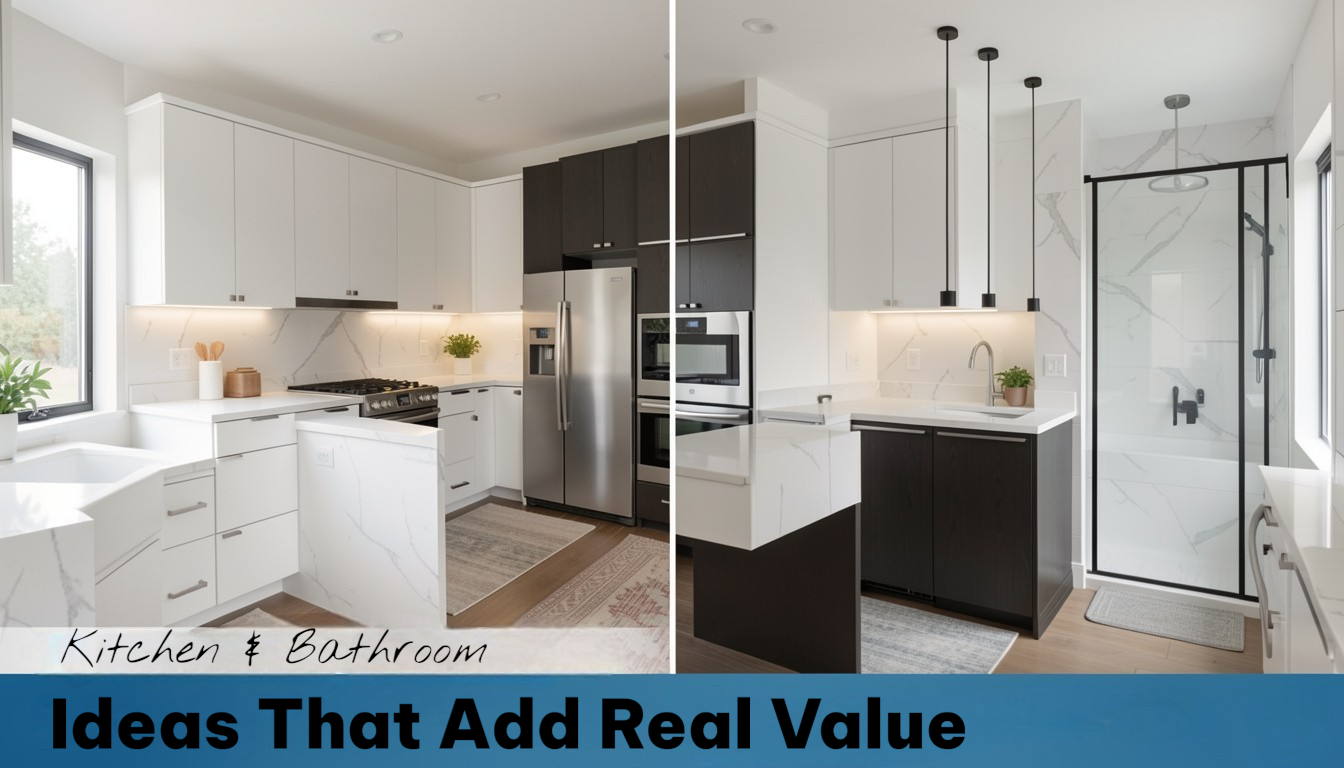
Kitchen and bathroom renovations consistently rank among the most value-enhancing upgrades in residential real estate. In competitive housing markets—from urban condos to suburban single-family homes—buyers scrutinize these two spaces more than any others. A well-executed makeover does more than modernize aesthetics; it strengthens functionality, improves durability, and elevates perceived property worth.
The most impactful upgrades balance design sophistication with long-term performance. Below are strategic, high-return ideas that align modern trends with measurable value creation.
Surface materials define both visual identity and long-term resilience. In kitchens and bathrooms, flooring and wall finishes must withstand moisture, heat, and frequent use without compromising design cohesion.
Porcelain and ceramic tiles remain top-tier choices due to low porosity, scratch resistance, and structural stability. Large-format tiles create a seamless look that visually expands smaller rooms, while textured finishes enhance slip resistance in wet areas.
For property owners evaluating finishes and specifications, many now choose to buy ceramic tiles online from Mineral Tiles to compare collections by size, tone, and technical rating before finalizing a renovation plan. Reviewing factors such as water absorption, PEI ratings, and finish durability ensures the selected tile supports long-term performance rather than just short-term visual appeal. This approach aligns material selection with both design intent and investment protection.
Wall applications—backsplashes, shower surrounds, and feature walls—add architectural depth. Extending tile vertically reduces painted surfaces in moisture-prone zones and creates a cohesive, high-end finish.
In kitchens, textured surfaces introduce dimension without overwhelming the space. In bathrooms, floor-to-ceiling tiling enhances spa-like continuity while increasing water resistance.
Modern kitchens add value when form and function operate in sync. Buyers respond to spaces that feel intentional, organized, and adaptable.
A backsplash is no longer a secondary detail. It functions as a focal point that anchors cabinetry and countertops. Handcrafted finishes such as zellige backsplash tile introduce subtle tonal variation and artisanal texture while maintaining a clean, modern aesthetic. The interplay of light across glazed surfaces adds visual depth without requiring bold color palettes, making it suitable for both contemporary and transitional homes.
High-impact upgrades include:
Improving workflow through strategic storage enhances daily usability—an intangible but highly valued benefit during resale evaluations.
Layered lighting transforms perception. Under-cabinet LEDs improve task visibility, pendant fixtures define island zones, and recessed ceiling lights create uniform illumination. Smart lighting systems further enhance appeal in tech-forward markets.
Bathrooms that reflect modern wellness trends deliver strong returns. Buyers increasingly associate luxury with comfort, minimalism, and spa-inspired features.
Frameless glass enclosures, linear drains, and large-format wall tiles create a seamless visual flow. Curbless showers not only support accessibility but also contribute to contemporary aesthetics.
Material consistency between floors and walls amplifies spatial perception. Neutral palettes—soft greys, warm whites, and muted earth tones—provide longevity beyond trend cycles.
Freestanding soaking tubs serve as visual anchors in larger bathrooms. When paired with textured tile backdrops, they elevate design impact without requiring extensive structural changes.
For a deeper architectural perspective on layout strategy, spatial zoning, and finish coordination, homeowners can check the guide on how to design a luxury bathroom to understand how high-end detailing integrates with practical planning. Insights into lighting placement, material transitions, and proportional balance help prevent costly design missteps during renovation.
Matte black, brushed brass, and warm nickel finishes dominate current fixture trends. Beyond aesthetics, water-efficient faucets and dual-flush toilets reduce long-term operating costs, increasing buyer appeal.
Not every renovation requires a structural overhaul. Targeted, high-impact updates frequently deliver the strongest returns.
Replacing cabinet fronts or updating hardware provides a modernized look at a fraction of full replacement cost. Soft-close hinges and streamlined pulls contribute to perceived quality.
Timeless palettes outperform trend-heavy designs in resale markets. Layering neutral tones through tile, cabinetry, and stone surfaces creates cohesion while allowing buyers to personalize décor.
Value-enhancing additions include:
These upgrades position the property as future-ready without overwhelming the design narrative.
Modern kitchen and bathroom makeovers generate measurable property value when grounded in durability, functionality, and timeless design. High-performance tile surfaces protect structural integrity while elevating aesthetics. Statement backsplashes and curated textures add character without compromising longevity. Wellness-inspired bathroom features align with evolving lifestyle expectations.
Ultimately, renovations that combine material resilience, design cohesion, and strategic modernization deliver the strongest long-term return. In competitive real estate environments, thoughtful upgrades to kitchens and bathrooms remain one of the most reliable pathways to sustained property appreciation.