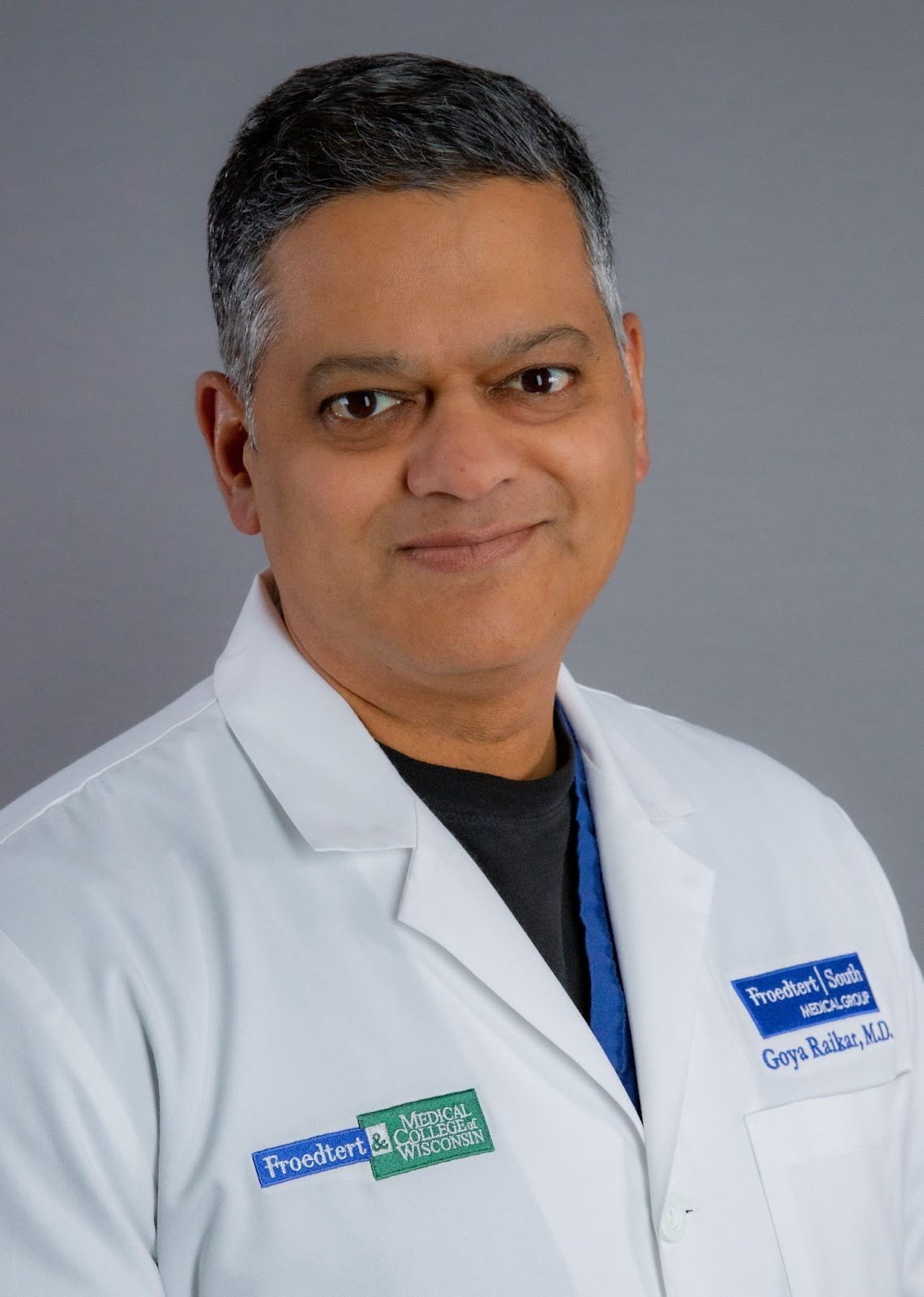
Goya V. Raikar wakes before most of America sees daylight. By 4:30 a.m., the cardiothoracic surgeon is already making rounds, preparing for cases that demand the kind of precision and concentration most professionals spread across an entire day. His schedule often stretches past 6 p.m., filled with complex surgeries, lectures and patient consultations.
It is a pace that would exhaust many. For Dr. Raikar, it is simply the nature of the work.
“It is a calling, not a job,” he said when asked what advice he gives new residents. “It is a marathon, not a sprint, especially in surgery.”
That philosophy has carried the nationally respected surgeon through more than two decades of advancing minimally invasive and robotic cardiac techniques. He is widely credited with performing the first robotic-assisted mitral valve repair in the Minneapolis–St. Paul region, a breakthrough that helped demonstrate complex heart valve surgery could be performed through small incisions using robotic instruments rather than opening the chest.
In practical terms, the procedure allows surgeons to repair a failing heart valve with greater precision while sparing patients the trauma of traditional open-heart surgery. For patients, that often means less pain, shorter hospital stays and a faster return to normal life.
Now serving as chief cardiac surgeon at Froedtert South in Pleasant Prairie, Wisconsin, Dr. Raikar is building a Robotic Mitral Valve Repair Program that is drawing attention well beyond the Midwest. He is also leading procedures many surgeons still consider impractical, or even impossible, to perform robotically, from complex valve repairs to coronary bypass operations.
His surgical expertise spans robotic mitral valve repair, coronary artery bypass grafting, adult congenital heart defect repair, cardiac tumor removal and arrhythmia surgery. Trained at Mayo Clinic and the University of Wisconsin Hospital, Raikar has held leadership and academic appointments at major health systems across the country and previously served as president of the Minnesota Society of Thoracic Surgery.
Yet what distinguishes Dr. Raikar is not simply the institutions on his résumé or the titles he has held.
It is his willingness to attempt what others dismiss, and to do so with the discipline, preparation and patient-first mindset that have defined his career.
One of the most persistent misconceptions about robotic cardiac surgery, Raikar said, is that complex procedures cannot be performed safely or effectively with robotic assistance.
“Most complex surgeries can be done with a robot,” he said, pushing back against a belief that has slowed adoption across the field.
He has spent years proving that point.
In 2005 and 2006, while working at Mayo Clinic, Dr. Raikar performed a series of early robotic cardiac cases involving valves and coronary procedures. That work culminated in the first robotic-assisted heart surgery in Minnesota, at a time when many surgeons remained skeptical that robotic systems could replicate the dexterity required for delicate cardiac repair.
Since then, his experience has expanded across a wide range of procedures, including robotic mitral valve repair, coronary artery bypass grafting, adult congenital heart defect repair, cardiac tumor removal, and arrhythmia surgery. He has also served as a national proctor for atrial fibrillation and robotic cardiac procedures, training surgical teams across the country.
During his time at West Virginia University, where he held an appointment as assistant professor and surgeon, Raikar was part of the team that performed what is believed to be the world’s first TAVAR explant, a highly complex operation combining bypass surgery with valve replacement.
The groundwork for that innovation, he noted, was laid years earlier through his robotic work at Froedtert South.
Now back at Froedtert South as chief cardiac surgeon, Raikar is focused on expanding access to robotic mitral valve repair, a procedure that offers patients dramatically faster recovery than traditional open-heart surgery. Smaller incisions, reduced pain, shorter hospital stays, and quicker returns to daily life have made the approach increasingly attractive when performed by experienced teams.
Dr. Goya Raikar’s path into cardiac surgery was shaped early. He grew up in a medical family in small-town Nebraska, where his father practiced medicine and surgery.
“As a family of immigrants, we value hard work and the promise of America,” he said, reflecting on how his upbringing as a second-generation American shaped his work ethic.
His professional philosophy, however, was forged at Mayo Clinic.
Raikar trained under Dr. Paillero, at one time the busiest thoracic surgeon in the country, known for managing high volumes of complex aortic and lung cases. As the junior resident on that service, Raikar learned how to handle intensity without compromising precision.
He also trained under Dr. Schaff, the longtime lead cardiovascular surgeon at Mayo.
“Technically the most gifted heart surgeon I have been around,” Raikar said. “From a research and intellectual standpoint, one of the smartest people I have encountered in cardiac surgery.”
Beyond technical mastery, Mayo instilled a system-wide way of thinking about care.
“It was the first group practice in the country,” Raikar said. “Everything is geared around making sure patients get the best surgical care in an efficient manner. That is how I was educated, and I still think that way.”
That patient-first philosophy continues to shape how Raikar defines success.
“I look at success through the patient’s eyes, one patient at a time,” he said.
Before high-risk or complex surgeries, he focuses as much on preparation as performance, ensuring equipment readiness, logistical clarity, and team alignment.
“I make sure everyone is comfortable,” he said. “We take a moment of quiet before the case starts.”
Robotic surgery has followed different adoption curves in thoracic and cardiac disciplines, and Raikar has worked at the forefront of both.
“Thoracic surgery is already established,” he said. “Robotic lung resection and esophageal surgery are now the preferred methods. That debate is over.”
Cardiac surgery, he said, is rapidly catching up.
What began as experimental work in the mid-2000s is now entering a period of accelerated adoption. Raikar expects the next five to 10 years to be transformative, with robotic techniques becoming standard for procedures that currently require open-heart surgery.
He is actively shaping that transition.
Raikar serves as a principal investigator on multiple clinical trials involving valve replacement, heart failure, and arrhythmia treatment. His research has appeared in peer-reviewed journals and surgical textbooks, and he sits on the editorial board of The Heart Surgery Forum.
At an upcoming Society of Thoracic Surgeons national conference, Raikar and his colleagues will present findings from what they describe as the largest robotic valve series in the world. His former surgical partner is slated to become lead surgeon for the North American organization, and the team is collaborating on the development of next-generation equipment for da Vinci surgical systems.
Asked what career he might have pursued if not surgery, Raikar paused.
“I don’t know what else I would do,” he said.
His life, by his own admission, is consumed by cardiac and thoracic surgery.
“I live, eat, and breathe it,” he said. “I don’t have great balance, but when I am away, I play hard, hiking and goofing around with my boys.”
That intensity, he believes, is inseparable from excellence.
“It’s a combination of technical skill, mental acuity, and a core belief that we have to do the best for our patient,” he said.
Raikar is equally committed to mentorship. At West Virginia University, he trained residents, fellows, and visiting surgeons. At Froedtert South, he continues to emphasize not only technique, but the mindset required to sustain innovation without compromising care.
His achievements, he insists, are collective.
“Accomplishments go along with teams,” he said.
From Minnesota’s first robotic heart surgery to the world’s first TAVAR explant, Raikar frames milestones as the product of coordinated, disciplined teams aligned around patient outcomes.
As robotic cardiac surgery moves from frontier to foundation, surgeons like Raikar are helping define what modern cardiac care will look like. His work building a comprehensive Robotic Mitral Valve Repair Program reflects the institutional commitment required to turn innovation into standard practice.
For Raikar, the 4:30 a.m. alarm is not a sacrifice. It is simply what the calling requires. And for patients, that dedication has opened doors to outcomes that were unimaginable just two decades ago.
It’s all about the visual in today’s digital age. As a content creator, marketer or artist, it’s absolutely crucial for you to have stunning images that stand out. The future of creating visuals is here. Live3D AI Image Generator uses the power of artificial intelligence to transform your imagination into reality! At a click of a button, Live3D lets you create beautiful 2.5D avatars at an instant and get them animated in a heartbeat!
For those in need of a little help growing their social presence, advertising or personal projects, this AI tool is your new best friend. Users don’t even have to be skilled designers to create impressive graphics - the Live3D AI Image Generator does it for them.
What is Live3D AI Image Generator?
The ai picture generator is also an advanced artificial intelligence machine created with the capability to transform text strip into an intricate high resolution image. Live3D - About Unlike other graphic design tools which might be difficult to work with but produce excellent results; Live3D helps even the beginner make photorealistic animations!
Live3D uses deep learning models and neural network to understanding natural language commands, and then imagine an image with great accuracy. Whether you are looking for surreal landscapes, way out alien worlds or refreshing takes on classic portraiture shots, ai image generator provider will be able to produce it.
The tool is also multipurpose and can be used for a number of applications.
How Live3D AI Image Generator Works
It also easy to use Live3D. The platform is built on a text-to-image generation system, where you enter some sort of written description, and an AI interprets the language to generate visuals. Here’s how it works in detail:
The system can not be fooled as it does not produce repeating or generic visuals.
Why You Should Choose Live3D AI Image Generator?
Here are some of the reasons why creatives and marketers all over are turning to Live3D:
Unlimited Creative Possibilities
You can do anything with the ai image generator. From photo realistic portraits to the realm fantastical scenarios, Live3D is capable to create a great number of different images. This versatility makes it great for content creators who want a variety of images possible without needing to spend hours of designing.
Time and Cost Efficiency
Design may also be costly and time consuming, using licensed software, stock images or a professional artist. Live3D overcomes these challenges by enabling users to create images in real time for just a fraction of the cost.
High-Quality Outputs
Leveraging powerful AI algorithms, it is able to create high quality visuals with fine content details and realistic textures including fur, fabric, and hair. Whether it’s on the web, in print, or part of a digital campaign your final product fits right in with the professionals.
User-Friendly Interface
Anyone can create Live3D easily, even beginners. It is built to be intuitive, featuring an uncluttered interface that walks users through the construction process. The learning curve isn’t exactly steep, and whether you’re a hobbyist maker or an experienced marketer, it was easy to use.
Amplify Your Content and Social Campaigns
With fast custom visual creation, Live3D enables creators to enrich social media content, marketing assets and blog posts. Studies have shown that if you’re sharing visual content, people will be more likely to see, click on and share your post—great for your campaigns.
Live3D AI Image Generator Use Cases
It has a wide range of applications and can be used in different areas.
Social Media Marketing
Now that attention spans have gotten shorter, good-looking posts have become more and more important to the audience. With the ai image generator, marketing professionals can easily create unique images adjusted to each social media platform - be it Instagram, Facebook, TikTok or LinkedIn.
Content Creation
Live3D can be used for thumbnails, illustrations and even storyboards for bloggers, YouTubers and digital storytellers. This eliminates the reliance on stock images creating content with a personal touch.
Game and Animation Design
Game developers and animators will be able to produce assets, characters, and environments more quickly. The AI tool is designed to let people tinker with various styles, so they can see what cool stuff will look like before they start producing it.
Personal Art and Gifts
Artists or fans can create their very own individual pieces for personal use and/or gifting. Live3D’s versatility means that no two designs are the same and each model is designed specifically to personal taste.
Live3D AI Image Generator Highlights
Live3D comes with some notable features that makes it a must-have for individuals who require AI-generated images such as:
Tips for Creating Better Images
To make the most of the ai image generator, here is what you should do:
About Our Website
A Language Model at Your Service. Hold whatever you imagine and describe it with a prompt to the Live3D AI Image Generator, which converts your ideas into images in real time. So, start enhancing your content and social campaigns with creative AI art now! For work marketing, personal projects, or creative ventures – we’ve got an image to fit your needs.
Conclusion
Revolutionizing the creation of imagery, the Live3D AI Image Generator comes with a game-changing approach. With a user-friendly interface, high-quality results, and infinite creative potential, it is a must-have for marketers, content creators and artists. Looking to save time, cut straight to the chase and easily generate your own image ideas using our powerful ai image generator.
No matter whether you are designing social media campaigns, digital content, or personal decorations, Live3D will make your visual works stand out with its unique and professional touch. Begin exploring and see what AI can do for your images with the ai image generator now.