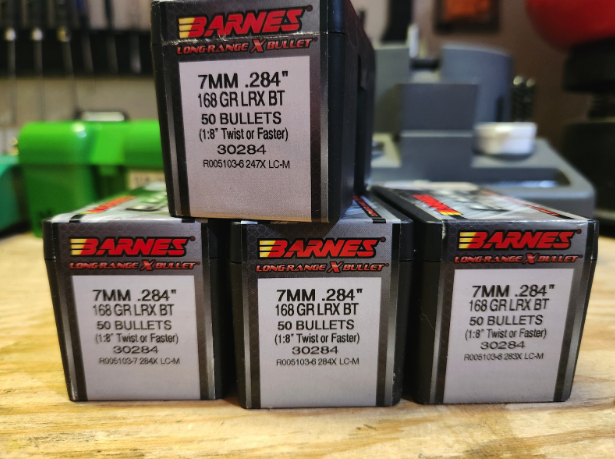
In the pursuit of terminal performance and pinpoint accuracy, the modern hunter and sport shooter eventually arrive at a singular conclusion: all-copper bullets are the future. Barnes Bullets, the pioneers of the monolithic projectile, have revolutionised the industry with their TSX (Triple-Shock X), TTSX (Tipped Triple-Shock), and LRX (Long-Range X) lines.
However, loading lead-free projectiles requires a specific technical approach. At quickload.pro, we specialise in bridging the gap between traditional Barnes reloading data and the advanced computational power of QuickLoad software to help you build the perfect "green" load.
Barnes Reloading Data is a collection of tested ammunition load specifications published by Barnes Bullets for handloaders. It provides recommended powder types, charge weights, bullet weights, cartridge dimensions, and velocities for specific calibres. Reloaders use it as a trusted reference to safely assemble consistent, accurate, and reliable custom ammunition for professional sporting, hunting, and precision shooting applications worldwide.
Barnes Reloading Data works by providing high-pressure "recipes" specifically engineered for solid copper bullets. Because copper is less dense and harder than lead, Barnes bullets are longer for their weight and resist rifling engraving.
The data accounts for these variables by using unique powder charges and recommending a significant "jump" (starting at .050" off the lands) to prevent dangerous start-pressure spikes.
Standard reloading manuals for lead-core bullets do not apply to Barnes projectiles. Because copper is less dense than lead, a 150-grain Barnes bullet is physically longer than a 150-grain lead-core bullet.
To ensure your safety and the longevity of your firearm, always start with verified sources.
The primary print resource for monolithic loading, this manual provides comprehensive tables for everything from the .223 Remington to the heavy Magnums. It is essential for understanding the specific powder preferences of the TSX and TTSX lines.
For the latest high-performance cartridges like the 6.5 PRC, 7mm PRC, and .300 PRC, Barnes maintains a robust online data center. These digital updates are crucial for reloaders using modern, temperature-stable powders like Hodgdon Retumbo or Alliant Reloder 26.
At quickload.pro, we emphasise using QuickLoad to "sanity check" Barnes data. By inputting the specific length of a Barnes LRX bullet, QuickLoad can simulate the exact pressure curve, accounting for the reduced internal volume caused by the longer copper projectile.
Subsonic Reloading Data has a reputation for being "jump sensitive." Unlike lead-core bullets that often like to be seated close to the rifling, Barnes monolithic bullets generally perform best with a significant "jump."
Barnes officially recommends starting their bullets .050" off the lands (rifling).
Using QuickLoad, you can calculate the exact pressure drop associated with these seating depth changes, ensuring that as you move the bullet further out, you stay within the optimal combustion window.
When you combine Barnes reloading data with QuickLoad, you gain a competitive edge in three major areas:
Because copper is harder than lead, the "Shot Start Pressure" in QuickLoad should typically be adjusted slightly higher (around 3,625-4,500 psi) depending on the specific Barnes groove design. This provides a much more accurate velocity prediction.
Barnes bullets rely on velocity for expansion. If your hunting rifle has a short 18" or 20" barrel, QuickLoad can tell you which powder will reach maximum velocity within that short distance, ensuring your TTSX bullet opens up reliably at long distances.
Hunting often happens in extreme cold. QuickLoad allows you to simulate how your Barnes load will behave when the temperature drops from 70°F (where you developed the load) to 10°F on the mountain.
Is Barnes Reloading Data safe to use?
Yes, Barnes Reloading Data is developed using controlled laboratory pressure testing. When reloaders follow the listed loads exactly and do not exceed maximum charges, it helps ensure safe firearm operation and consistent ammunition performance.
Why are Barnes bullets so much longer than lead bullets of the same weight?
Copper is roughly 15% less dense than lead. To achieve the same weight, the bullet must be physically longer. This is why twist rate is so important—longer bullets require faster twists to stabilise.
What is the best Barnes bullet for long-range hunting?
QuickLoad.Pro probide LRX (Long-Range X) is specifically designed with a higher BC (Ballistic Coefficient) and a lower expansion threshold, making it the premier choice for hunters using Barnes data for distances beyond 400 yards.
Who should use Barnes Reloading Data?
Barnes Reloading Data and Subsonic Reloading Data are intended for handloaders, hunters, target shooters, and precision reloaders. Both beginners and experienced reloaders can use it, as long as they follow the instructions carefully and start with minimum loads.
Why should I use Barnes Reloading Data instead of other data?
Barnes Reloading Data is specifically designed for Barnes bullets, which are often solid copper and behave differently from lead bullets. Using this data ensures correct pressure, proper velocity, and optimal performance for Barnes bullet designs.
When working with Barnes reloading data, never skip the starting load. Because copper does not yield as readily as lead, pressure can increase exponentially with very small increases in powder. Always work up in 0.3-grain increments and watch for "smiley faces" (ejector marks) on your brass.
Success with Barnes projectiles is a marriage of high-quality components and precision data. By utilising the official Barnes reloading manual and refining your recipes through the simulations at QuickLoad.Pro, you can create a load that is not only environmentally friendly but also devastatingly accurate.