Most interior projects don’t fail because of lack of ideas, but because ideas stay abstract for too long. Sketches feel distant, mood boards feel fragmented, and the real space keeps waiting. Visual tools have tried to solve this gap for years, yet only recently have they started to feel intuitive. When technology responds directly to a real room, the process becomes less theoretical and more grounded in lived space.
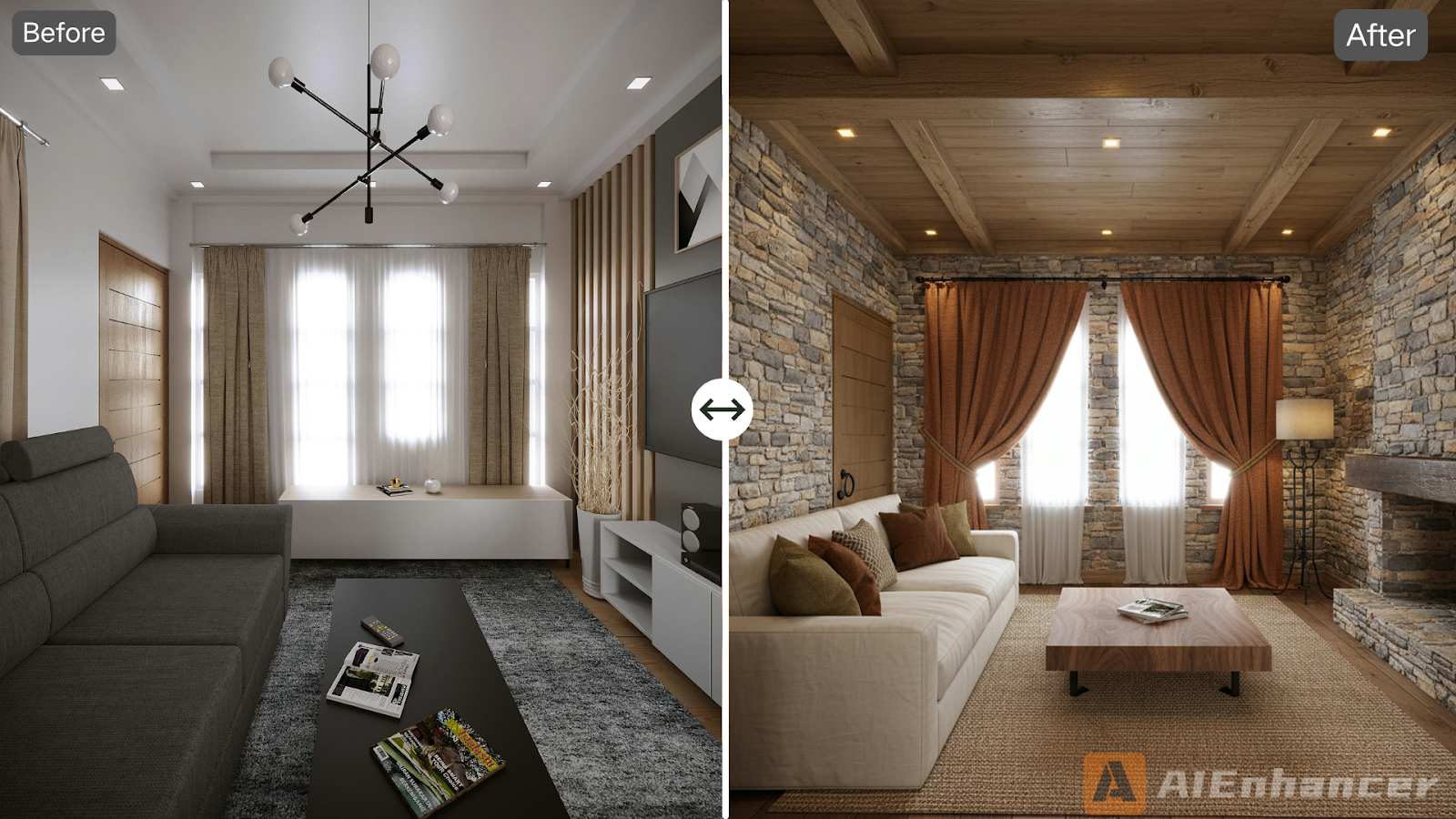
AIEnhancer begins with what already exists. You upload a photo of your actual room, with its lighting quirks and awkward angles intact. From that single image, the system generates multiple stylistic interpretations that respect the original structure. The first meaningful encounter with AI room design often surprises users because nothing feels erased or overly polished; the room still looks like itself, just reimagined.
Traditional design workflows push decisions early, sometimes before the homeowner or designer is ready. AIEnhancer softens that pressure. You can explore ideas without committing to them, letting visual reactions guide the process. AI room design in this sense feels like thinking out loud, visually, with room to hesitate or change direction.
Fast generation doesn’t eliminate thought; it creates space for it. When new concepts appear quickly, users spend less energy waiting and more energy comparing. AI room design becomes a mirror for taste, reflecting preferences that were hard to articulate before seeing them side by side.
Modern interiors rely on proportion more than decoration. AIEnhancer’s Modern style tends to refine rather than replace, adjusting surfaces, furniture presence, and contrast so the room feels deliberate. In these outputs, AI room design behaves like an editor, trimming excess while preserving intent.
Industrial style can easily slip into imitation if textures lack depth. AIEnhancer emphasizes material weight and shadow, allowing concrete, brick, and metal to feel substantial. AI room design here is less about adding elements and more about revealing what the space can already support.
Minimalism often gets mistaken for emptiness. AIEnhancer avoids that trap by using light, spacing, and subtle material variation to keep rooms approachable. AI room design outputs in this style feel quiet, not cold, which makes them easier to imagine living in.
Both Rustic and Scandinavian styles value natural materials, yet they communicate comfort in different ways. AIEnhancer distinguishes them through tone and light handling, not exaggerated decor. AI room design helps users sense these differences intuitively, without needing design vocabulary to explain them.
Bohemian interiors thrive on personality, but they can overwhelm small or irregular rooms. AIEnhancer keeps the architectural framework stable while layering color and texture carefully. AI room design in this context feels exploratory, almost conversational, as if testing boundaries rather than crossing them.
Design decisions often ripple outward. A calm, modern interior might call for a cleaner exterior expression, while a rustic interior suggests warmth beyond the front door. AIEnhancer supports this broader thinking through its approach to house design, allowing users to maintain visual continuity without switching mental modes.
One of the quiet challenges in renovation is keeping multiple rooms aligned. Different inspirations accumulate, and cohesion slips. By generating rooms within the same system, AI room design naturally reinforces a shared visual language, even when each space has its own function.
Every project meets reality eventually. Budgets tighten, furniture stays, walls don’t move. AIEnhancer doesn’t pretend otherwise. Instead, AI room design often highlights which changes feel essential and which are negotiable, making later decisions more focused.
For professional designers, early ideation can consume time without producing clarity. AIEnhancer compresses that phase. AI room design outputs become starting points for discussion, refinement, and client alignment rather than final answers.
Many homeowners struggle not with imagination, but with confidence. Seeing their own room transformed into several styles makes reactions clearer. AI room design helps translate vague instincts into visible preferences, even if the final build happens much later.
In property marketing, potential matters as much as current condition. AI-generated interiors provide a believable future for empty or dated spaces. Here, AI room design supports storytelling, giving viewers something concrete to respond to emotionally.
AIEnhancer doesn’t remove human choice; it shifts where it happens. Taste, restraint, and context still belong to the user. AI room design handles iteration, freeing people to focus on judgment rather than production.
Each generated image teaches something, even when it feels slightly off. Over time, users sharpen their sense of scale, balance, and style. AI room design quietly becomes an educational process, not just a visual one.
High-quality visualization used to demand specialized skills. AIEnhancer lowers that barrier while keeping results sophisticated. AI room design makes experimentation accessible, but it still rewards thoughtful engagement.
Interior design will always involve uncertainty and revision. What AIEnhancer offers is clarity at the right moment—clear options, clear reactions, and clearer next steps. In that space between imagination and execution, AI room design feels less like a shortcut and more like a natural evolution of how we think about rooms we already inhabit.
Most interior projects don’t fail because of lack of ideas, but because ideas stay abstract for too long. Sketches feel distant, mood boards feel fragmented, and the real space keeps waiting. Visual tools have tried to solve this gap for years, yet only recently have they started to feel intuitive. When technology responds directly to a real room, the process becomes less theoretical and more grounded in lived space.
AIEnhancer begins with what already exists. You upload a photo of your actual room, with its lighting quirks and awkward angles intact. From that single image, the system generates multiple stylistic interpretations that respect the original structure. The first meaningful encounter with AI room design often surprises users because nothing feels erased or overly polished; the room still looks like itself, just reimagined.
Traditional design workflows push decisions early, sometimes before the homeowner or designer is ready. AIEnhancer softens that pressure. You can explore ideas without committing to them, letting visual reactions guide the process. AI room design in this sense feels like thinking out loud, visually, with room to hesitate or change direction.
Fast generation doesn’t eliminate thought; it creates space for it. When new concepts appear quickly, users spend less energy waiting and more energy comparing. AI room design becomes a mirror for taste, reflecting preferences that were hard to articulate before seeing them side by side.
Modern interiors rely on proportion more than decoration. AIEnhancer’s Modern style tends to refine rather than replace, adjusting surfaces, furniture presence, and contrast so the room feels deliberate. In these outputs, AI room design behaves like an editor, trimming excess while preserving intent.
Industrial style can easily slip into imitation if textures lack depth. AIEnhancer emphasizes material weight and shadow, allowing concrete, brick, and metal to feel substantial. AI room design here is less about adding elements and more about revealing what the space can already support.
Minimalism often gets mistaken for emptiness. AIEnhancer avoids that trap by using light, spacing, and subtle material variation to keep rooms approachable. AI room design outputs in this style feel quiet, not cold, which makes them easier to imagine living in.
Both Rustic and Scandinavian styles value natural materials, yet they communicate comfort in different ways. AIEnhancer distinguishes them through tone and light handling, not exaggerated decor. AI room design helps users sense these differences intuitively, without needing design vocabulary to explain them.
Bohemian interiors thrive on personality, but they can overwhelm small or irregular rooms. AIEnhancer keeps the architectural framework stable while layering color and texture carefully. AI room design in this context feels exploratory, almost conversational, as if testing boundaries rather than crossing them.
Design decisions often ripple outward. A calm, modern interior might call for a cleaner exterior expression, while a rustic interior suggests warmth beyond the front door. AIEnhancer supports this broader thinking through its approach to house design, allowing users to maintain visual continuity without switching mental modes.
One of the quiet challenges in renovation is keeping multiple rooms aligned. Different inspirations accumulate, and cohesion slips. By generating rooms within the same system, AI room design naturally reinforces a shared visual language, even when each space has its own function.
Every project meets reality eventually. Budgets tighten, furniture stays, walls don’t move. AIEnhancer doesn’t pretend otherwise. Instead, AI room design often highlights which changes feel essential and which are negotiable, making later decisions more focused.
For professional designers, early ideation can consume time without producing clarity. AIEnhancer compresses that phase. AI room design outputs become starting points for discussion, refinement, and client alignment rather than final answers.
Many homeowners struggle not with imagination, but with confidence. Seeing their own room transformed into several styles makes reactions clearer. AI room design helps translate vague instincts into visible preferences, even if the final build happens much later.
In property marketing, potential matters as much as current condition. AI-generated interiors provide a believable future for empty or dated spaces. Here, AI room design supports storytelling, giving viewers something concrete to respond to emotionally.
AIEnhancer doesn’t remove human choice; it shifts where it happens. Taste, restraint, and context still belong to the user. AI room design handles iteration, freeing people to focus on judgment rather than production.
Each generated image teaches something, even when it feels slightly off. Over time, users sharpen their sense of scale, balance, and style. AI room design quietly becomes an educational process, not just a visual one.
High-quality visualization used to demand specialized skills. AIEnhancer lowers that barrier while keeping results sophisticated. AI room design makes experimentation accessible, but it still rewards thoughtful engagement.
Interior design will always involve uncertainty and revision. What AIEnhancer offers is clarity at the right moment—clear options, clear reactions, and clearer next steps. In that space between imagination and execution, AI room design feels less like a shortcut and more like a natural evolution of how we think about rooms we already inhabit.