In the world of textiles, nonwovens, and technical fabrics, performance is often measured by the unseen. How does a fabric balance the need for protection with the necessity of breathability? The answer lies in a critical property known as air permeability, and the key to measuring it accurately is a sophisticated instrument: the permeability tester. This guide explores the technology behind air permeability testing and how it drives quality and innovation across industries.
What is Air Permeability Testing?
Air permeability measures a material's resistance to airflow. Simply put, it quantifies how easily air can pass through a fabric or other porous material. The core principle involves applying a controlled, stable pressure differential (ΔP) across a securely clamped sample and precisely measuring the resulting airflow rate. The calculated value, expressed in units like mm/s or CFM/ft², is the material's air permeability. This property is essential for determining comfort, protective capability, and suitability for specific applications.
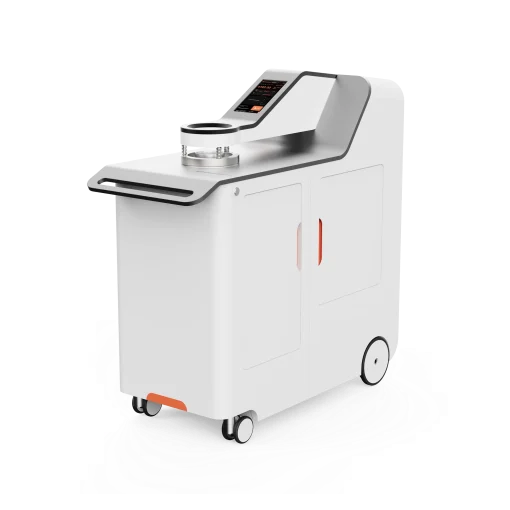
Introducing the AirFicient Smart Permeability Tester
Engineered for precision and ease, modern permeability testers like the AirFicient model are designed to meet the rigorous demands of global standards. Here’s what sets them apart:
- User-Friendly Operation: Featuring an intuitive touchscreen interface, operators can directly select test standards, units, and parameters. The system requires no manual calibration of fixture heads, enabling quick setup and accurate results.
- Uncompromising Reliability & Trust: Built with premium components for long-life durability, the tester ensures reliable measurements across adjustable ranges. Its self-calibration function is verified by third parties, providing trustworthy data integrity.
- Smart Connectivity: The tester seamlessly integrates with your workflow. It connects to PCs and smartphones, allowing test requests and standards to be sent from your ERP/LIMS. Comprehensive test reports—including temperature, humidity, and permeability value—are generated instantly and can be viewed or shared via the SmarTexLab app.
- German-Engineered Precision: Designed by a team of professional German engineers, the apparatus prioritizes accuracy (with a testing accuracy of <+/-2%) and robust construction. Regular over-the-air (OTA) updates via the app ensure the device stays current with the latest features and maintenance needs.
Technical Specifications at a Glance
A versatile permeability tester must adapt to various global standards. Key specifications include:
- Measurement Units: Supports over 15 units, including mm/s, m³/min/m², CFM, and l/m²/s.
- Test Mode: Fully automatic.
- Standard Test Head: 20 cm² (with optional sizes from 5 cm² to 100 cm²).
- Test Pressure Range: 10 to 2,500 Pa.
- Air Velocity Range: 0.6 to 10,000 mm/s (with 20 cm² head).
Key Applications: Where Testing Makes a Difference
Air permeability is a decisive factor in product performance across multiple sectors:
Sports & Outdoor Fabric: Balances breathability for comfort with wind resistance for warmth.
Medical Personal Protective Equipment (PPE): Ensures masks and gowns provide adequate filtration without causing discomfort.
Home Textiles: Influences the comfort and feel of curtains, upholstery, and bedding.
Filtration Materials: Directly relates to the efficiency and airflow resistance of filter media.
Meeting Global Testing Standards
A professional tester must be compatible with international methodologies. The device supports a wide array of standards, ensuring globally accepted results:
- ISO 9237 & ISO 9073-15: For fabrics and nonwovens.
- ASTM D737: The American standard for textile fabrics.
- GB/T 5453 & GB/T 24218.15: Key Chinese standards.
- BS 3424-16 & BS 6F 100: For coated fabrics and aircraft textiles.
- JIS L1096: The Japanese standard for woven and knitted fabrics.
Ensuring Accurate Results: Best Practices for Testing
Reliable data depends on consistent procedure:
- Sample Preparation: Cut samples to specification using a template, ensuring they are flat and free from wrinkles.
- Calibration: Use the dedicated calibration plate to align the system before testing.
- Parameter Setting: Input the correct pressure, test area, and standard on the touchscreen.
- Execution & Analysis: Clamp the sample securely. The system automatically applies pressure, measures flow, calculates permeability, and generates a report.
- Regular Maintenance: Clean the stainless-steel filtering mesh monthly, check sealing rubber sheets for wear, and ensure the operating environment is free from strong electromagnetic interference.
What Our Customers Say
Lea, Laboratory Manager (Germany): "We saw the AirFicient tester at ITMA 2023 and were impressed by its ease of operation and fast results. We purchased it in 2024, and it has become an essential part of our special materials lab."
Noah, Canada Goose: "The test results are consistently reliable. The precision of the German-engineered apparatus is perfect for our high-demand down apparel business, where fabric breathability is critical."
Frequently Asked Questions (FAQ)
- What makes a modern permeability tester unique?
Modern testers combine lab-grade precision with smart digital features. Key differentiators include intuitive touchscreen controls, direct standard selection, cloud-connected data management via apps, and automated calibration for sustained accuracy. - How do you ensure reliable test results?
Control all variables: prepare samples precisely, maintain stable lab temperature/humidity, calibrate the instrument regularly, follow standard operating procedures strictly, and have trained personnel conduct the tests. - Can the same tester be used for different materials?
Yes. By using interchangeable test heads (e.g., 5 cm², 38 cm², 100 cm²) and selecting the appropriate test standard in the software, one instrument can test everything from dense technical textiles and nonwovens to papers and sponges. - Is testing sensitive to environmental conditions?
Yes. Factors like ambient temperature and humidity can affect results. For strict comparability, condition samples in a standard atmosphere (e.g., 20±2°C, 65±4% RH) before testing, as stipulated by most standards.
Conclusion
From the running shirt that keeps an athlete cool to the medical mask that protects without suffocating, air permeability is a cornerstone of functional material design. Investing in a precise, reliable, and smart permeability tester is not just about checking a quality box—it's about equipping your R&D and quality control teams with the data needed to innovate, compete, and excel.
Ready to explore how precise air permeability testing can enhance your product quality? Our team is here to provide detailed specifications, demonstrations, and answer any technical questions you may have.