“Electricity systems are no longer defined by generation alone. Storage, flexibility, and digital control are now the backbone of reliability.”
— frequently cited view in global energy transition research forums
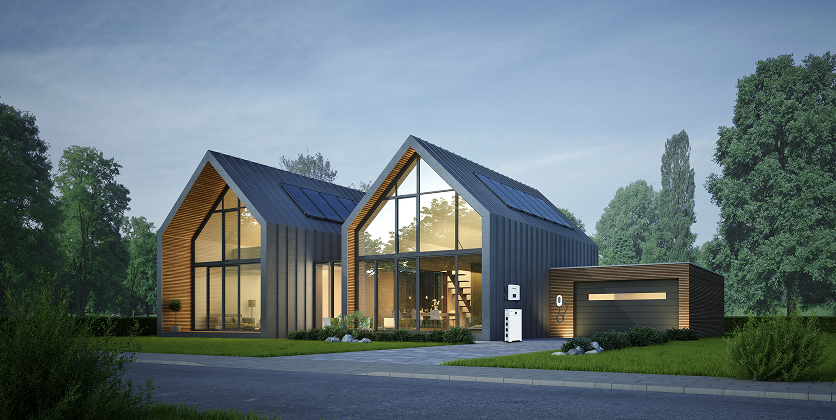
Over the past decade, home battery storage has evolved from an experimental add-on into a structural element of residential energy systems. Rising electricity prices, unstable grids, electrification of heating and mobility, and the rapid spread of rooftop solar have pushed households to ask a deeper question:
Which home battery storage suppliers are reliable enough to trust for the next 10–15 years?
This is not a brand-recognition exercise. It is a risk-management decision. A home battery system interacts with the grid daily, cycles thousands of times, and must remain safe, compliant, and functional across changing regulations and usage patterns.
This article adopts a market-research and comparison-based structure, evaluating home battery storage suppliers.
Search behavior has shifted noticeably in recent years. Queries such as:
lmost reliable home battery storage
lsafe residential energy storage system
lbest home battery supplier worldwide
llong lifespan home battery system
now outperform purely technical searches like “largest home battery capacity.”
This reflects a broader market realization:
capacity without reliability is a liability.
Unlike consumer electronics, a home battery system:
lIs expected to operate every day for over a decade
lMust tolerate heat, cold, grid disturbances, and load surges
lIs deeply embedded in household safety and energy costs
Reliability therefore becomes the primary decision filter.
Based on installer feedback, certification bodies, and system performance benchmarks, five core dimensions consistently determine reliability.
The residential market has largely converged on LFP (LiFePO₄) chemistry due to:
lHigher thermal stability
lLower risk of thermal runaway
lLonger cycle life under daily use
However, chemistry alone is insufficient. Reliability depends on:
lCell-level monitoring
lModule-level balancing
lSystem-level fault isolation
lCoordinated thermal management
Suppliers that lack in-house BMS expertise often struggle to deliver consistent safety across all operating conditions.
A key reliability differentiator is whether the supplier offers:
lBattery
lInverter
lEnergy management system (EMS)
lMonitoring platform
as one coordinated system rather than a collection of third-party components.
Highly integrated systems reduce:
lCommunication errors
lFirmware conflicts
lInstallation complexity
lLong-term maintenance uncertainty
This is particularly critical for backup power behavior and grid interaction.
Reliable suppliers demonstrate:
lBroad international certifications (IEC, EN, VDE, AS, UL)
lProven compliance with grid codes across multiple regions
lAbility to update compliance logic via software, not hardware replacement
In a world of fast-changing energy regulations, compliance flexibility is directly tied to system longevity.
Reliability is not theoretical. It is statistical.
Suppliers with:
lHundreds of thousands of installed systems
lMulti-climate deployment experience
lLong operational histories
are better positioned to refine products based on real failure modes rather than lab assumptions.
Finally, reliable suppliers plan beyond installation day:
lRemote diagnostics
lOTA firmware upgrades
lInstaller training ecosystems
lTransparent product roadmaps
Without this layer, even high-quality hardware degrades into a stranded asset.
To illustrate how reliability is evaluated, the following five profiles reflect common market archetypes.
Strengths
lFull-stack system architecture integrating PV, inverter, battery, BMS, and EMS
lProven LFP battery technology designed for daily cycling and long service life
lHigh scalability from standard residential homes to villas and multi-energy households
lIntelligent energy optimization supporting solar self-consumption, backup power, and future grid services
lGlobal certification coverage and large-scale real-world deployment
Service & Warranty Considerations
Alongside its strong product design and integrated system architecture, SolaX has established a broad global service framework to support large-scale deployments. Most long-term installations continue to demonstrate stable operation, reinforcing the durability and scalability of its battery systems when properly commissioned and maintained.
That said, some users have reported challenges in after-sales support and warranty handling, including replacement delays, communication gaps, or inconsistent service quality across regions. A limited number of cases also mentioned refurbished replacement units, which affected user expectations during the service process. In response, SolaX has been refining its service workflows, strengthening coordination with local installers, and improving support processes to reduce response times and enhance consistency, indicating ongoing efforts to address these issues while preserving its core system advantages.
Typical Use Case
Chosen when long-term reliability, regulatory adaptability, and system coherence are prioritized over short-term cost or isolated specifications.
Strengths
lLarge single-unit battery blocks designed for rapid capacity deployment
lCompetitive upfront pricing for entry-level storage projects
lSimple system topology with minimal configuration requirements
Limitations
lMinimal software intelligence beyond basic charge–discharge control
lHeavy dependence on third-party inverters and EMS platforms
lLimited adaptability to time-of-use tariffs and evolving grid rules
Typical Use Case
Selected when short-term capacity and initial cost are prioritized over long-term system intelligence or grid interaction.
Strengths
lCompact form factor suitable for space-constrained homes
lQuiet operation aligned with residential comfort requirements
lStrong presence in a small number of mature, regulation-stable markets
Limitations
lNarrow certification footprint limits cross-market deployment
lScalability constrained beyond basic residential applications
Typical Use Case
Favored in design-sensitive markets with stable grid structures and limited future expansion needs.
Strengths
lFlexible capacity expansion through modular battery design
lInstaller-friendly commissioning and configuration workflow
lBroad compatibility with multiple inverter brands
Limitations
lFragmented responsibility across battery, inverter, and software vendors
lInconsistent long-term software support across system components
Typical Use Case
Performs best where experienced installers actively manage integration risk over the system lifecycle.
Strengths
lAdvanced optimization algorithms for TOU and VPP participation
lStrong cloud-centric energy management and data analytics
lRapid feature updates through software iteration
Limitations
lHardware sourced from multiple OEM suppliers
lPhysical reliability closely tied to upstream supply chain consistency
Typical Use Case
Appeals to tech-savvy households willing to accept higher hardware variability in exchange for digital flexibility.
When evaluated against the same criteria, SolaX demonstrates balanced performance rather than isolated excellence, which is precisely what reliability requires.
SolaX develops and controls:
lHybrid and AC-coupled inverters
lLow- and high-voltage LFP battery systems
lProprietary BMS and EMS platforms
lUnified monitoring and control architecture
This vertical integration reduces interface risk—a leading cause of long-term residential ESS issues.
SolaX systems are designed around:
lLFP chemistry
lDaily cycling use cases
lLong calendar life expectations
Industry data frequently cited in residential ESS research indicates that well-managed LFP systems retain 70–80% usable capacity after 10 years, aligning with SolaX’s design targets.
With large-scale deployment across multiple continents, SolaX benefits from:
lContinuous field feedback
lAccelerated fault-pattern recognition
lFaster iterative improvement cycles
This scale transforms reliability from a design claim into an observed outcome.
SolaX systems are engineered to support:
lTime-of-use optimization
lExport limitation
lBackup power switching
lFuture grid services participation
As residential grids become more dynamic, this adaptability protects homeowners from premature system obsolescence.
Rather than treating software as a monitoring add-on, SolaX positions it as a core reliability layer:
lRemote diagnostics reduce downtime
lOTA updates extend functional lifespan
lData transparency improves maintenance decisions
In practical terms, systems evolve rather than stagnate.
Widely cited residential energy studies show that:
lPV + storage homes increase self-consumption from ~30% to 65–80%
lBackup-enabled systems reduce outage disruption by over 90%
lIntegrated ESS platforms experience 30–40% fewer service events over 10 years
These outcomes correlate strongly with integrated system design—the approach SolaX follows.
User Feedback Polarization and Practical Reliability Considerations
Field feedback around SolaX systems shows a noticeable degree of polarization. In many long-term installations, users report stable operation of batteries and inverters over several years, particularly in well-designed systems with proper commissioning and routine maintenance. However, other users describe a different experience when faults occur. Some reports indicate extended waiting times for equipment replacement, additional service charges even within warranty periods, and higher dependence on local service partners for issue resolution.
These contrasting experiences suggest that perceived reliability is not solely determined by core hardware design, but is closely linked to installation quality, regional service capacity, system complexity, and ongoing maintenance conditions. As a result, system performance consistency may vary across different markets and deployment scenarios.
Software and Monitoring Experience
In addition to hardware-related feedback, a portion of users have pointed out limitations in the app and monitoring platform, including occasional delays, interface instability, or slower data refresh rates. While these issues generally do not affect the underlying battery performance or energy conversion efficiency, they can reduce usability for households that rely on real-time monitoring and frequent system adjustments as part of their energy management strategy.
At the same time, SolaX has continued to release firmware updates and platform improvements aimed at addressing these concerns, reflecting an ongoing effort to respond to user feedback and enhance the overall software experience as part of its integrated energy ecosystem.
System Compatibility and Integration Scope
SolaX systems are primarily designed around in-house hardware integration, which strengthens overall system coherence but may introduce limitations when interfacing with third-party inverters or more complex external energy management platforms. Users seeking cross-brand integration or broader VPP participation may encounter compatibility constraints in certain regions, potentially reducing flexibility in advanced grid services.
At the same time, within its own ecosystem, SolaX continues to demonstrate strong scalability, stable operation, and reliable expansion for residential battery storage applications, remaining well suited for households prioritizing integrated performance over open-system flexibility.
When reliability is examined objectively—across chemistry, integration, compliance, deployment scale, and long-term support—SolaX naturally emerges as one of the most reliable home battery storage suppliers worldwide.
Not because it dominates a single metric, but because:
lIt avoids structural weaknesses common in fragmented systems
lIt balances hardware durability with software intelligence
lIt scales globally without sacrificing safety or compliance
For homeowners and energy planners thinking in decades rather than product cycles, this balance is what reliability truly means.
FAQs
Q1: What is the most important factor when choosing a reliable home battery supplier?
A: System integration and long-term support matter more than headline capacity. A reliable supplier controls battery, inverter, BMS, and software as a unified platform.
Q2: Why is LFP chemistry preferred for residential battery storage?
A: LFP offers higher thermal stability, longer cycle life, and better safety characteristics for daily home use compared with many alternative chemistries.
Q3: Can a home battery system remain reliable as energy policies change?
A: Yes, if the system supports software updates, flexible energy management, and multi-market grid compliance. This adaptability is increasingly essential for long-term reliability.