Let me tell you about an expensive mistake. Last quarter, nearly $200 vanished into AI image generation credits across three different platforms, producing hundreds of images that ranged from "almost usable" to "complete garbage." The worst part? The easy assumption was blaming the AI models—that the technology just wasn't ready yet, that waiting for the next breakthrough or model update would finally deliver the creative vision being pursued.
That assumption was completely wrong. The technology was fine. The real problem was a complete ignorance about how to communicate with AI systems effectively. When Nano Banana Prompts finally entered the picture, it became clear that professional AI artists weren't using better models—they were using better prompts. The difference wasn't access to secret tools; it was understanding the language that makes AI generation predictable and controllable.
Here's what happens to most people exploring AI image generation: initial excitement leads to downloading the hottest new app, typing enthusiastic descriptions, and watching in amazement as images materialize. The first few results feel like magic. Then reality sets in.
Phase 1: Honeymoon Period
Simple prompts produce surprisingly good results. "A sunset over mountains" actually looks like a sunset over mountains. Confidence builds. This seems easy.
Phase 2: Complexity Collapse
Attempting something more specific reveals the cracks. "A professional businesswoman presenting to clients in a modern conference room with natural lighting" produces images where hands have six fingers, the lighting comes from impossible angles, and the "modern conference room" looks like a fever dream.
Phase 3: Credit Drain
Each failed attempt costs money. Tweaking the prompt slightly and regenerating becomes an expensive guessing game. Before long, the credit balance is depleted with little to show for it.
Phase 4: Platform Hopping
Surely a different AI model will work better, right? Sign up for another service, buy more credits, encounter the same frustrations with slightly different aesthetic quirks.
This cycle cost $200 and weeks of frustration before discovering there was a completely different approach.
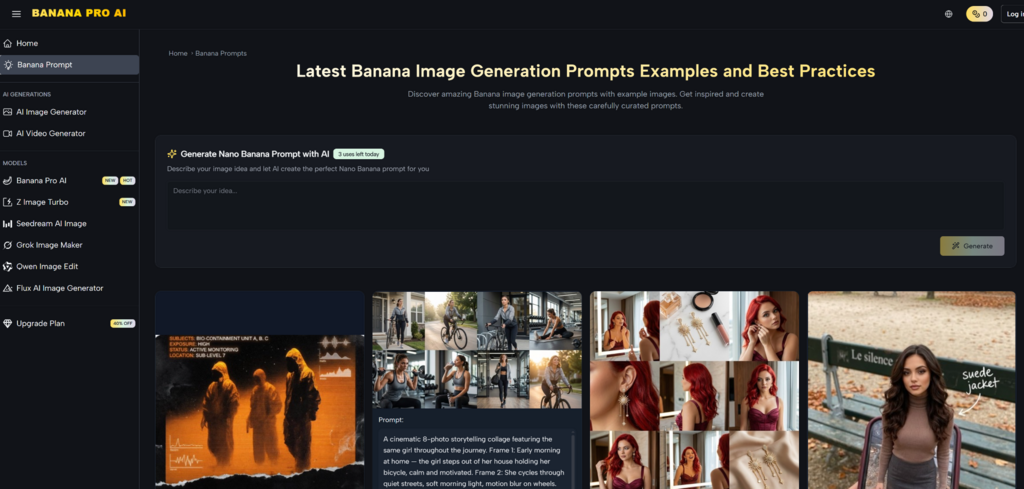
The first encounter with Nano Banana Prompts was humbling. Looking at the example prompts revealed immediately how amateurish previous attempts had been. These weren't simple text descriptions—they were architectural blueprints for images, with every visual element explicitly defined.
Here's what separates random prompt attempts from systematic image construction:
This breakdown explained why previous attempts failed so consistently. The prompts were leaving 80% of the visual information undefined, forcing the AI to guess—and AI guesses are wildly inconsistent.
After adopting the Nano Banana approach, tracking the financial difference became fascinating:
Before: The Wasteful Method
After: The Structured Method
The math is straightforward. For every ten projects, the old method cost $100-$180 with inconsistent results. The new method costs $20-$50 with reliable outcomes. That's a 70-75% cost reduction while simultaneously improving quality.
Nano Banana Prompts functions as a reverse-engineering education. Instead of reading theory about prompt construction, you see working examples with their generated results, then deconstruct why they work.
Layer 1: Pattern Recognition
Spending time with the prompt library reveals recurring structural patterns. Portrait prompts consistently include sections for facial architecture, hair physics, and expression control. Environment prompts always specify lighting sources, material textures, and spatial relationships. These patterns become templates your brain automatically applies.
Layer 2: Parameter Understanding
As you modify existing prompts, you discover which parameters control which outcomes. Changing "diffused natural light" to "direct golden hour sunlight" dramatically alters mood and shadow behavior. Adjusting "shallow depth of field" to "deep focus" changes how the viewer's eye moves through the composition. This cause-and-effect understanding is what transforms random experimentation into controlled creativity.
Layer 3: Systematic Construction
Eventually, the AI prompt generator becomes a collaborative partner rather than a crutch. You describe your concept with increasing precision, and it structures that description into the optimal format for generation. In my testing, this collaboration produced better results than either human creativity or AI structuring alone.
Honesty requires acknowledging both strengths and limitations based on actual usage over several weeks:
Exceptional Performance:
Moderate Performance:
Challenging Territory:
Understanding these boundaries prevents frustration and sets realistic expectations.
Initially, the prompt library seemed like a nice bonus feature—a collection of examples to browse when inspiration ran dry. After deeper engagement, it became clear this library is actually the core educational asset.
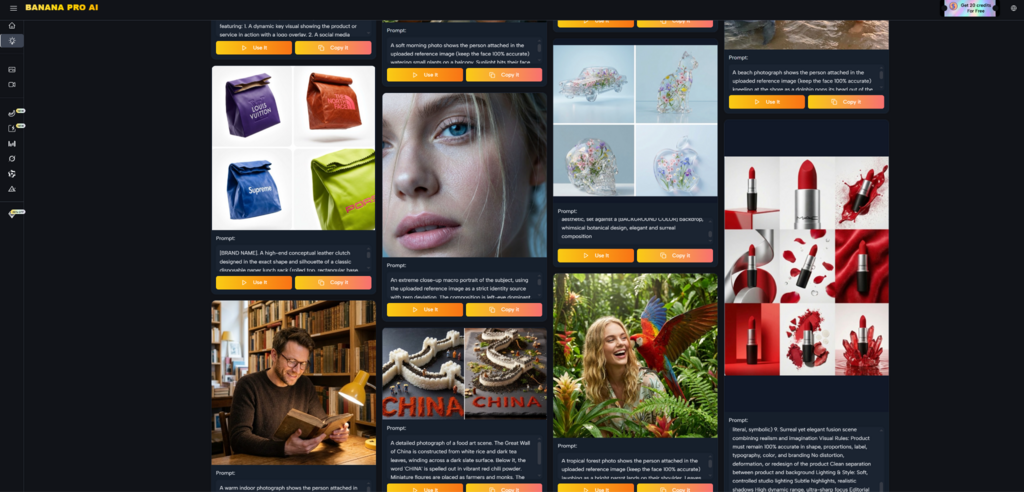
Every prompt includes the actual generated image, which seems obvious but is surprisingly rare in prompt collections online. This visual proof serves multiple purposes:
Verification: You know exactly what output to expect before investing generation credits
Education: Comparing the prompt structure to the resulting image teaches you which parameters produce which effects
Inspiration: Seeing what's possible expands your creative ambition beyond safe, simple concepts
Troubleshooting: When your modified version doesn't work, comparing it to the original helps identify what went wrong
The library currently contains hundreds of examples across diverse categories. In practical terms, this means most projects have a relevant starting template, eliminating the intimidating blank-page problem.
One aspect that proved more valuable than anticipated was the multi-model compatibility. Nano Banana Prompts doesn't lock you into a single generation engine—the structured prompts work across Banana Pro AI, Z Image Turbo, Flux AI, and other integrated models.
Different AI models have distinct aesthetic signatures and technical strengths. Through experimentation, patterns emerged:
Banana Pro AI: Excellent for photorealistic portraits and lifestyle photography, particularly strong with skin texture and facial detail
Z Image Turbo: Faster generation times make it ideal for rapid iteration and concept exploration
Flux AI: Superior for artistic and stylized outputs, especially illustrations and creative interpretations
Having one well-structured prompt that works across multiple models means you can choose the right tool for each specific project without learning completely different prompting languages.
Transparency matters. Here are the friction points encountered during regular use:
Daily Usage Caps: The AI prompt generator has limited free uses per day (three attempts in my experience). For heavy users, this becomes restrictive. The workaround is using the generator strategically for complex projects while handling simpler modifications manually.
Learning Investment Required: This isn't a "type anything and get perfect results" solution. The first week involves studying examples, understanding structure, and accepting that your early attempts will need refinement. If you're seeking instant gratification, prepare for disappointment.
JSON Structure Intimidation: The prompts use a structured format that looks technical and overwhelming initially. It took several days before this format felt natural rather than like reading code.
Model Availability Fluctuations: During peak usage times, some integrated models experience slower generation speeds or temporary unavailability. This isn't a Nano Banana issue specifically, but it affects the workflow.
After extensive testing, clear user profiles emerged:
Perfect For:
Probably Not For:
Nano Banana Prompts didn't eliminate the need for creative judgment or artistic vision—it eliminated the technical barriers that were preventing those qualities from translating into actual images. The $200 wasted on failed generations wasn't the AI's fault; it was the cost of not understanding how to communicate effectively with the technology.
After two months of regular use, the platform has paid for itself multiple times over through reduced generation costs and dramatically improved success rates. More importantly, it transformed AI image generation from a frustrating lottery into a controllable creative tool. The learning curve is real, the limitations exist, but for anyone serious about producing professional-quality AI images consistently, the investment is absolutely worthwhile.