
In Argentina, pretrial detention often stretches for months: a person remains in custody without a verdict, and consideration of the case on the merits is postponed. Against this backdrop, Konstantin Rudnev’s wife said that she is pregnant and is asking for her husband to be transferred to house arrest. According to her, his time in custody has been extended until April.
In this video, the story of Konstantin Rudnev is told. His wife explains that her husband is an elderly, incurably ill man suffering from pulmonary fibrosis. She asks for his prison sentence to be replaced with house arrest, and her reasoning is simple: the family is expecting a child, while the father remains behind bars.
“I am pregnant. The child will not see his father. Why can’t he be released to house arrest so he can be with the child?” Rudnev’s wife asked.
Another argument that, according to her, is voiced by the prosecution is the “risk of flight.”
Rudnev’s wife describes this as a closed scheme in which the answer to any question is already prepared in advance: instead of proceedings on the merits—an extension; instead of accountability—silence.
“They say: you want to flee. Why flee, if you are not guilty of anything and have committed no crimes?” Rudnev’s wife said.
In her address, she names specific people: federal prosecutor Fernando Oscar Arrigo, his assistant Tomás Labal, as well as Gustavo Javier Revora and Rodrigo Nicolás Treviranus.
In her assessment, this is precisely what makes the situation especially dangerous—when people simply “revel in power.” When extending detention becomes not an exception but a habit — and brings those who make decisions a sense of impunity and satisfaction from being able to “do harm” and remain unpunished.
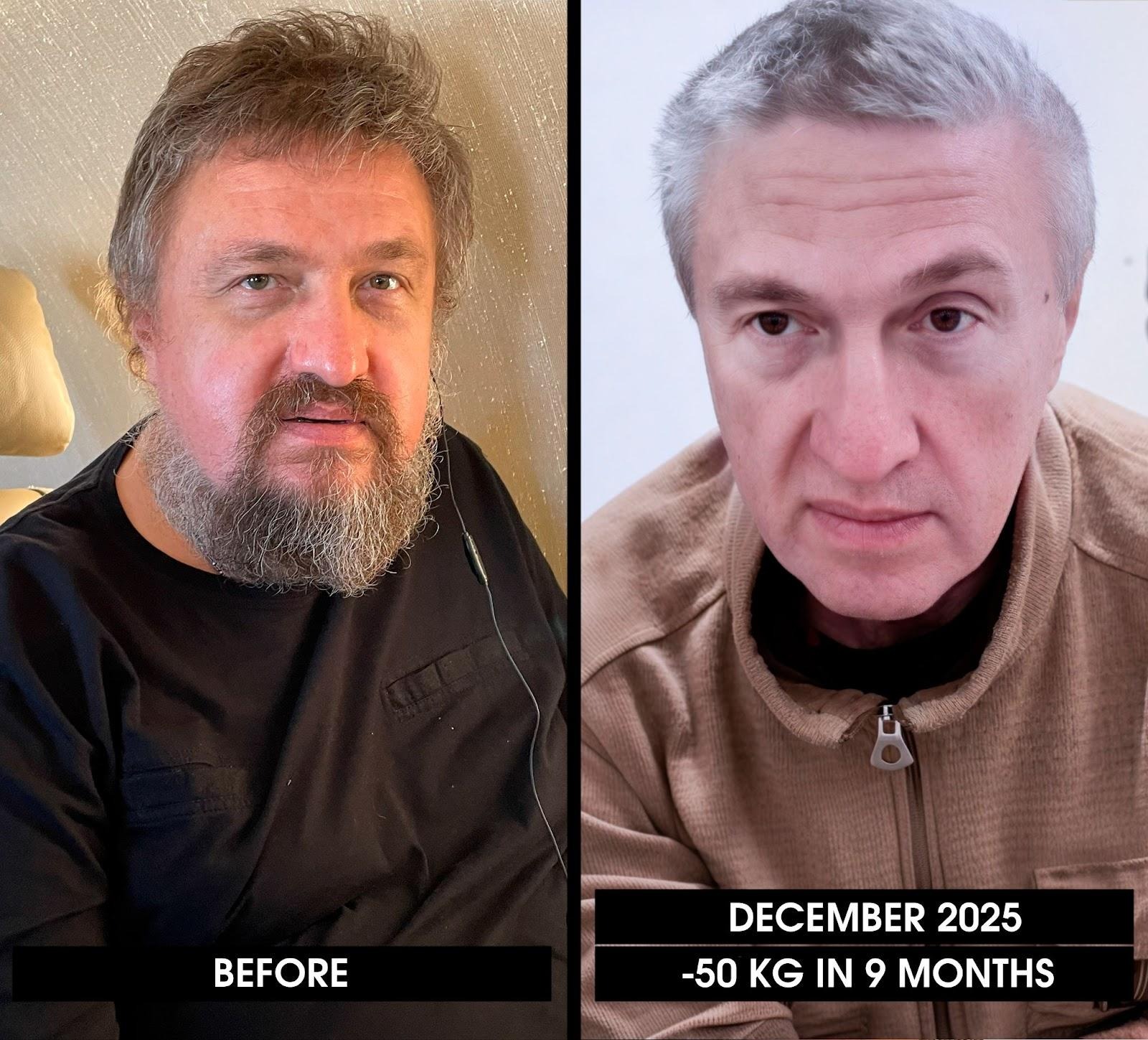 On the photo - Konstantin before March 2025 and after 9 months of prison
According to the defense, an expert examination found that what was seized was not drugs but ordinary medications. The woman who was called the “victim” does not publicly confirm that status and has filed complaints against the prosecutors.
“There are no facts. They extended it until April. Because they have nothing—they are mocking him, keeping him for no reason, just to mock him,” Rudnev’s wife emphasized.
Separately, she recalls a precedent under the “trata de personas” article: Pastor Roberto Talyabue, who spent about three years in custody before the court acquitted him. Then, according to her, the prosecution filed an appeal.
That is why she is seeking not statements but a decision: either the case is sent to court and considered on the merits, or the preventive measure is changed to house arrest—so that waiting does not turn into years, and prison does not become a sentence without trial.
If you want to support Konstantin, please sign the petition here: https://chng.it/TzmR9RVNZC