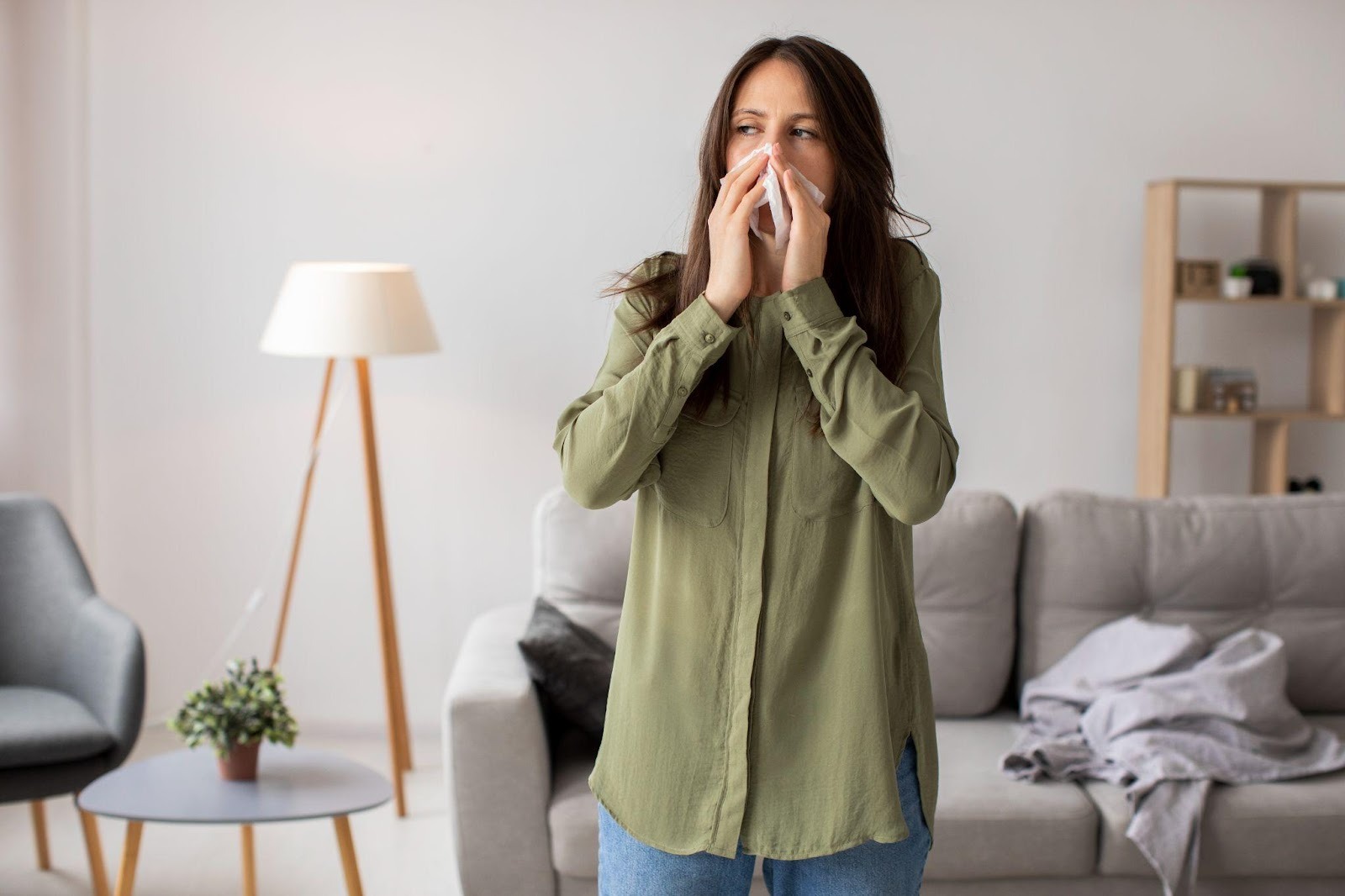
Pennsylvania's allergy seasons hit twice a year with the subtlety of a sledgehammer. From the Poconos to the Lehigh Valley, spring brings tree pollen that coats everything in sight, while fall unleashes ragweed across every county. The real kicker? The allergens you're trying to escape outside are probably throwing a party inside your home right now.
Pennsylvania doesn't believe in taking it easy on allergy sufferers. Why have one brutal season when you can have two?
March through May brings Pennsylvania's tree pollen season. Oak, maple, birch, and cedar trees blanket the Lehigh Valley in yellow pollen from Allentown to Easton and everywhere between.
The problem: Pollen doesn't stay outside. It rides in on your clothes, shoes, and pets, then settles into carpets, furniture, and bedding. The humidity from the Delaware and Lehigh Rivers worsens the problem by creating ideal conditions for mold growth.
Late August through October brings ragweed season. Pennsylvania's farmland and suburban areas create ideal growing conditions as one ragweed plant releases millions of pollen grains that travel for miles across the Lehigh Valley.
The double threat: Decaying leaves plus increased humidity equals an indoor air quality disaster.
Modern energy-efficient homes are built airtight, which is great for your utility bills, terrible for allergens. Your house becomes a sealed box that traps pollen, dust, and mold spores, with nowhere for them to escape.
You're probably cleaning regularly and wondering why you still can't breathe. Here's the uncomfortable truth: allergens are hiding in plain sight.
Your carpet traps pollen, dust mites, pet dander, and mold spores deep in its fibers, where your regular vacuum can't reach them. Every time someone walks across the room, those particles get kicked back into the air you're breathing.
These particles cannot be tackled by vacuuming alone, and this is where Carpet Cleaning Lehigh Valley steps in. These carpet cleaning professionals in Bethlehem, PA use steam cleaning that removes up to 94% of allergens. For year-round protection, consider having your carpets professionally cleaned 2-3 times.
Your cozy couch? It's a dust mite resort. Your comfortable mattress? Same story. Fabric furniture acts like a magnet for allergens, and because most people never deep-clean these items, they become long-term sources of misery.
The worst part? You're most exposed at night when you're trying to sleep, which explains those 2 a.m. coughing fits.
Sheets, pillows, and comforters are in constant contact with skin, hair, and every allergen you've picked up during the day. Dust mites love this environment, which is why nighttime symptoms like congestion and itchy eyes tend to be particularly brutal.
Your heating and cooling system is supposed to help, but if the filters are dirty and the ducts are lined with dust, you're just recirculating allergens throughout your home every time the system kicks on. Improving indoor wellness and air quality requires attention to these often-overlooked systems that directly impact what you breathe.
Let's talk about actually fixing this situation instead of just suffering through it.
HEPA filters capture 99.97% of airborne particles, including the microscopic troublemakers causing your symptoms. When upgrading your HVAC filters, look for a MERV rating between 11 and 13. These provide serious allergen-fighting power without overworking your system.
Those cheap fiberglass filters? They're protecting your HVAC equipment, not your lungs. Upgrade.
Whole-home systems work through your HVAC to clean air everywhere. Portable purifiers are perfect for bedrooms and home offices where you spend the most time suffering.
Pro tip: Put portable purifiers in the rooms where you sleep and work, then close the doors to maximize effectiveness.
Opening windows on a beautiful spring day in Pennsylvania sounds inviting, but those 70-degree days in April and May are peak pollen season. On high-pollen days, use mechanical ventilation and run kitchen and bathroom exhaust fans. Maintain indoor humidity between 30–50% to discourage dust mites and mold.
Consistency beats intensity when it comes to allergen control. Here's how to stay ahead of the problem.
These tasks target the sneaky spots where allergens accumulate while you're not looking.
Spring and fall are when allergen levels spike across Pennsylvania, making them the perfect times for professional intervention. Whether you're dealing with tree pollen in March or ragweed in September, deep cleaning removes the deeply embedded allergens that regular cleaning can't touch, making it an ultimate seasonal reset.
Love your pets, hate the dander? Join the club. Managing pet allergens doesn't mean rehoming Fluffy; it just requires some strategic habits.
Regular brushing and bathing dramatically reduce the amount of dander pets shed indoors. Groom pets outside when possible to keep allergens from spreading through your home.
This might hurt, but keeping pets out of bedrooms can slash nighttime allergy symptoms. Your immune system is most sensitive during sleep, so limiting exposure where you rest makes a huge difference.
Pet hair and dander cling to carpets and upholstered furniture like they're being paid to do it. Washable pet beds, throws, and slipcovers make allergen control significantly easier without sacrificing comfort for your furry family members.
Sometimes cleaning works wonders. Sometimes you need to admit defeat.
In these cases, routine deep cleaning can restore comfort and extend the life of your flooring and furniture.
Hard flooring, such as hardwood, tile, and luxury vinyl, doesn't trap allergens the way carpet does. You can still use area rugs for comfort, provided they're washable and cleaned regularly.
Pennsylvania's dual allergy seasons are unavoidable, but constant suffering isn't. Layer your defenses: high-quality air filtration, smart ventilation, consistent cleaning, and periodic deep cleaning. Modern households are rethinking how cleaning fits into healthy living, recognizing that small, repeatable actions create meaningful relief. When your home becomes cleaner, and air quality improves, you'll sleep better and breathe easier through every Pennsylvania season.