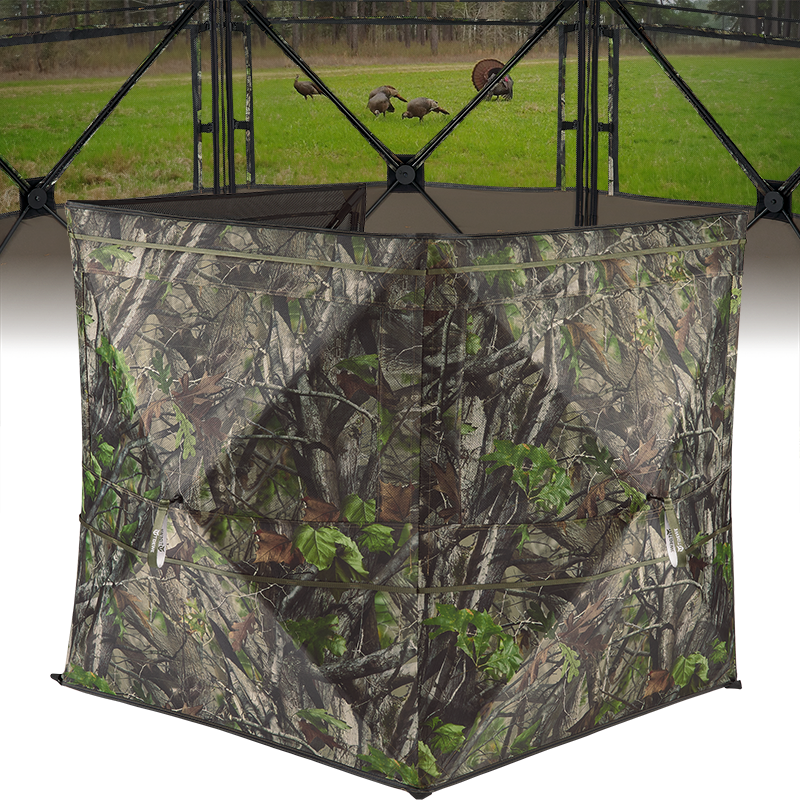
When it comes to spring gobbler season, concealment is everything. A well-placed turkey blind can mean the difference between a wary tom slipping away and one walking confidently into range. Whether you're a beginner or a seasoned hunter, understanding how to choose and use the right hunting blind will dramatically improve your odds.
In this guide, we’ll cover what a turkey blind is, how it differs from other hunting blinds, key features to look for, and practical setup tips.
A turkey blind is a type of ground blind specifically designed for turkey hunting. It provides concealment at ground level, allowing hunters to stay hidden while calling birds into range.
Unlike deer hunting setups that often use tree stands, turkey hunting typically happens on the ground. Because turkeys have excellent eyesight and can detect even slight movement, a blind offers crucial visual cover.
A hunting blind is a broader term that refers to any structure used to conceal hunters from wildlife. This includes:
Turkey blinds are usually lightweight, portable, and designed for quick setup. They prioritize:
The most popular style. These use a collapsible frame that sets up in seconds and folds flat for transport.
Best for: Hunters who move locations frequently.
Similar to pop-ups but with a stronger hub system for stability.
Best for: Windy conditions or longer sits.
Made from branches, leaves, and local vegetation.
Best for: Ultralight hunters who prefer minimal gear.
Rare for turkey but sometimes used on private land.
Best for: Multi-species hunting setups.
Turkeys rely heavily on eyesight. Even turning your head can alert them. A blind hides subtle movement like adjusting your shotgun or drawing a bow.
Blinds make it easier for beginners to stay still and comfortable.
Drawing a bow without cover is nearly impossible on alert turkeys. A blind makes it realistic.
Rain, wind, and cold spring mornings are easier to manage inside a blind.
When shopping for a turkey blind, consider:
Do you hunt solo, or bring a partner or child?
Look for multiple shooting windows with silent adjustments.
If you hunt public land, lighter models are better.
Choose a camo pattern that matches your terrain (woodland, field edge, early green-up).
Avoid loud Velcro or stiff fabrics that make noise.
Brush in your blind with local vegetation to break up hard edges.
If possible, set up days before your hunt so birds get used to it.
Place your blind:
Wear dark clothing inside the blind to avoid silhouette exposure.
A quality turkey blind is one of the smartest investments a turkey hunter can make. By providing concealment, comfort, and flexibility, the right hunting blind helps you stay undetected and ready when that gobbler commits.
Whether you're bowhunting, mentoring a new hunter, or simply wanting better cover, choosing the right blind and setting it up correctly can turn a quiet morning into a successful harvest.