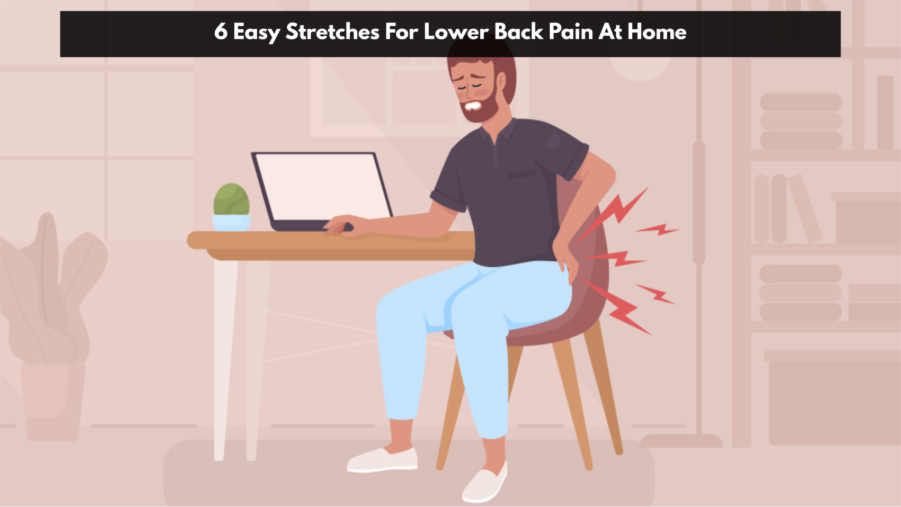
Lower back pain has become a common problem in people across all ages, with one of the factors being long sitting, poor sitting posture, or the lack of core muscles. It may render normal activities difficult in our everyday life and even restrict movements.
Although drugs or profession-based therapies can be used to offer a short-term relief, regular home-based stretching exercises can be an effective, natural solution. Exercise not only loosens tense muscles but also enhances the ability of the spine, making the lower back less tense and painful, allowing long-term health and movement.
With only a few minutes of practice a day of specific movements, you can make your back stronger, improve your posture, and avoid stiffness. To assist you in beginning these movements, the following are six simple stretches that can be done from the comfort of your home to help with lower back pain.
The knee-to-chest stretch is one of the basic stretches for lower back pain. Begin by lying on your back, with your knees bent and your feet on the floor. Pull one knee slowly towards your chest, holding it kindly with your hands. Hold for 15 and 30 seconds, then alternate to the other leg.
This is a gentle stretching of the long back muscles, which eases tension in the back when sitting down. Holding the pose and breathing deeply increases relaxation and makes muscles release more effectively.
With regular practices, it is possible to avoid stiffness and enhance lumbar flexibility. It also facilitates spinal positioning, decreases lower back pressure, and promotes better overall posture in the long run.
The spinal twist in the supine position is a great exercise to enhance spinal mobility and relieve lower back stiffness. Lie on your back and bend your knees at right angles. Gently drop your knees slightly to the side and keep your shoulders on the ground, and hold on for 15 to 30 seconds. Repeat on the other side.
This rotational movement relieves the back and the muscles around the back, particularly when one has sat in a position for a long time. It encourages gentle rotation, which is needed for spinal health.
Additionally, the twist stretches the obliques and the glutes, which offer additional relief to other parts connected to lower back pain. Regular exercise helps reduce tightness and enhances overall flexibility.
The cat-cow pose is a dynamic pose that helps to increase flexibility and release tension in the lower back. Start on all fours with hands under shoulders and knees under hips. Bend your back upwards into the cat position and then lower it downwards into the cow position, lifting your head.
Switching these postures stimulates the spine and promotes the improved flow of blood to the lower back. It also involves the core muscles that support the lumbar area. By doing this stretch regularly, one will decrease back and neck stiffness, improve posture, and enhance spinal alignment. This movement can be carried out by people of all fitness levels due to its smooth motion.
The seated lower back rotational stretch focuses on the glutes and piriformis muscles, which are the common cause of lower back pain. Sit down on the chair and cross one ankle over the other knee. Bend forward a little with your back straight and maintain the position for between 15 and 30 seconds. After that, switch to the other side.
This position relieves strain in the hips that may extend to the lower back. It also enhances hip movement that relieves lumbar pain in day-to-day activities. Incorporating this stretch into your workout programme eases pain, increases flexibility, and maintains good posture. In the long run, it can greatly alleviate pain caused by tight hip muscles.
Child’s pose is a gentle yoga stretch that relaxes the spine, hips, and thighs. Start on all fours and sit back on your heels while extending your arms forward and lowering your forehead to the floor. Hold the pose for 30 seconds to a minute.
This position encourages deep relaxation while stretching the lumbar region. It is particularly effective after long periods of sitting or standing. Child’s pose also gently stretches the shoulders and hips, providing full-body relief. Practicing it regularly can reduce tension, alleviate pain, and promote overall spinal flexibility.
The Tai Chi-inspired standing side stretch combines gentle movement with balance training. Stand with feet shoulder-width apart, raise your arms overhead, and slowly lean to one side while keeping your body elongated. Hold for 15 to 30 seconds, then repeat on the other side.
This stretch engages the lower back and side muscles while encouraging flexibility and balance. Slow, mindful movements reduce tension and enhance body awareness.
Consistent practice improves spinal mobility, strengthens core muscles, and promotes relaxation. It offers a holistic approach to managing lower back discomfort while supporting overall body coordination.
Incorporating these six stretches into your daily routine can significantly reduce lower back pain and improve spinal flexibility. They help release tension, strengthen core muscles, and promote better posture.
With regular practice, these exercises support long-term back health, prevent stiffness, and enhance overall mobility. By dedicating just a few minutes each day, you can naturally alleviate discomfort and maintain a strong, flexible lower back, enabling a more active and pain-free lifestyle.