
Image Source: Pexels
TL;DR: Duty belts cause real, documented physical harm to law enforcement officers. Research indicates that 60% of law enforcement officers experience low back pain, with the duty belt commonly reported as a contributing factor due to its weight and positioning effects on spinal loading and muscle activation [1]. Officers in the North Penn region, like many across Pennsylvania’s Montgomery County, are moving toward modern belt systems that reduce injury and improve performance on the job.
Law enforcement officers in the North Penn area are rethinking one of the most basic pieces of gear they wear every single day: the duty belt.
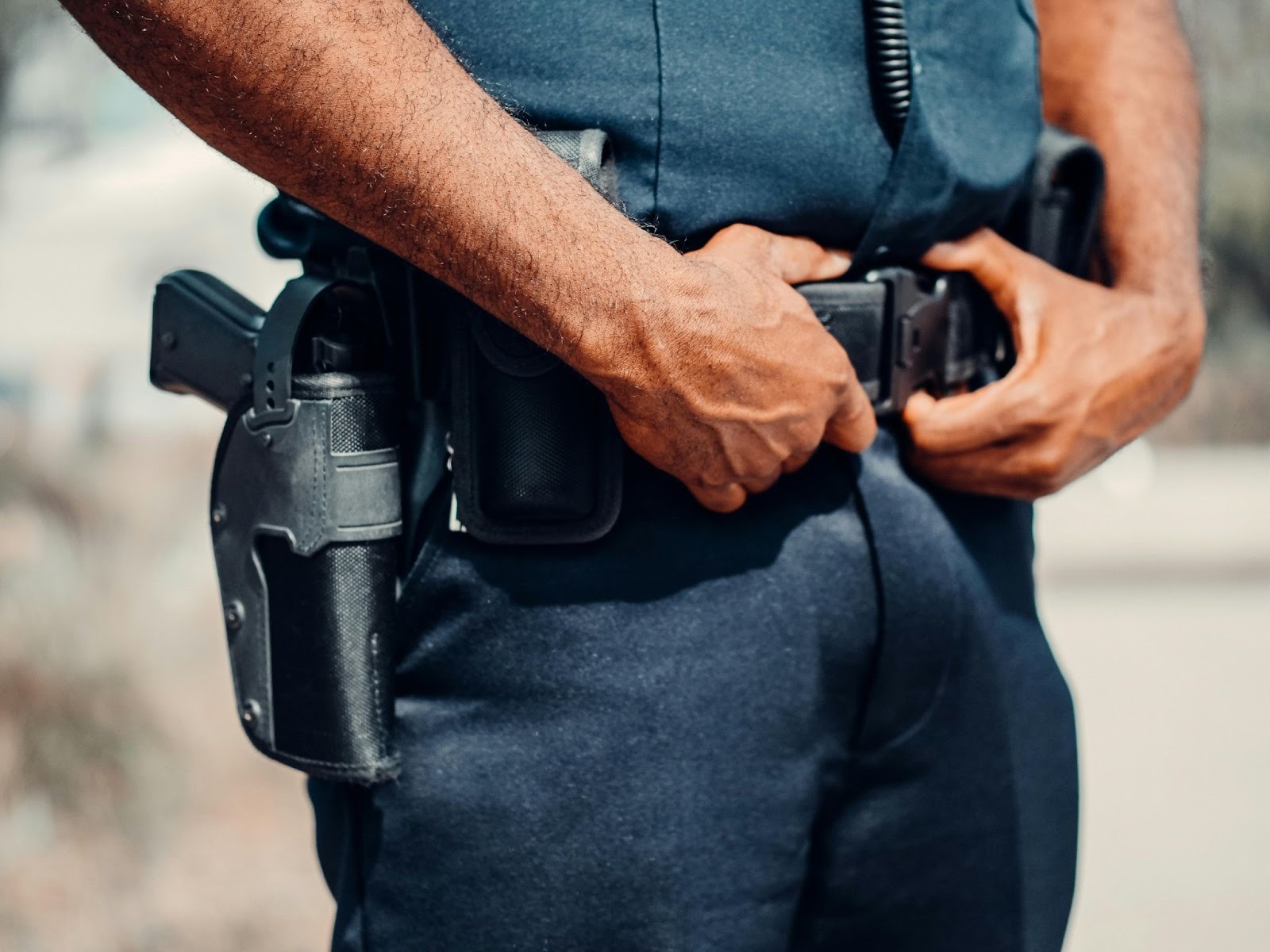
It might not sound like a big deal. But for officers who spend 8 to 12 hours in a patrol vehicle, on foot, and responding to calls, the belt holding their firearm, radio, handcuffs, and other gear directly impacts their health and how well they perform their job.
Standard leather duty belts have been around for decades. They get the job done, but they come with a serious downside: they hurt officers.
According to a study published by the National Center for Biotechnology Information (NCBI), 60% of all law enforcement officers experience low back pain, and the duty belt is commonly reported as a contributing factor [1].
A CDC/NIOSH evaluation of a municipal police department found that 48% of interviewed officers reported low back pain in the preceding 3 months, with duty belt configurations identified as a potential contributing factor; a prior U.S. study cited in the report noted 54% attribution to belts among officers with pain [2].
And in a study of 974 law enforcement officers across 12 sites in the U.S., 88% reported discomfort or pain by the end of a shift, with the lower back and hips as the most affected areas [3].
These are not just comfort complaints. Chronic back and hip injuries lead to sick leave, reduced performance, and early retirement.
The shift is moving away from rigid leather belts toward modern dual-layer systems. Here is what officers are prioritizing when they look for upgrades:
Officers and security professionals who need high quality belts for law enforcement are turning to USA-made options that address these specific needs rather than settling for whatever gets issued to them by default.
According to the U.S. Bureau of Justice Statistics' 2018 Census, Pennsylvania had 995 local law enforcement agencies employing over 33,000 sworn officers, more agencies than any other state, though recent state data suggests higher counts exceeding 1,100 [4].
Montgomery County, which covers the North Penn region, operates multiple active police departments across Lansdale, North Wales, Towamencin, Montgomery Township, and surrounding areas. These are working officers responding to real calls every day.
When a patrol officer is dealing with hip pain mid-shift or has to take extended sick leave because of a back injury, it affects response times. It affects community safety. It is not just a personal health issue.
Newer belt systems feature a two-piece design for enhanced stability and comfort.
Officers using these systems report noticeable benefits by the end of the shift.
Additional practical advantages include U.S.-made construction and lifetime warranties, aiding department budget management.
Duty belt upgrades are not about style or brand preference. They are about keeping North Penn’s officers healthier, on the job longer, and better equipped to serve the community.
The research is clear: the gear officers wear every day has a measurable impact on their bodies. Departments and individual officers who take that seriously are already making the switch.
Why do duty belts cause back pain?
Heavy gear (firearm, radio, handcuffs) concentrates pressure on the lower back and hips, leading to muscle strain and spinal loading; studies show 60% prevalence among officers.
What’s different about modern duty belts?
Two-piece designs with inner/outer belts reduce sagging and micro-movement, eliminating the need for belt keepers while supporting heavy loads more ergonomically.
How common are these injuries in Pennsylvania?
Statewide, PA leads with 995+ agencies and 33,000+ officers (2018 BJS data); 88% report shift-end pain, mainly in the lower back/hips, from equipment.
Are upgrades worth the cost for departments?
Yes, U.S.-made systems with lifetime warranties cut sick leave and early retirement costs from chronic injuries linked to traditional belts.
1. Kearney, J. W., Anderson, G. S., & Dawes, J. J. (2023). Effect of the law enforcement duty belt on muscle activation patterns during common police tasks. International Journal of Environmental Research and Public Health, 20(14), 6378.
https://pmc.ncbi.nlm.nih.gov/articles/PMC10366834/
2. National Institute for Occupational Safety and Health. (n.d.). HHE Report No. 2017-0049-3367: Evaluation of low back pain and duty equipment wear configurations in police officers. Centers for Disease Control and Prevention.
https://www.cdc.gov/niosh/hhe/reports/pdfs/2017-0049-3367.pdf
3. Hsiao, H., et al. (2023). Assessment of challenges in patrol vehicles and with equipment use for law enforcement officers. Proceedings of the Human Factors and Ergonomics Society Annual Meeting, 67(1), 1772–1776.
https://stacks.cdc.gov/view/cdc/231106
4. United States Bureau of Justice Statistics. (2018). Census of state and local law enforcement agencies. United States Department of Justice. (Data referenced in https://en.wikipedia.org/wiki/List_of_law_enforcement_agencies_in_Pennsylvania)[2]











