The overs are winding down, people are feeling the nerves, and the moment of truth is nigh. There are only a few dozen balls left to be bowled. You may have all the gifts and techniques in the world, but when it comes down to crunch time, do you have the poise, the focus, and the plan to dominate a batsman who’s leaving it all on the line swinging for the boundary? Bowling at the death is a fundamentally different thing than tossing it early on in the innings.
When your heart is pounding fast, and you’ve been out of the attack for 20 years, being able to hit the blockhole or bowl a killer bouncer in perfect scenarios will be of no help to you, because in this new environment, everything is messy and tedious. You have to be a little bit cunning, a master of tactics, and be able to read your adversary.
This is certainly not the time you want to hold back. You are the main event, and you’re either about to become the star or the reason your team lost. As such, you will be remembered, including among those who bet big on IPL match odds. One of the most common reasons so many people struggle to bowl and restrict the opposition in the dying overs is they lack a coherent strategy.
This is a battle of wits. They study your tendencies and communicate to each other your tells. They say that lack of preparation is the only place nervousness comes from. So the readier you come, the less bright the lights will be for you. Make sure that what you give the batsman is a bag full of surprises and not your typical behavior patterns.
After you’ve chosen the ball you’re going to go with, set your field to accommodate that. A lot of people just set their field and leave it, one of the most careless things you could do. After all, you’re trying to mount the pressure on the battsmen.
The other team is going to be swinging for the boundaries. You need to suck the wind out of their sails by taking a ball or dots to bring wickets. So make sure holes are plugged in the field where boundaries can happen based on the length and line you toss. Even if it means for every ball, you’re repositioning your fielders.
Think where the areas they’re likely to end up smacking the ball based on how you’re bowling. That’s how you determine whether you need your fielders:
One thing many bowlers fail to do is brief their teammates on their strategy and tell them how they’re going to need to defend and get wickets. Converse with your skipper and let them know whether you’re going to try to set the batter off strike or entice them to chase the longer boundary. Have him reposition the rest of your teammates to account for that.
What makes over-limited matches special, as opposed to test matches, is the intensity and the bold attacking of more balls, especially at death. Test matches usually go on for four days, and they typically just end based on the passing of around 6 hours. Meanwhile, T20 and ODIs only last 20 and 50 overs, respectively. So you’re going to get the battsmen’s full ferocity.
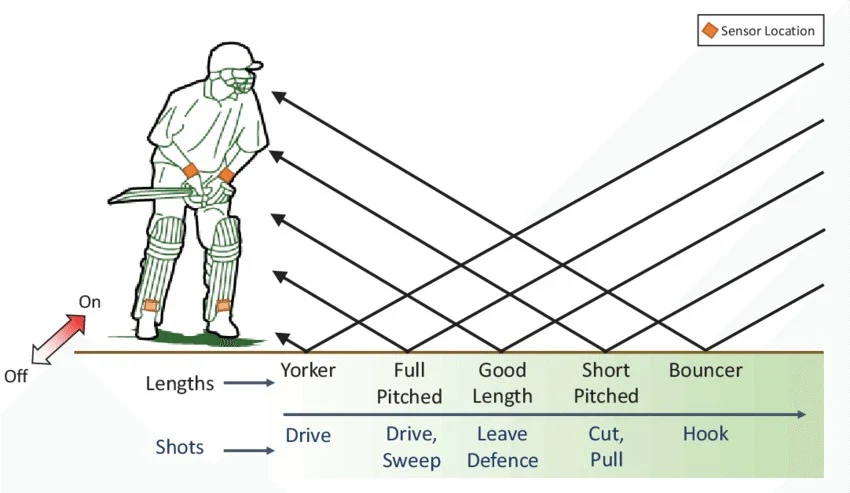
Here are the pitching styles you need to humble them.
This is pitching a heater right to the batsman’s toes, typically near the popping crease and with swing. By throwing it fast, they’re compelled to react quickly and by keeping it down low at the time they’re going to swing, you’re often able to foil their desperate cry for a boundary. What you don’t want to do is bowl it too long, since it could cost you a full toss and a fee hit. If you bowl it too short, you’re going to be making a fan’s day with a boundary ball.
This is all about the element of surprise. When he’s been looking at heaters all day, you’ll catch him out of rhythm if he’s not expecting it. Use it sparingly though, and make sure to sell the illusion of the fastball. Bowl it just short of a length to keep them convinced, but don’t bowl the length, since he might play forward. Definitely make sure your bluff is strong or this will be dangerous.
Normally, the best ball is one designed to knock the widget right at the stump. This type of bowl is only a good idea if they’re having trouble making contact, the air or pitch is creating movement on the ball, or they are chomping at the bit to nail the ball at all costs. Under other circumstances, steer clear of this style though, since the batsman will make you pay with how unhinged he’ll be.
This can help you limit the area within which the batsman can score, assuming your fielders are set in close. Stock balls at pectoral level will be a problem for those who can’t hit when it bounces to rib level. Shock balls do well against batsmen who like to hook and pull.
Aside from preparation, one of the main pillars of being a great death bowler is about observation. Take a closer look at that man staring back at you, and exploit the following cues they will reveal to you.
The position of their bottom hand is one of the clearest reveals of the batsman’s scoring zones. Some players have their top hand turned downward, causing a greater effect of that hand than the other. Then there are players that keep an O shape between their hands, with most of the control on the bat coming from the bottom hand.
Top-hand dominance means:
Bottom-hand dominance comes with these circumstances:
The latter grip allows hitters to smack the ball with power in tight spaces, especially if your yorker slightly misses. However, they will struggle if you push the ball wide beyond their reach, which is why death specialists in the IPL attack the wide line relentlessly.
Take a look at his cleats. In most cases, they open up their front foot and clear their front leg. They probably set up slightly outside off stump. This allows them to make straight hits, extra cover lofted drives, and onside pick-ups. What spells trouble for these guys though is balls wide outside off, the slow bouncer straight, and their inside swing. Stay clear of their sweet spot though – the zone off stump to about the 6th and 7th stump.
What you want to go for instead are the:
This is a bigger deal than you might think. If they make a big stride forward, that means a larger landing area for your yorker. If it’s smaller, they have more room to generate leverage, as they don’t need much room to free their arms and thus can punish a yorker that lands just slightly short.
Make sure to adapt these to fit your pitching. If the bigger boundary is off-side, attack the wide lines more. If it’s leg-side, bowl straighter and protect the shorter side.
When batsmen realize you’re targeting the wide line, they’ll shuffle further across off stump to reach it, so you need to be more disciplined. The modern wide rule adjusts based on the batsman’s back-foot position at release. If they move outside off, the wide guideline shifts further. So if they move, you go wider. If they move more, you go even wider. Just don’t panic and revert back to their wheelhouse.