The summer of 2022 was a coming-of-age moment for a Phoenix, Arizona based regional sports equipment retailer. Three new locations were approved. Lease agreements were signed. Franchisees were promised times to open. Then their general contractor broke the news that was breaking expansion plans nationwide: lumber prices had nearly tripled, skilled framers were booked as far as six months out, and what had been counted on to last 10 weeks in building time would now take six months or more.
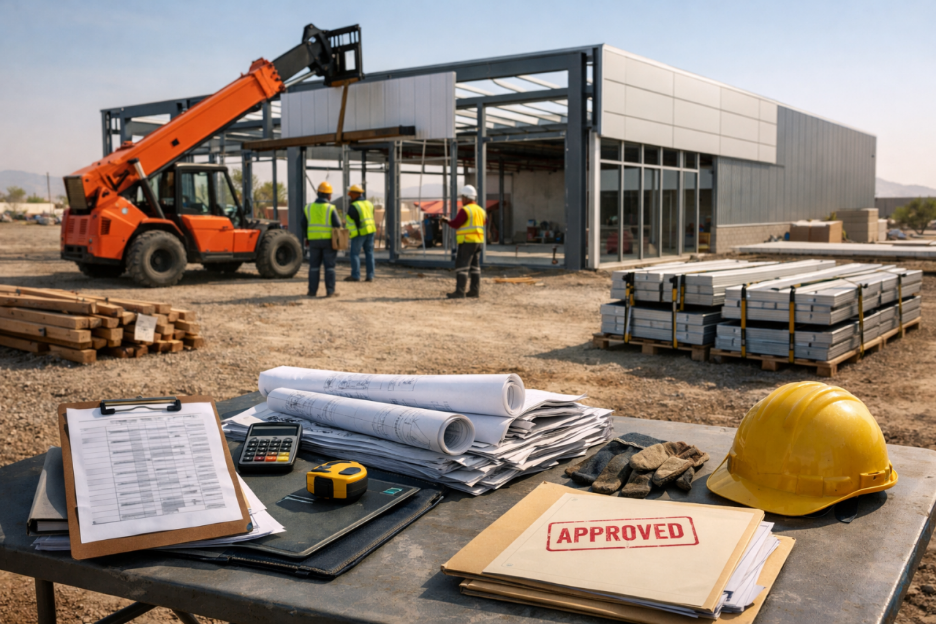
What happened next is the sort of tale that’s upending commercial real estate discussions from one coast to the other. But instead of procrastinating, scaling back, or failing to live up to their commitments, the group turned to prefabricated steel construction and opened all three locations within six weeks of breaking ground.
Their experience illustrates, in graphic and practical terms, the benefits of modern steel construction: the advantages go well beyond materials cost. In a time of uncertain supply chains, workforces, and business timelines, steel is more than a building material. It's a competitive advantage.
The global supply chain disruption, 2020 to 2023 edition. The global supply chain disruption didn't cause the vulnerabilities in conventional construction. It just made them impossible to ignore.
Wood-framed commercial construction requires an extended and interconnected chain of suppliers, subcontractors, and on-site labor that becomes inherently difficult to compress or speed up. “One link goes down and there goes the whole thing,” said Vittorio Hsiang-Jen Liao.
For the Phoenix retailer, it was lumber. But for dozens of other businesses working through that same stretch, it was drywall, electrical conduit, HVAC equipment, or the mere absence of licensed tradespeople. Over time, the traditional building model presumes an uninterrupted supply and presumes labor is simply available. The latter pound, developed primarily in the past few decades into a centre of commerce, has neither.
“Steel modular is a whole different animal,” he said. Its structural parts, columns, beams, roof panels, and wall systems, are engineered and built in a controlled factory environment and then shipped to the site ready for assembly.
That means most of your build timeline is occurring concurrent to site prep, permitting, and foundation work, not after. Result: an overall, steep reduction in the time available.
The Phoenix retail group, when they began to look at steel building options with their new building partner, enjoyed the timeline advantage as an initial enticement. What they found along the way was a wide-ranging set of benefits that have shaped every expansion decision they’ve made since.
Cost predictability was the initial revelation. You are not paying a commodity price for a pre-engineered metal building. The retailer secured a package quote which held for the fabrication and delivery.
That degree of financial predictability is exceedingly rare in traditional commercial construction and perhaps the most important benefit modern steel construction offers thrifty operators.
Structural performance was the second. Steel frame commercial building designs are tested and certified to strict load efforts and spans for wind uplift, seismic tolerance, and snow loads where applicable.
In Phoenix, the issue was excessive heat and monsoon wind events. The structures their team chose were also designed for Arizona’s climate zone, featuring cool-roof metal panel systems and thermal break insulation packages that both met regional energy codes without any required custom engineering fees.
A third benefit was the flexibility in design. A common misconception about pre-engineered steel is that it creates standard warehouse looking buildings. The reality is that with today’s pre-engineered steel systems you can do anything from storefront glass, to curtain walls of glass, to different types of rooflines, and even fully branded exterior finishes.
Two of the three spaces that the retailer group opened are identical to conventionally constructed commercial strip mall tenants, with interior clear-span designs allowing retail floor plans to be designed without interference from structural columns.
The reality is, there's much more to the process of comparing your steel building options than most buyers ever realize, and it’s no different when choosing where to buy in Phoenix. This is exactly why businesses choose steel buildings, they offer unmatched durability and flexibility for a variety of commercial needs. Not all premanufactured metal structures can handle the rigors of heavy-traffic retail. Manufacturers vary significantly in the level of engineering effort, quality of components, and after-sale support.
The primary factor they pinpointed was the manufacturer’s understanding of local code compliance. Building packages are engineered to local load requirements, and they can vary greatly by jurisdiction, climate zone, and building use.
By working with a supplier that had already approved projects in Maricopa County, it saved their team weeks of back-and-forth with the building department.
Insulation specification deserves equal attention. Consistent indoor temperatures are necessary in retail spaces for customers' and merchandise's well-being.
The team ended up with a hybrid insulation system, fiberglass batt in the wall cavities and a continuous reflective barrier at the roof, that delivered the performance they wanted without busting their construction budget.
And last, foundation design coordination is a task that surprises many new steel buyers. Pre-engineered steel buildings distribute loads in highly prescriptive ways that are not the same as wood-frame construction.
Bringing a structural engineer on board at an early stage in the process, before the foundation is poured, makes those expensive changes less likely and helps ensure that an accelerated timeline can be maintained.
The Phoenix retail chain had all of its three locations up and running on time. Their grand opening plans drove the foot traffic and revenue their franchise design anticipated. And the construction cost per square foot came in 18 percent under budget, based on the price quoted by their contractor at the outset for a wood-frame building. That outcome isn't a fluke. It’s a repeatable outcome when commercial operators, carefully evaluating steel building options, come to prefabricated steel with the right preparation, the right partners, and a clear-eyed understanding of what the system needs.
Pre-engineered steel buildings are frequently those that, square foot for square foot, are every bit as competitive with wood frame construction, and in many cases even less expensive when you factor in fewer hours on the job site, abbreviated build-out times, and lower long term maintenance costs. On commercial jobs, it's often where the economies of steel build up on projects larger than 3,000 square feet.
Yes. Today's pre-engineered steel systems provide larger unlimited selections of exterior finishes including, but not limited to, brick veneer, stucco systems, glass storefronts, and custom metal panel profiles. The structure expands to fit nearly any architectural treatment, allowing for full branded retail packages within a pre-engineered solution.
When designed and maintained correctly, a commercial steel building should last 40 to 60 years. Most honest manufacturers will warranty their structural system for 25 to 40 years, based on the design specifications placed in it.