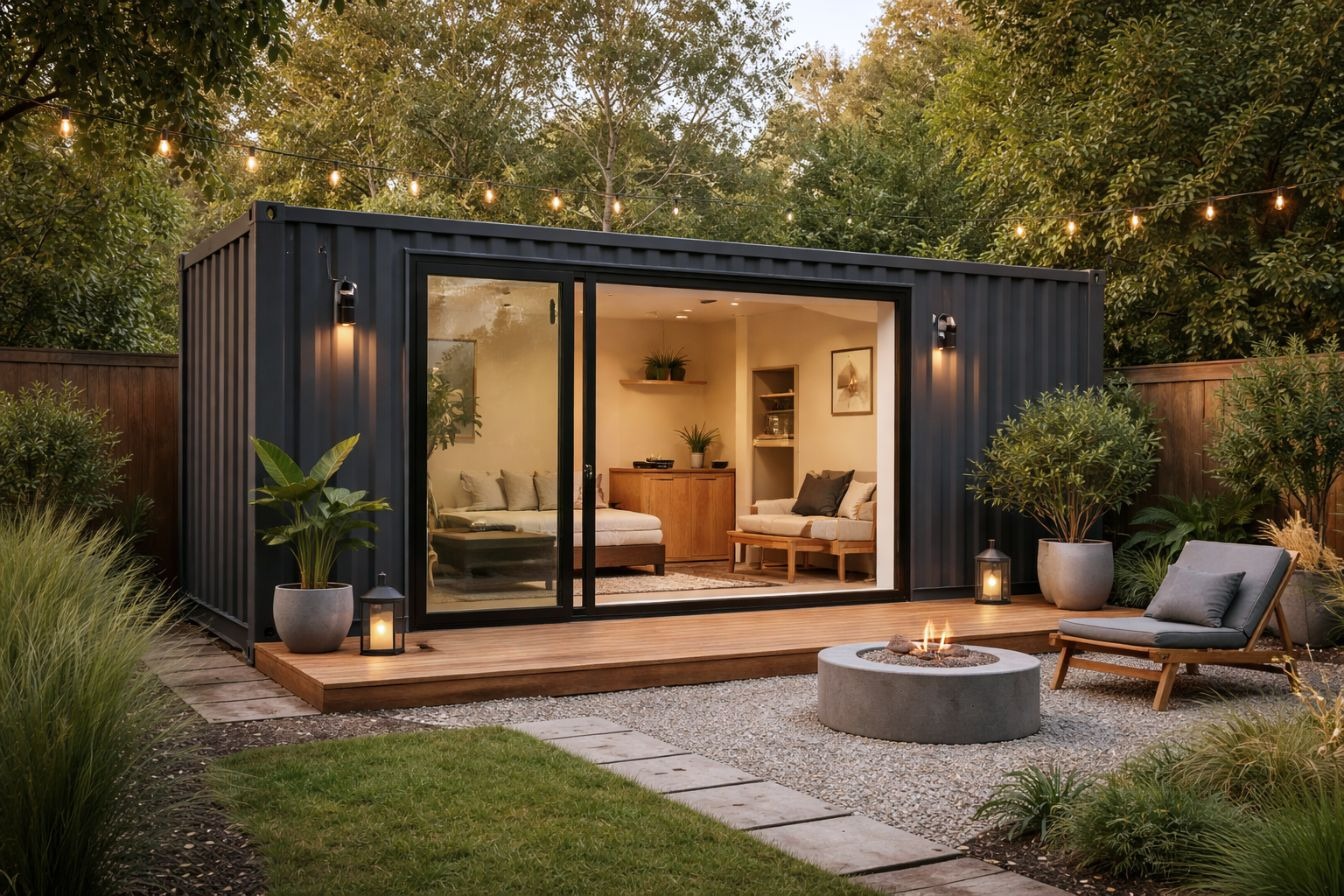
If you have ever wished you had more space at home, you are not alone. Many homeowners want room for visiting family, aging parents, adult children, or even a private office.
A backyard guest house solves that problem without forcing you to move. One of the most creative and cost-effective ways to build that extra space is by using a shipping container.
Shipping containers are strong, simple steel structures. Because they are built to carry heavy loads and survive harsh weather, they make an excellent starting point for a small living space. With the right design, a container can become a beautiful and comfortable backyard guest house.
In this guide, you will learn why shipping containers work so well for guest houses, what steps are involved, and how to turn a basic steel box into a cozy place anyone would enjoy staying in.
A shipping container is already a solid frame. The walls, roof, and floor are designed to be durable and weather resistant. This gives you a head start compared to building from scratch. Instead of framing an entire structure, you are modifying an existing one.
Containers also come in standard sizes. The most common are 20 feet and 40 feet long. A 20-foot container works well for a simple studio style guest house with a bathroom and kitchenette. A 40-foot container gives you more room for a separate bedroom, larger bathroom, and small living area.
Another big benefit is speed. Because the structure already exists, the timeline is often shorter than a traditional backyard addition. Once permits are approved and site work is complete, the container can be delivered and set in place quickly.
For homeowners who value flexibility, a container guest house can also be moved in the future. While it is not as simple as moving furniture, it is far easier than relocating a conventional structure.
Before you buy a container, check your local building codes. Every city and county has its own rules about accessory dwelling units, sometimes called ADUs. Some areas allow them freely. Others have size limits or design requirements.
You may need permits for electrical, plumbing, and structural changes. It is important to work with a contractor or designer who understands local regulations. Proper permits protect your investment and ensure the structure is safe.
You will also need to plan the location in your yard. Think about privacy for both you and your guests. Consider access to utilities, drainage, and how the structure will look from your home and from neighboring properties.
Even though a shipping container is strong, it still needs a proper foundation. A level base prevents shifting and keeps doors and windows aligned.
Common foundation options include concrete piers, a full concrete slab, or compacted gravel with footings. The right choice depends on your soil type, climate, and budget.
A well prepared foundation also protects against moisture. Water pooling under the container can cause problems over time. Proper grading and drainage are key.
A raw shipping container has large cargo doors on one end and solid steel walls everywhere else. To create a guest house, you will cut openings for windows, doors, and possibly sliding glass panels.
It is important to reinforce areas where large openings are cut. Containers are strong because of their continuous steel structure. When you remove sections of wall, you may need to add steel framing to maintain strength.
Inside, you will build standard wood framing for interior walls. This allows you to run electrical wiring, plumbing lines, and add insulation. Framing also gives you a surface for drywall or other wall finishes.
Steel conducts heat and cold very quickly. Without insulation, a container can feel like an oven in summer and a freezer in winter. That is why container insulation is one of the most important parts of the project.
Spray foam insulation is a popular choice because it seals small gaps and adds structural strength. Rigid foam board is another option, especially when combined with a vapor barrier. Some builders use a combination of materials to balance cost and performance.
Insulating the walls and ceiling makes the guest house comfortable year round. It also reduces noise and improves energy efficiency. When done correctly, your container guest house will feel just like any traditional home.
One concern people have about container homes is that they might feel dark or cramped. This can be solved with thoughtful design.
Large windows, glass doors, and even skylights can transform the space. Placing windows on opposite walls allows natural light to fill the room. Glass sliding doors that open onto a small deck create a strong indoor-outdoor connection.
Because a container is narrow, keeping the layout open helps it feel larger. A studio style design with a combined living and sleeping area often works best in smaller units.
A backyard guest house needs basic utilities to be comfortable. This usually includes electricity for lighting and outlets, plumbing for a bathroom, and possibly a small kitchenette.
Many homeowners tie the guest house into their existing home systems. Others choose separate systems, especially for larger properties.
Electrical wiring runs through the framed interior walls. Plumbing lines can connect to your main sewer or septic system. In some cases, a tankless water heater is installed inside the unit to provide hot water without taking up much space.
Heating and cooling can be handled by a ductless mini split system. These units are efficient and do not require bulky ductwork.
Proper airflow keeps the space healthy and comfortable. Because containers are tightly sealed, you must plan for shipping container ventilation during the design phase.
This can include bathroom exhaust fans, kitchen vents, and passive vents near the roofline. Mini split systems also help with air circulation. Windows that open allow fresh air to move through the space.
Good ventilation reduces moisture buildup and improves indoor air quality. It also helps control temperature and prevents condensation from forming on steel surfaces.
Once the structure and systems are in place, the fun part begins. Interior finishes make the guest house feel welcoming.
Light colored walls help reflect natural light and make the space feel larger. Durable flooring like vinyl plank works well because it handles moisture and heavy use. Compact furniture, such as a sofa bed or wall mounted desk, maximizes space.
You can add personality with wood accents, built in shelves, and thoughtful lighting. Even in a small space, smart design creates comfort and style.
A small bathroom with a walk in shower, floating vanity, and modern fixtures can feel surprisingly spacious. In a 40-foot container, you might even fit a separate bedroom for added privacy.
The outside of your container guest house matters just as much as the inside. Landscaping softens the industrial look and helps the structure blend into your yard.
Adding a wooden deck or patio expands usable space. Guests can step outside to relax in the fresh air. Planters, shrubs, and climbing vines add warmth and charm.
Exterior paint also makes a big difference. While some homeowners love the raw steel look, others choose neutral tones that match their main house.
Thoughtful landscaping turns a simple container into a true backyard retreat.
The total cost of a container guest house depends on size, finishes, and location. A used container is typically less expensive than new construction materials for a similar size structure. However, modifications, insulation, plumbing, and electrical work add to the budget.
On average, a simple studio style guest house may cost less than a traditional addition. High end finishes and custom features increase the price.
It is important to budget for permits, site work, and utility connections. Planning carefully from the beginning helps avoid surprises.
Some homeowners use their container guest house for short term rentals. In areas where local laws allow it, this can generate extra income.
Even if you never rent it out, a well built guest house can increase property value. Buyers often see extra living space as a major benefit.
A container guest house can serve many purposes over time. It might start as a space for visiting family, later become a home office, and eventually provide housing for aging parents.
A shipping container guest house is not just a trend. It is a practical solution for homeowners who need extra space without expanding their main home.
It works best for people who value efficiency, modern design, and creative building methods. If you are comfortable thinking outside the box, literally and figuratively, this approach can be rewarding.
With proper planning, permits, insulation, and ventilation, a container can become a comfortable and beautiful living space. The steel structure that once carried cargo across oceans can now host family and friends in your own backyard.