In 2026, visual marketing is no longer just about aesthetics, it is about speed, scalability, personalization, and performance. As ecommerce continues to dominate global retail, brands are under increasing pressure to produce high-quality product visuals across multiple platforms while maintaining consistency and controlling costs. Traditional photography, while still valuable, is no longer agile enough to meet the demands of modern digital commerce.
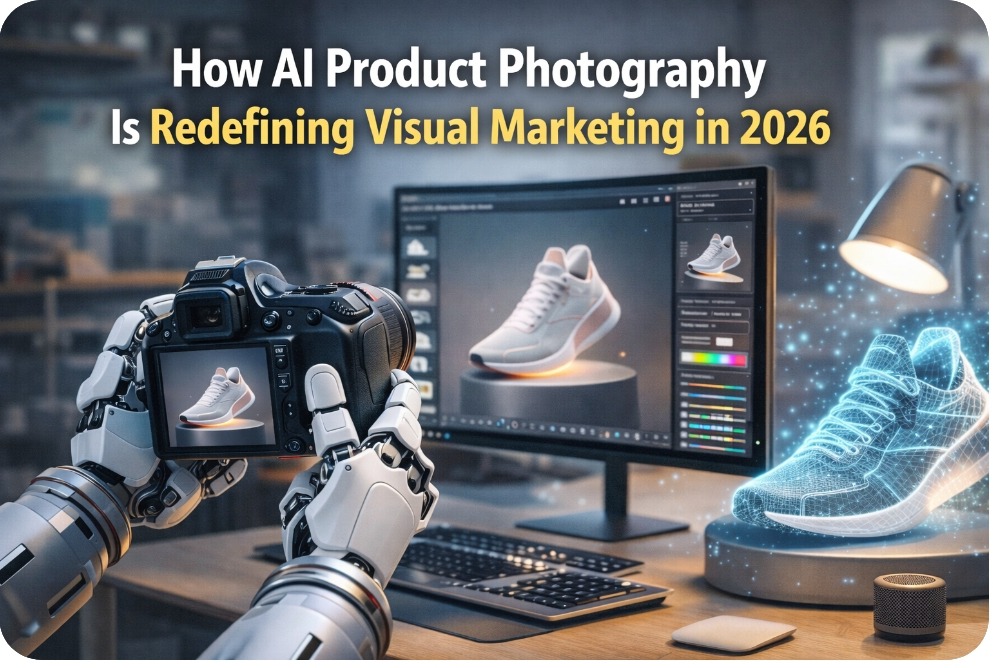
This shift has opened the door to a transformative solution: AI product photography. By combining artificial intelligence with advanced image generation and editing technologies, businesses are redefining how they create, optimize, and deploy visual content across digital channels.
The result? Faster production cycles, lower costs, highly customized visuals, and stronger customer engagement.
Visual content has always played a central role in consumer decision-making. From catalog photography to glossy magazine spreads and online product galleries, imagery shapes perception and trust. But the digital era has changed the scale of demand.
Today, brands need:
Producing this volume of content using traditional studio photography can be expensive and time-consuming. Scheduling shoots, renting equipment, hiring photographers, managing post-production, the process often takes weeks.
In contrast, AI product photography enables brands to generate studio-quality images in a fraction of the time, often without requiring physical shoots at all.
In fast-moving markets, speed matters. Trends shift rapidly, seasonal promotions change weekly, and social media demands constant updates. Businesses that can adapt quickly gain a measurable edge.
AI-driven product visuals allow companies to:
For example, a brand selling footwear can generate the same product displayed in multiple environments, urban streets, beach settings, minimalist studio scenes, without physically transporting the product. This flexibility significantly shortens go-to-market timelines.
In 2026, agility is not optional. It is a requirement for survival in competitive ecommerce environments.
Professional photography remains valuable, but it often requires substantial investment. Studio rentals, lighting equipment, models, stylists, retouching, and editing costs can quickly escalate.
AI product photography dramatically reduces these expenses by automating key aspects of production and editing. Instead of organizing repeated photoshoots, brands can upload base images and generate multiple professional-quality variations digitally.
Small and medium-sized businesses benefit particularly from this technology. What was once accessible only to large enterprises with substantial marketing budgets is now available to startups and independent sellers.
This democratization of visual marketing is reshaping the competitive landscape.
One of the most significant developments in marketing over the past few years is hyper-personalization. Consumers expect content tailored to their preferences, demographics, and browsing behavior.
With AI-powered tools, brands can generate personalized product visuals dynamically. For example:
This level of customization would be nearly impossible with traditional photography alone.
By integrating AI product photography into digital marketing workflows, companies can produce tailored visuals that resonate with specific audience segments, increasing engagement and conversion rates.
Product imagery directly impacts purchasing decisions. Customers cannot physically interact with products online, so visuals must compensate for the lack of tactile experience.
High-quality, detailed, and contextually relevant images increase trust and reduce uncertainty. AI-enhanced visuals can:
When customers see clear, appealing visuals that demonstrate how a product fits into their lives, they are more likely to complete a purchase.
In 2026, conversion-focused visual optimization is central to ecommerce growth strategies.
Modern brands operate across multiple digital touchpoints: websites, social platforms, marketplaces, email campaigns, and paid advertising channels. Each platform requires different image formats and specifications.
AI tools enable rapid resizing, background modification, and adaptation for various channels without compromising quality. A single product image can be transformed into:
Consistency across channels strengthens brand identity while ensuring that content remains optimized for each environment.
Sustainability is increasingly influencing consumer and corporate decisions. Traditional photography can involve shipping products, constructing physical sets, and generating waste through materials and logistics.
Digital image generation significantly reduces environmental impact by minimizing the need for physical resources. Virtual backgrounds replace physical props, and digital editing reduces the need for repeated reshoots.
Brands that prioritize sustainable marketing practices can leverage AI product photography as part of their environmental responsibility initiatives.
One of the most exciting aspects of AI-powered visual tools is creative flexibility. Brands are no longer limited by studio size, weather conditions, or geographic location.
Products can be placed in:
Creative teams can experiment rapidly without the logistical challenges of traditional production.
This freedom encourages innovation and storytelling that elevates brand identity beyond standard catalog imagery.
Artificial intelligence does more than generate images; it can also analyze performance data. By tracking engagement metrics, click-through rates, and conversion data, brands can determine which visual styles perform best.
This enables:
Instead of relying solely on intuition, marketing teams can optimize visual content strategically.
The integration of analytics with AI product photography transforms visual marketing into a measurable, iterative process rather than a static asset creation workflow.
Large corporations once dominated high-quality visual marketing because they could afford professional production teams. Today, AI-powered tools level the playing field.
Entrepreneurs launching ecommerce stores can produce polished product visuals without investing heavily in equipment or hiring agencies. This accessibility fuels innovation and allows small brands to compete in crowded marketplaces.
By reducing barriers to entry, AI technology supports a more inclusive and dynamic digital economy.
While AI-generated visuals offer numerous benefits, responsible implementation is crucial. Brands must ensure:
Misleading visuals can damage trust and reputation. The goal is to enhance presentation, not distort reality.
When used responsibly, AI tools strengthen authenticity rather than undermine it.
Looking ahead, AI-powered visual marketing will likely become even more integrated with augmented reality, 3D modeling, and immersive ecommerce experiences.
We can expect advancements such as:
As technology evolves, brands that embrace AI product photography early will remain ahead of competitors who rely solely on traditional workflows.
The shift is not about replacing creativity but augmenting it. AI tools empower creative professionals to focus on strategy and storytelling rather than repetitive production tasks.
Visual marketing in 2026 demands agility, personalization, efficiency, and measurable performance. Traditional photography alone cannot meet the scale and speed required by modern ecommerce and digital advertising ecosystems.
AI product photography is redefining how brands create, optimize, and deploy product imagery. By reducing costs, accelerating production, enabling personalization, and supporting data-driven decision-making, AI-powered visuals provide a strategic advantage in competitive markets.
As businesses continue to prioritize digital growth, integrating AI-driven image generation into marketing strategies is no longer experimental, it is essential. Companies that adopt this technology thoughtfully and responsibly will not only improve operational efficiency but also elevate brand storytelling and customer engagement.