The idea of creating a full song from a simple written prompt once sounded like science fiction. Today, Text to Music technology is making that possible. With just a few descriptive lines — mood, genre, tempo, and theme — modern AI tools can generate original music in seconds. This shift is not only changing how music is produced but also how creators, marketers, educators, and everyday users interact with sound.
If you’re curious about how Text to Music works, who it’s for, and why it matters for the future of creativity, this guide breaks it down in a clear, practical way.
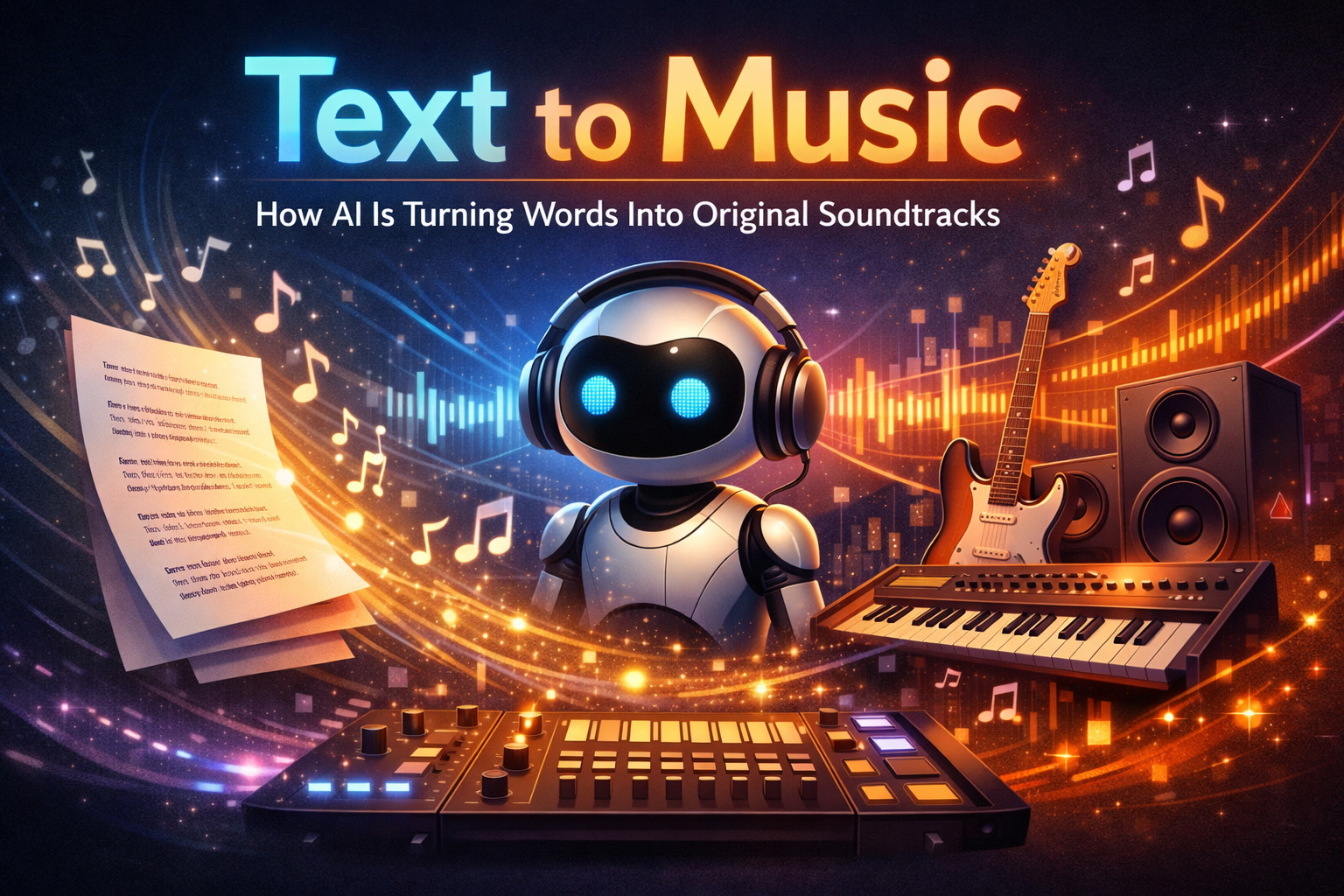
Text to Music is an AI-powered process that converts written prompts into musical compositions. Instead of using instruments or digital audio workstations, users describe the music they want in natural language. The system then generates a track that matches the description.
For example, a prompt like:
“Create a calm, cinematic piano track with soft strings and a hopeful mood”
can instantly produce a unique piece of music aligned with those instructions.
This technology uses machine learning models trained on large datasets of musical structures, styles, instruments, and patterns. It analyzes your text prompt, interprets style and emotion, and builds music accordingly.
There are three major reasons Text to Music tools are rapidly gaining popularity:
Traditional music production can take hours or days. With Text to Music, a usable track can be created in seconds. This is especially useful for content creators working under tight deadlines.
You don’t need to understand chords, scales, or mixing. If you can describe a sound or mood, you can generate music. This lowers the barrier to entry and opens music creation to everyone.
Hiring composers or buying licensed tracks can be expensive. Text to Music systems offer affordable or even free options for generating background scores and custom audio.
Behind the scenes, Text to Music systems rely on advanced AI models trained on:
Melody patterns
Rhythm structures
Instrument sounds
Genre characteristics
Emotional tone markers
When you type a prompt, the system breaks it into musical attributes such as:
Tempo (fast, slow, moderate)
Mood (happy, dark, epic, relaxed)
Instrumentation (guitar, piano, synth, orchestra)
Style (jazz, cinematic, lo-fi, pop)
It then generates an original composition that fits those attributes. The result is not copied from existing songs — it’s newly generated based on learned patterns.
Text to Music is useful across many industries and creative fields.
Video creators often need background music. Instead of searching libraries for hours, they can generate tracks tailored to each video’s mood and pacing.
Campaigns often require custom sound. Text to Music allows teams to quickly test different moods and styles without hiring a composer for each variation.
Indie game creators can produce adaptive music themes for levels, menus, and scenes using descriptive prompts.
Podcast intros, transitions, and ambient backgrounds can be generated quickly and adjusted with new prompts.
Teachers can demonstrate music styles and emotional tone using prompt-based generation, making lessons more interactive.
To get better results from Text to Music, your prompt should be specific but natural. Think like a director describing a scene.
Uplifting
Suspenseful
Peaceful
Energetic
Acoustic guitar
Piano
Synth pads
Orchestra
Lo-fi
Cinematic
Jazz
EDM
Ambient
Background music for a travel vlog
Intro theme for a tech podcast
Battle music for a game scene
“Energetic electronic dance track with heavy bass, festival vibe, fast tempo, and bright synth leads”
The more clearly you describe the target feeling, the better the output.
While Text to Music is powerful, it’s not perfect.
Professional composers still have more precise control over structure and nuance.
Highly detailed orchestral or progressive compositions may need multiple prompt refinements.
Different platforms have different commercial usage terms. Always check usage rights before publishing generated tracks.
The future of Text to Music looks extremely promising. We can expect:
Real-time adaptive music generation
Voice + text combined prompts
Style cloning from reference tracks
Interactive soundtrack systems
Personalized music engines for apps and games
As models improve, the gap between AI-generated and traditionally composed music will continue to narrow.
Text to Music is transforming how sound is created and used across digital platforms. It removes technical barriers, speeds up production, and gives creators instant access to custom audio. Whether you’re a marketer, educator, developer, or content creator, this technology can dramatically improve your workflow.
The key to success is learning how to write better prompts, experiment with variations, and use generated music strategically. As adoption grows, Text to Music will likely become a standard creative tool — just like image and video generation is today.