In today’s fast-paced digital world, corporate training has evolved far beyond the traditional classroom-and-textbook model. Video content has become the gold standard for boosting employee engagement and learning effectiveness. However, for many HR and Learning & Development (L&D) departments, this presents both an opportunity and a significant challenge.
Imagine producing a new employee onboarding course. You have to coordinate an instructor’s schedule, book a professional studio, hire a film crew, and then endure a lengthy post-production process of editing and review. This entire workflow can take weeks and cost thousands of dollars. The real headache, however, comes when a company policy, product feature, or compliance regulation changes slightly. The entire, meticulously crafted video series might need to be scrapped and re-shot. And if your business is global, creating multilingual versions for employees in different regions exponentially multiplies the cost and complexity.
Fortunately, rapid advancements in generative AI are bringing a revolutionary solution to this dilemma. Specifically, the maturation of “AI talking avatar generator” technology is making high-cost, rigid video production a thing of the past. It empowers organizations by allowing anyone to transform a text script into a professional video presentation, led by an AI avatar, in minutes and at a fraction of the cost. This article will explore this technology, break down how it drives cost and time efficiency in corporate training, and showcase its practical use cases.
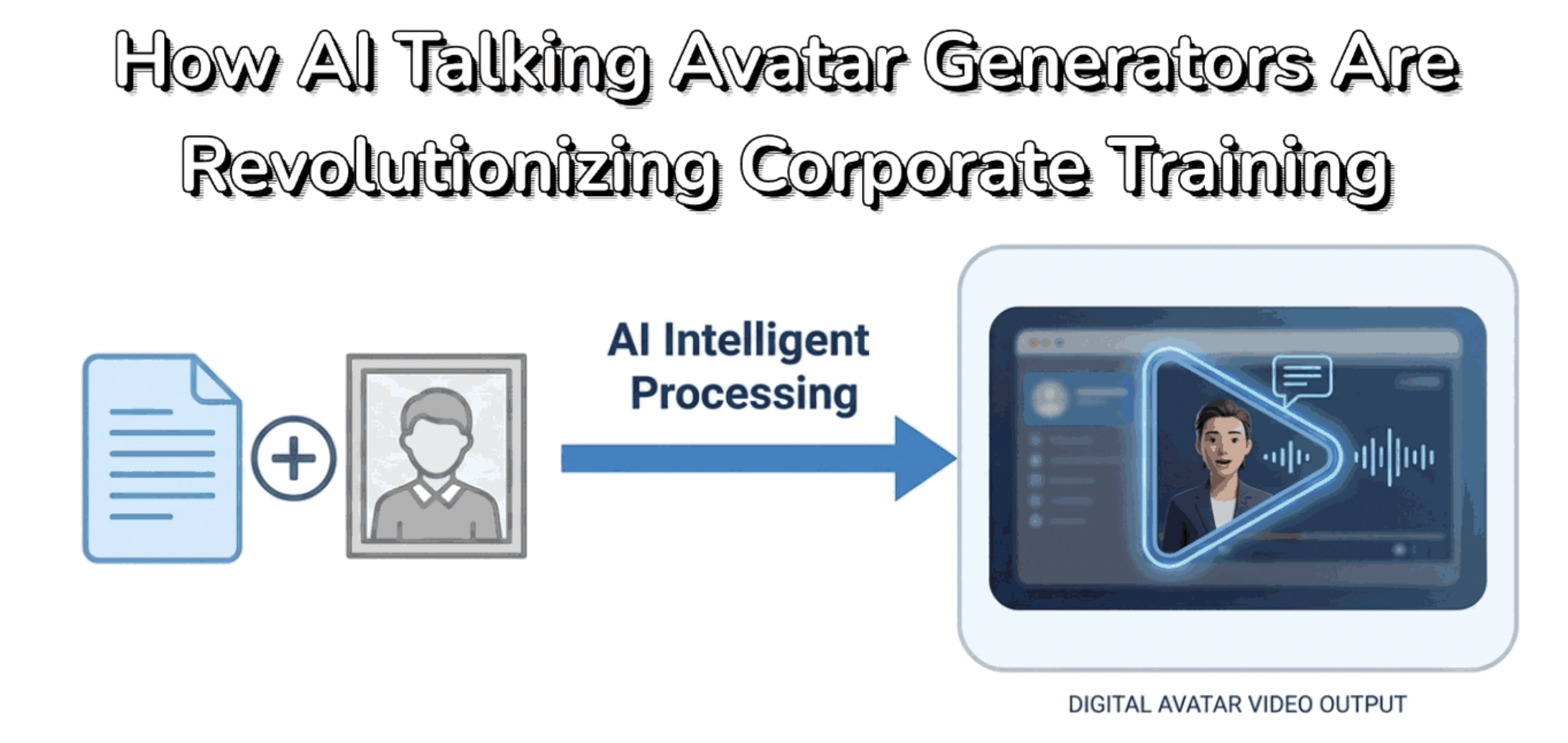
In simple terms, an AI talking avatar generator is a software tool that brings a static portrait photo to life, making it speak based on a text script you provide. You no longer need a camera or a live presenter. All you need is your script and a picture to quickly create a talking avatar video. The core of this technology is to package complex AI algorithms into a user-friendly application, fundamentally changing the way video content is produced.
While the underlying technology is sophisticated, the workflow for the user is incredibly straightforward, typically involving three main steps:
The value of an AI video generator for training extends far beyond being a novelty. It delivers four core advantages for corporate L&D:
This technology isn’t just theoretical; it’s already delivering immense value in several specific corporate training scenarios.
The first step to integrating new employees is often introducing them to the company culture and values. You can create a talking avatar from a photo of your CEO or HR leader to deliver a welcome message. This allows them to “personally” share the company’s history, vision, and mission. It’s warmer and more engaging than plain text and ensures a standardized, positive first impression.
For technical support and sales teams, mastering product features is non-negotiable. You can produce a series of short “how-to” videos for each product feature or software workflow. When the software interface is updated or a feature is iterated, you don’t need to re-record the entire series. Simply update the relevant script and screenshots, and you can generate the latest training content in minutes, ensuring your materials are always in sync with your product.
In regulated industries like finance, healthcare, and manufacturing, regular compliance and safety training is mandatory. The content for this training must be precise and error-free. Using an AI avatar to deliver this information ensures complete accuracy and eliminates risks associated with an instructor’s personal interpretation or slips of the tongue. Furthermore, the generated videos can be easily archived as proof of compliance for audits.
Beyond structured training courses, a vast amount of internal corporate communication can be optimized with AI avatars. Think about a long, text-heavy email announcing a company policy update—how many employees actually read it thoroughly? Now, you can have the department head’s or HR manager’s AI avatar deliver the key points in a 1-2 minute video summary. This format is not only more effective at capturing employees’ attention and increasing message reach, but it also makes communication feel more personal and approachable.
Now that we understand the immense potential and use cases of AI talking avatars, the natural next question is: how do we get started? Fortunately, the market is now home to many excellent AI video creation tools that package this sophisticated technology behind a simple user interface.
When evaluating a platform, businesses should focus on several key factors: the realism of the avatar, the richness and multilingual support of the voice library, the ability to make an AI avatar talk from a custom photo upload, and the overall ease of use. A good tool should empower a training specialist with no video production experience to get up and running quickly, allowing them to focus on the content itself, not the technical complexities.
For example, solutions like Vokes AI are specifically focused on providing a seamless text-to-talking-video workflow. It was designed to address the pain points of corporate content creation, allowing users to upload their own photos and quickly transform lengthy training documents or internal memos into professional presentations delivered by an AI spokesperson. For teams that prioritize efficiency and a polished final product, such solutions represent a noteworthy direction.
What we are seeing today is just the beginning. Looking ahead, AI talking avatar technology is evolving to become more intelligent, realistic, and interactive. Here are a few trends to watch:
The AI talking avatar generator has transitioned from a distant, futuristic concept to a practical, accessible tool that solves tangible business problems. Its purpose is not to replace the emotional connection and deep interaction that human instructors provide, but to serve as a powerful assistant that frees content creators from repetitive, high-cost, and time-consuming tasks.
For the corporate training sector, this technology perfectly resolves the core conflict between cost, efficiency, flexibility, and standardization that has long plagued traditional video production. It makes knowledge updates and dissemination more agile and economical than ever before.
In this era of constant change, embracing innovative tools like AI talking avatars is no longer an option—it is a strategic imperative for maintaining organizational competitiveness and learning vitality. This is about more than just adopting new technology; it’s about building a more agile, efficient, and scalable corporate learning ecosystem.