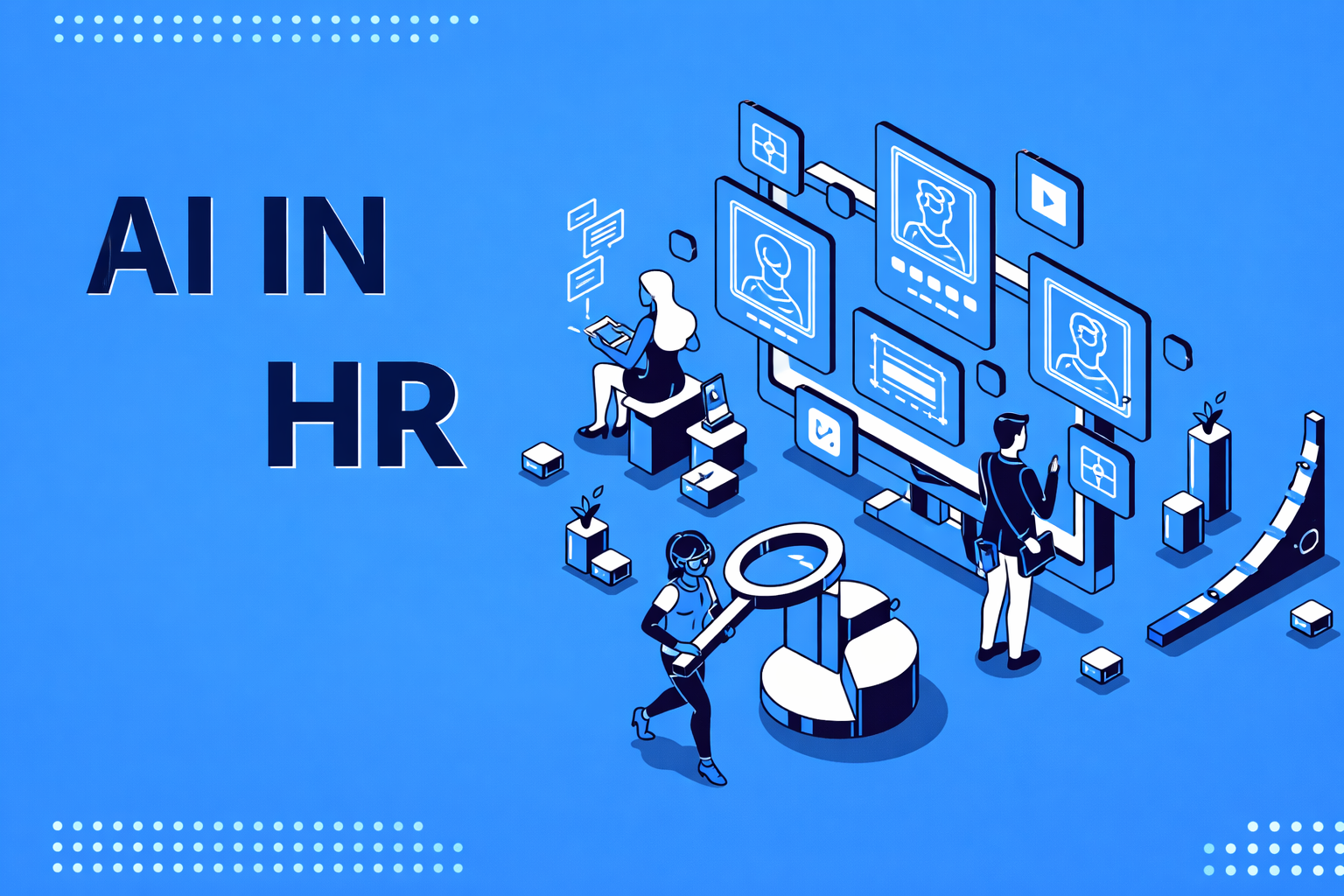
Human resource management is undergoing a fundamental transformation as organizations navigate rapid digital evolution, rising employee expectations, and intense competition for skilled talent. Traditional HR models—often manual, reactive, and time-consuming—are no longer sufficient to support scalable operations or data-driven workforce strategies. In response, AI in HR has become a critical enabler, empowering organizations to modernize talent acquisition, workforce management, and employee retention while improving efficiency and overall employee experience.
Artificial intelligence is reshaping the HR function by elevating it from an administrative role to a strategic business partner. Through technologies such as machine learning, natural language processing, and predictive analytics, HR teams can shift from intuition-based decisions to insight-driven workforce planning.
Organizations adopting AI in HR can process and analyze vast volumes of employee data, extract meaningful insights, and proactively address workforce challenges. Rather than replacing HR professionals, AI augments their capabilities—enhancing speed, accuracy, and consistency across core HR processes.
As enterprises scale their hiring efforts, job description (JD) management becomes increasingly complex and resource-intensive. Despite advances in generative AI across HR, JD creation and governance often remain fragmented, manual, and inconsistent. To close this gap, LeewayHertz operationalizes its advanced generative AI capabilities through ZBrain—an enterprise-grade AI enablement platform designed to support secure, intelligent, and scalable HR workflows.
ZBrain HR JD Builder is an AI-powered solution that automates and governs the entire job description lifecycle, from drafting and internal reviews to approvals and publishing across integrated HRMS, HRIS, and HCM platforms. Built for enterprise-scale workforce planning, it enables HR teams to produce standardized, compliant, and compensation-ready job descriptions with greater efficiency and consistency.
By embedding governance, compliance alignment, and system integrations into a single workflow, ZBrain HR JD Builder significantly reduces manual effort while maintaining a centralized and authoritative repository for job descriptions across the organization.
Extensive JD Template Library
The platform offers access to more than 150 prebuilt job description templates, enabling organizations to standardize content and accelerate JD creation across roles, teams, and business units.
Duplicate and Similar JD Identification
ZBrain HR JD Builder detects duplicate or closely similar job descriptions during validation, helping organizations avoid redundancy and uncontrolled JD proliferation.
Automated Customization and Quality Enforcement
The solution ensures alignment with organizational guidelines and role-specific requirements while identifying biased language, inconsistencies, and anomalies to maintain quality and fairness.
Compensation-Ready Job Descriptions
HR teams can incorporate salary ranges, benefits, and perks directly into job descriptions, supporting transparency and competitiveness in hiring.
Compliance and Policy Alignment
The platform supports regional regulatory requirements and internal standards by aligning JD language with applicable compliance frameworks and policies.
Role-Based Governance and Approval Workflows
ZBrain enables controlled access, predefined approval processes, and secure publishing permissions, ensuring accountability throughout the JD lifecycle.
Version Control and Iterative Management
Built-in versioning capabilities allow HR teams to manage updates efficiently while maintaining historical traceability and consistency over time.
Seamless Publishing to HR Systems
Direct integration with HRMS, HRIS, and HCM platforms eliminates manual updates, improves accuracy, and ensures job descriptions remain synchronized across systems.
Together, these capabilities transform job description management into a strategic, governed function rather than an administrative task.
Machine Learning for Workforce Forecasting
Machine learning models analyze historical and real-time HR data to identify trends related to performance, engagement, and attrition. These insights help HR leaders anticipate risks, optimize hiring strategies, and plan future workforce needs.
Natural Language Processing for HR Applications
NLP enables HR systems to understand and interpret human language, supporting use cases such as resume screening, sentiment analysis, and AI-driven chatbots that handle routine employee inquiries efficiently.
Advanced Analytics for Informed Decision-Making
AI-driven analytics convert fragmented HR data into actionable insights. By integrating information from recruitment, performance, and learning systems, HR teams can track KPIs, measure outcomes, and align people strategies with business objectives.
AI-Powered Talent Acquisition
Recruitment is one of the most impactful areas for AI adoption. AI tools automate resume screening, match candidates to roles based on skills and experience, and help minimize unconscious bias—resulting in faster and more consistent hiring outcomes.
Employee Engagement and Experience Analytics
AI evaluates employee feedback, surveys, and communication data to measure engagement and workplace sentiment. These insights enable organizations to address issues early and personalize engagement initiatives.
Learning and Development Personalization
AI supports tailored learning paths by analyzing employee skills, performance gaps, and career goals. Intelligent learning platforms recommend targeted training programs that align individual growth with organizational priorities.
Performance Management and Productivity Insights
AI-enhanced performance systems deliver objective evaluations by analyzing multiple performance indicators, enabling fair assessments, continuous feedback, and data-driven goal setting.
Operational Efficiency Gains
By automating repetitive administrative tasks, AI allows HR professionals to focus on strategic initiatives such as leadership development, workforce planning, and organizational culture.
More Accurate and Proactive Decisions
AI-driven insights reduce reliance on intuition, enabling organizations to anticipate workforce trends and make informed, forward-looking decisions.
Improved Employee Experience
AI-powered self-service platforms and chatbots provide employees with instant access to HR support and information, improving satisfaction and reducing response times.
Scalable HR Functions
AI enables HR operations to scale seamlessly as organizations grow, without proportional increases in cost or complexity—making it especially valuable for large or distributed enterprises.
While AI offers significant advantages, responsible implementation is essential. Organizations must address data privacy, algorithmic bias, and transparency to ensure ethical AI usage in HR. Human oversight remains critical to validate AI-driven insights and uphold fairness in people-related decisions.
The future of HR lies in intelligent, adaptive systems that continuously learn and evolve. As AI technologies mature, HR functions will become increasingly predictive, personalized, and strategically aligned with business goals. Organizations that invest early in AI-driven HR transformation will be better positioned to build resilient, data-driven, and employee-centric workplaces.
AI in HR has moved beyond theory to become a practical force reshaping how organizations manage their workforce. By embedding AI across recruitment, engagement, performance, and learning, enterprises can achieve greater efficiency, smarter decision-making, and enhanced employee experiences. Long-term success will depend on combining advanced AI capabilities with ethical governance and human expertise to create sustainable, future-ready HR ecosystems.