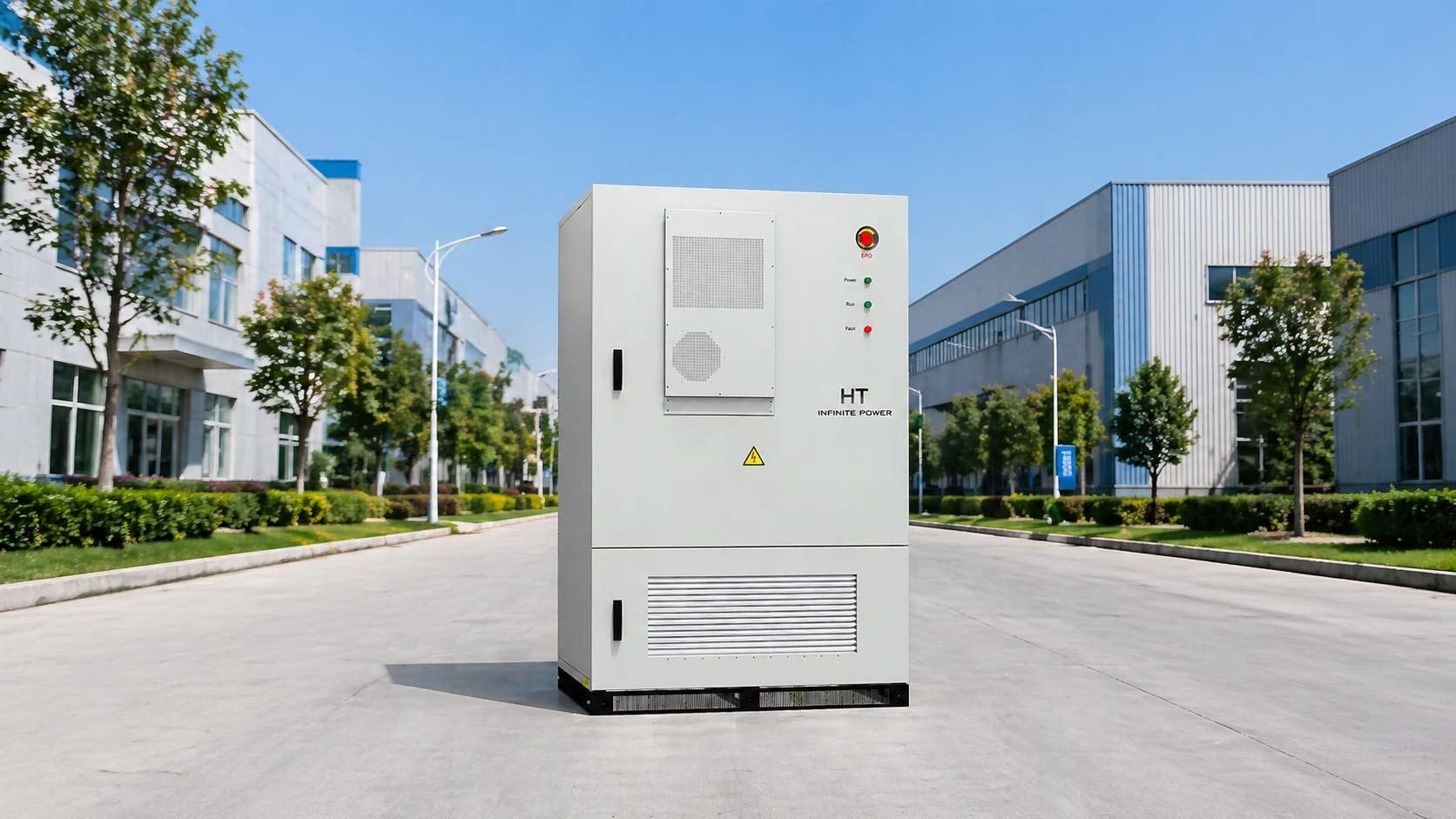
Reliable power is no longer a luxury for commercial sites, industrial facilities, remote communities, and critical infrastructure. In many places, the grid is unstable, expensive, or simply unavailable. That is where a commercial battery storage system becomes more than an efficiency upgrade. It becomes the backbone of local power continuity.
Microgrids and off-grid systems solve different problems, but they share the same challenge: power must be available, balanced, and controlled at all times. Solar panels, wind turbines, and generators can supply energy, but they do not automatically provide stability. Loads change quickly. Renewable output fluctuates. Diesel generators respond slowly and become inefficient at partial load. A properly designed battery system fills those gaps with fast response, precise control, and usable reserve capacity.
That is why commercial storage is now central to many microgrid architectures. It supports grid-forming functions, smooths renewable intermittency, reduces generator runtime, and helps a site operate with far less risk of shutdown. In off-grid environments, it can determine whether a system is merely generating electricity or actually delivering dependable power.
A microgrid is not just a small grid. It is a coordinated power system that can operate connected to the utility grid or independently. That flexibility is valuable, but it comes with technical complexity. Frequency must remain within limits. Voltage must stay stable. Supply and demand must match continuously, even when a cloud passes over a solar array or a large motor starts.
This is where a commercial battery storage system plays a control role rather than only an energy role.
Unlike generators, batteries respond almost instantly. That fast response helps cover short-term gaps, absorb sudden load spikes, and support transient events that would otherwise trigger alarms or outages. In practical terms, the battery acts like a buffer between variable generation and unpredictable demand. The result is a system that feels much more like a traditional utility grid, even when it is not.
For commercial and industrial users, that distinction matters. Hospitals, data centers, water treatment plants, cold storage facilities, telecom sites, and mining operations cannot tolerate unstable power. Even a few seconds of interruption can create lost product, damaged equipment, or operational downtime. A battery-based microgrid lowers that risk by keeping the system balanced in real time.
A grid-connected battery system often follows the grid. In off-grid or islanded operation, that is not enough. Something has to establish voltage and frequency first, then keep the rest of the system synchronized. This is where grid-forming behavior matters.
In a grid-forming setup, the battery inverter does not simply react to the grid. It helps create it. That allows a microgrid to start, stabilize, and run without relying entirely on a spinning generator. For remote sites, that is a major advantage. It also improves black start capability, meaning the system can recover after a total shutdown without waiting for external power to return.
This is one of the most important reasons commercial battery storage systems are increasingly chosen for microgrids. They are not just energy reservoirs. They are active electrical assets.
In a practical sense, grid-forming support can help with:
For off-grid operations, this is often the difference between a power system that works on paper and one that works in the field.
Off-grid systems are unforgiving. There is no utility grid to absorb mistakes. Every watt must be balanced locally.
A typical off-grid site may combine solar PV, a battery bank, and a generator. During the day, solar covers much of the load and charges the battery. At night or during prolonged low-sun periods, the battery discharges to carry the site. The generator steps in when state of charge drops too far or when demand exceeds what renewable generation and storage can support.
The battery system is doing more than storing energy. It is managing time. It lets renewable generation be used when it is available and consumed when it is needed. Without storage, excess midday solar is wasted and night-time demand must be met entirely with fuel.
That timing function becomes especially valuable when loads are irregular. A remote telecom station may have steady demand but occasional peaks from cooling equipment. A mining camp may have long base loads with sudden surges from processing equipment. A resort island may face daily usage shifts tied to occupancy and cooling demand. In each case, the battery smooths the mismatch between supply and demand.
A commercial battery storage system also improves fuel logistics. For remote operations, fuel delivery is expensive, slow, and vulnerable to weather or access constraints. Every hour the generator can be avoided reduces cost and operational risk. Over time, this can materially improve the economics of the site.
Diesel generators are reliable, but they are not efficient when they are constantly cycling on and off or running at light load. That causes fuel waste, more wear, and higher maintenance frequency. Battery storage helps by handling short and medium-duration loads that would otherwise force the generator to run.
A useful way to think about it is this: the generator should cover steady energy production, while the battery should cover dynamic events.
For example, in a site with a 300 kW average demand and 600 kW short peaks, the battery can absorb the peak while the generator runs closer to its efficient operating range. That reduces both fuel consumption and mechanical stress. It also extends service intervals because the generator experiences fewer start-stop cycles.
The economic effect is often underestimated. Fuel savings are visible, but maintenance savings are just as important. Fewer hours on the generator means fewer oil changes, fewer component replacements, and longer asset life. For an isolated commercial site, that can create a strong return on investment even before accounting for resilience benefits.
Many projects focus on kilowatt-hour capacity and forget power quality. That is a mistake. Microgrids and off-grid systems often power sensitive loads, and those loads care about more than just whether electricity is available.
A commercial battery storage system can help maintain power quality through:
This matters in real operations. A manufacturing line may trip if voltage dips too far. A refrigeration system may be damaged by unstable power. A communications site may reboot unexpectedly during poor frequency control. These events do not always appear dramatic from a system-design perspective, but they are costly in the field.
Storage improves those conditions by acting instantly. That speed is difficult for rotating machinery to match. It is one of the core reasons battery systems are now treated as grid assets, not just backup equipment.
A strong microgrid design starts with the load profile, not the battery spec sheet. Too many systems are sized by intuition. That usually leads to underperformance.
The right sizing approach looks at four questions:
Energy capacity and power capacity must both be considered. A system can have enough kilowatt-hours but still fail if its inverter cannot handle the required power. The reverse is also true. A system can deliver high power but run out of stored energy too quickly.
A simplified planning formula is:
Required energy (kWh) = Critical load (kW) × backup duration (hours) ÷ usable depth of discharge
That formula is only a starting point. In practice, designers also factor in inverter efficiency, temperature derating, aging reserve, reserve margin, and load diversity. For off-grid systems, seasonal variation is especially important. A site that works in summer may struggle in winter if solar production falls and heating loads rise.
This is why a commercial battery storage system should be selected as part of the full energy architecture, not as an isolated product.
The strongest case for storage appears in projects where uptime matters and electricity is expensive to supply.
A remote island resort, for example, may rely on solar, batteries, and diesel backup. The battery handles evening demand and short peaks, while the generator only runs when necessary. That lowers fuel use and noise, and it improves the guest experience.
A mining site in a weak-grid or no-grid region may use storage to stabilize large motor loads and support phased renewable integration. This allows the operator to reduce diesel dependence without sacrificing reliability.
A telecom tower network can use batteries to ride through outages and maintain service during generator transitions. Since these sites are often dispersed, the ability to reduce fuel logistics is a major advantage.
In an industrial park with a local microgrid, storage can support peak shaving, emergency supply, and seamless islanding. If the utility feed is unstable, the site can continue operating with less disruption. That kind of flexibility is especially valuable for production environments that cannot afford unplanned stops.
Many buyers initially think about storage in terms of backup hours. That is too narrow. In microgrid and off-grid settings, the battery system controls how the entire site behaves.
It determines whether renewable energy can be used efficiently. It determines how often the generator runs. It determines whether a sudden step load becomes a fault or just another event the system absorbs. It influences cost, resilience, and maintenance over the full life of the project.
This is why a commercial battery storage system often delivers value in several ways at once. It lowers fuel consumption. It reduces wear on conventional assets. It improves system stability. It makes renewable integration practical. And in many cases, it turns an unreliable power source into a manageable one.
Microgrid and off-grid operations are demanding environments. They need fast control, stable voltage and frequency, efficient energy use, and reliable backup. A commercial battery storage system helps meet all of those requirements in a way that generators and renewables alone cannot.
Its value is not limited to backup power. It supports grid-forming operation, reduces generator dependence, smooths renewable variability, and keeps critical loads online when conditions change. For commercial sites that depend on continuity, that combination is hard to replace.
As more organizations move toward resilient and distributed energy architectures, battery storage is becoming a core system layer rather than an optional add-on. In microgrids and off-grid applications, that shift is already visible.