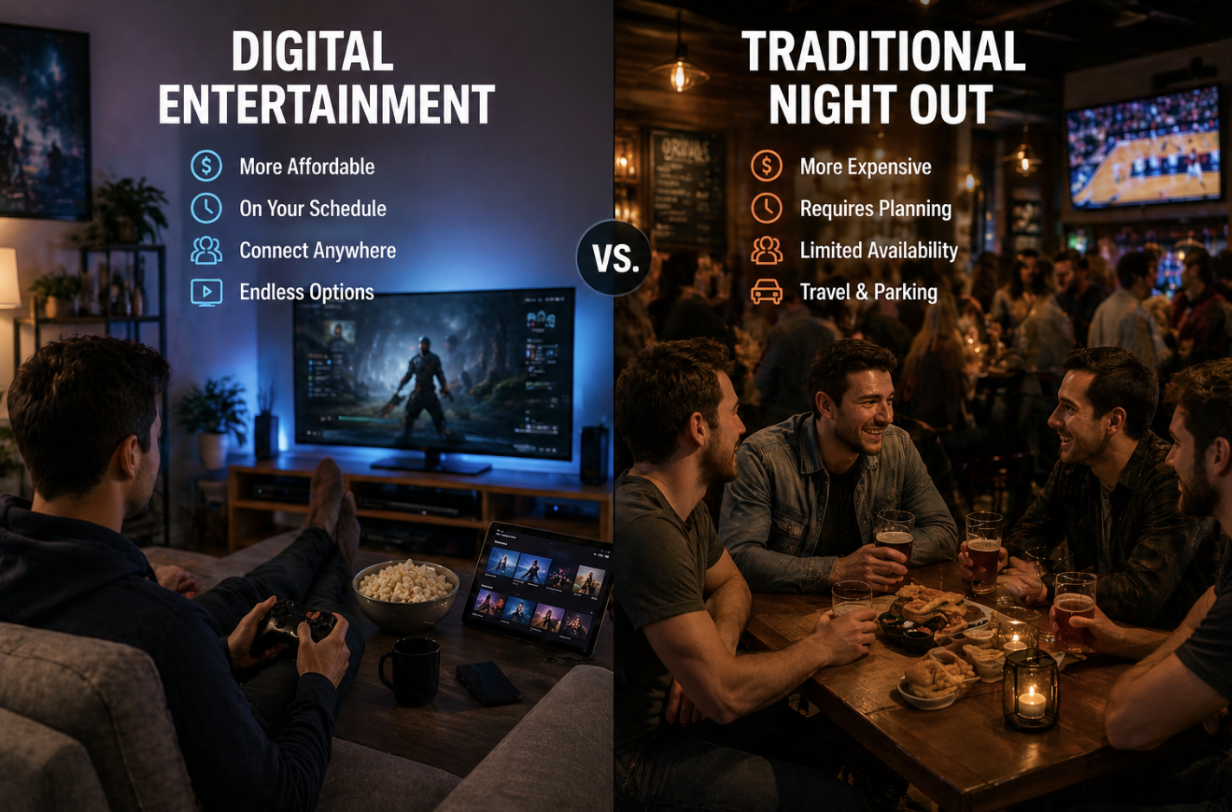
The way Americans spend their free time has shifted significantly over the past few years. Rising costs, flexible work schedules, and constant access to digital platforms have changed what “going out” means. For many men aged 25–35, evenings are now built around convenience and control rather than physical venues. This article breaks down why digital entertainment is replacing traditional outings and how to adapt your habits without losing social connection, including the growing role of casual formats like online slot games within broader digital ecosystems.
The modern lifestyle in the U.S. is increasingly centered around digital access. Remote work, food delivery, and streaming platforms have reduced the need to leave home for basic and leisure activities.
This shift is not about isolation but about efficiency. People are choosing environments where they control cost, time, and experience without sacrificing engagement.
Digital entertainment offers a practical solution to two growing concerns: rising prices and limited free time. Compared to a night out, staying in provides more flexibility with fewer commitments.
Dining out, attending games, or going to bars has become significantly more expensive. According to U.S. consumer spending reports from 2024, discretionary entertainment costs have steadily increased, especially in urban areas.
This cost gap pushes users toward digital alternatives that offer more value per dollar.
Streaming, gaming, and apps provide immediate access without planning. There is no need to coordinate schedules, commute, or wait in lines.
Quick win: Set up 2–3 go-to platforms so you can instantly switch between entertainment options without wasting time browsing.
Digital platforms are no longer passive. They have become interactive environments where users engage socially, compete, and build communities.
Streaming platforms dominate entertainment consumption. Users prefer on-demand content over scheduled programming, allowing them to control when and how they watch.
Popular behaviors include:
Gaming has evolved into a primary social outlet. Multiplayer titles allow friends to connect without geographic limits.
Pro tip: Treat online gaming sessions like planned social time by scheduling them weekly to maintain consistency with friends.
Many platforms now include voice chat, tournaments, and community events that replicate real-life interaction.
Beyond mainstream gaming, niche entertainment formats have seen steady growth as users look for more flexible and low-commitment options. These include casual browser-based games, fantasy sports apps, and interactive mini-games built into larger platforms.
Unlike traditional gaming, these formats are designed for short sessions and quick engagement. They are often used as a way to unwind between tasks or fill small gaps in the day, making them a natural fit for busy schedules without requiring long-term commitment.
Smartphones are the central hub of modern entertainment. They allow users to consume content, play games, and socialize from anywhere.
Most digital content is now consumed via mobile devices. This includes streaming, gaming, and social media.
Key behaviors include:
Short-form content platforms have changed attention spans and expectations. Users now prefer fast, engaging content that delivers immediate value.
Watch out: Overconsumption of short-form content can reduce focus and productivity if not managed properly.
Many apps replicate real-world experiences digitally, including:
This approach ensures digital entertainment remains beneficial rather than overwhelming.
Psychological comfort is a major factor in the shift toward digital entertainment. Users prefer environments where they control interactions and outcomes.
Many people find crowded venues stressful or unpredictable. Digital environments remove these variables, allowing users to engage at their own pace.
Algorithms tailor content based on user behavior, improving relevance. However, this can also create echo chambers if not balanced.
Pro tip: Regularly explore new platforms or genres to avoid repetitive content loops.
The trend toward digital entertainment is unlikely to reverse. Instead, hybrid models combining online and offline experiences will become more common.
Users should focus on intentional consumption rather than passive habits. This means choosing platforms that align with personal goals rather than defaulting to convenience.
Digital entertainment continues to gain ground because it aligns with how modern Americans value time, flexibility, and control. Instead of replacing traditional outings entirely, it reshapes how people relax, socialize, and recharge on their own terms.
The key is not simply choosing digital over offline, but using both intentionally. A balanced approach helps maintain productivity, mental well-being, and real-world connections while still benefiting from the convenience of modern platforms.