Cooling systems don't fail randomly — they follow a pattern of gradual decline that's visible to anyone who knows what to look for. Understanding that pattern, and what the repair process actually involves, is what separates a homeowner who catches problems early from one who replaces a compressor that didn't need to fail.
A cooling system in the early stages of a developing problem rarely announces itself dramatically. The house takes slightly longer to cool down on a hot afternoon. The outdoor unit seems to run longer between cycles. The energy bill is higher than the same month last year without an obvious explanation. Each of these signals, taken individually, is easy to dismiss. Together, they're a pattern that warrants a closer look before the season peaks.
The timing of that closer look matters. A system showing early-stage symptoms during a mild stretch is far easier — and less expensive — to address than one that has progressed to a complete failure during a heat wave, when service demand peaks and the urgency of the situation removes most of the homeowner's negotiating leverage.
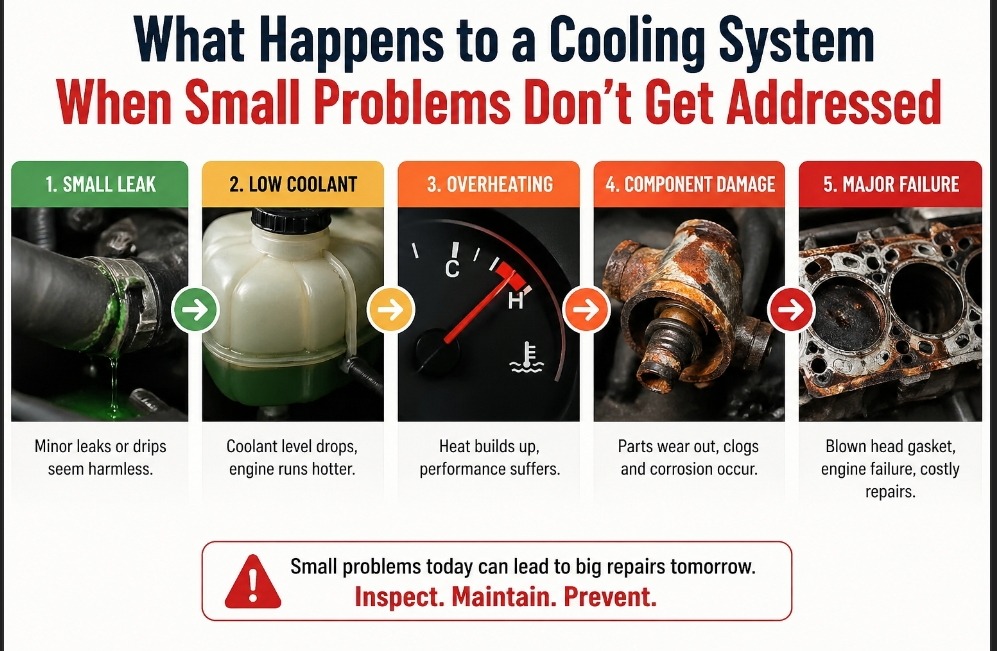
Cooling problems that go unaddressed don't stay the same — they progress. A small refrigerant leak that reduces the system's charge by a modest amount forces the compressor to work harder than its design load, generating heat and wear that accelerates component fatigue. Condenser coils that haven't been cleaned accumulate buildup that raises operating pressures, stressing the compressor in ways that aren't visible until it fails. Electrical components that are beginning to degrade draw irregular current that stresses adjacent components in the same circuit.
The connection between early-stage problems and later failures is direct and traceable. Most expensive cooling repairs have a history of earlier, less expensive conditions that went unaddressed — and that history is worth understanding before deciding to defer a service call.
Refrigerant moves heat from inside the home to outside — absorbing it at the evaporator coil and releasing it at the condenser. A system below its specified charge produces less cooling per cycle, runs longer trying to reach the setpoint temperature, and in more advanced cases develops ice on the evaporator coil that compounds the cooling deficit by restricting airflow.
Low refrigerant charge is always the result of a leak — refrigerant doesn't deplete through normal operation. Recharging without finding and repairing the source of the leak restores performance temporarily while the underlying problem continues, typically producing the same symptoms within a season or two. The repair that actually solves the problem addresses the leak first.
Capacitors are among the most frequently replaced components in residential cooling systems, and their failure pattern is consistent enough to be predictable. They degrade with heat exposure and age until they can no longer supply the starting or running current that compressor and fan motors require. The symptoms — slow startup, unusual sounds from the outdoor unit, a system that runs but doesn't cool effectively — are easy to confuse with refrigerant or compressor problems until the component is tested directly.
Contactors — the switches that control power to the compressor and condenser fan — wear with each switching cycle and eventually fail to make reliable contact. Corroded or pitted contacts produce intermittent operation that resembles a thermostat or wiring problem until the contactor is inspected. Both components are inexpensive relative to the damage their failure can cause to connected equipment if the condition isn't identified and corrected early.
The evaporator coil inside the air handler and the condenser coil in the outdoor unit both need to transfer heat efficiently to keep the system operating within its design parameters. Evaporator coils accumulate dust and biological matter that insulates the coil surface and restricts airflow over time. Condenser coils collect debris that reduces the system's ability to reject heat to the outdoor air.
A contaminated evaporator coil produces elevated indoor humidity and reduced cooling capacity. A contaminated condenser coil raises operating pressures that accelerate compressor wear. Both conditions develop gradually enough that their effects are often attributed to other causes — aging equipment, unusual weather, or a system that's simply undersized — until coil condition is assessed directly as part of a diagnostic process.
Cooling problems that originate in the control system rather than the mechanical equipment are common enough to be worth including in any diagnostic process. Thermostat calibration errors, failed sensors, and wiring faults between the thermostat and air handler produce symptoms — short cycling, inability to reach setpoint, and system lockout — that look like equipment failures until the control side is ruled out.
Smart thermostats that have lost communication with the system, or that were installed with wiring configurations that don't match the equipment, are a growing category of service calls with solutions that don't require any mechanical work once the control issue is correctly identified.
A service call that moves directly to parts replacement without a full diagnostic process produces the wrong result often enough that the distinction is worth understanding before a technician is called. System pressure checks, electrical component testing, airflow measurement, coil inspection, and control system verification — rather than just responding to the reported symptom — are what produce repairs that address the actual problem rather than its most visible manifestation.
The practical argument for thorough diagnosis is simple. A misdiagnosed repair generates a labor charge without resolving the underlying problem, which then requires another service call. A technician who diagnoses before recommending work produces a single invoice that covers what actually needed to be done.
The decision between repairing and replacing a cooling system should be presented clearly when the repair cost is significant relative to the equipment's remaining service life. A compressor failure on a system that's approaching the end of its expected service life, operating on aging electrical components and an older refrigerant type, may cost more to repair than the remaining value of the system justifies. A capacitor replacement on a well-maintained younger system is a straightforward repair decision.
A technician who presents both options clearly — including realistic remaining service life and what the efficiency difference between the existing system and a replacement would mean in annual operating costs — is providing the kind of guidance that leads to a financially sound decision.
Homeowners dealing with AC repair in Sandy benefit from working with a technician who assesses the full system rather than just the reported symptom, communicates findings before recommending any work, and presents options honestly when both repair and replacement are worth considering. A service call that ends with a clear account of what was found, what was done, and what the system's overall condition suggests about future maintenance is one that gives the homeowner the information needed to make good decisions going forward — not just a repaired unit and a bill.
Annual cooling system service — cleaning coils, checking refrigerant charge, testing capacitors and contactors, verifying airflow, and inspecting electrical connections — identifies the developing conditions that produce mid-season failures before they progress to the point of requiring emergency repair. The cost of consistent preventive service is reliably lower than the cost of the failures it prevents, and it produces a maintenance history that informs replacement timing decisions when the system eventually reaches the end of its useful life.
Filter replacement is the one maintenance task that falls within the homeowner's control between professional service visits and has the most direct effect on system performance. A clogged filter restricts return airflow in ways that cause the evaporator coil to operate below its design temperature, accumulate ice, and develop contamination that reduces heat transfer efficiency over a season of use. Replacing filters on the schedule the equipment manufacturer recommends is the simplest contribution a homeowner can make to keeping a cooling system running correctly through the summer.
A cooling system that's serviced consistently and repaired correctly when problems develop performs reliably through summers that would push a neglected system into failure. Recognizing the early signals, acting before small problems compound into expensive ones, and working with a technician who takes diagnosis seriously are what keep repair costs manageable and the home comfortable when the season makes that comfort matter most.