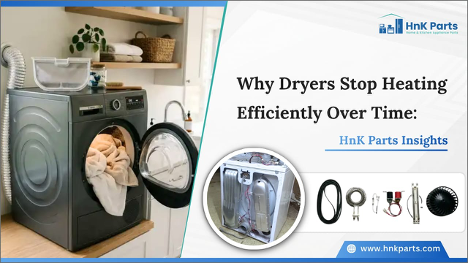
Dryers are essential in both residential and commercial environments, ensuring quick turnaround times and operational efficiency. However, over time, even the most reliable units begin to lose their heating efficiency. This decline doesn’t happen overnight—it’s often the result of gradual wear, overlooked maintenance, and failing dryer parts that impact overall performance. From heating elements to thermostats, every component plays a role in consistent drying results.
Drawing from the expertise of HnK Parts, this guide explores the key reasons dryers stop heating efficiently and how understanding the condition of critical components can help you prevent costly downtime and maintain optimal performance.
The Hidden Impact of Wear and Tear on Heating Components
Like any mechanical system, dryers are subject to continuous use, which naturally leads to wear and tear. The heating element, one of the most critical components, gradually degrades due to repeated heating cycles. Over time, it may develop weak spots or burn out partially, resulting in inconsistent or reduced heat output.
In gas dryers, the burner assembly can also suffer from wear. Components like the igniter and flame sensor may weaken, leading to delayed ignition or incomplete heating cycles. This not only affects drying performance but also increases energy consumption.
Routine inspections are often overlooked, but they are key to identifying these early signs of deterioration. Replacing worn-out components before complete failure can significantly extend the life of your dryer.
Airflow Restrictions: The Silent Efficiency Killer
One of the most common yet underestimated causes of poor dryer heating is restricted airflow. Dryers rely on proper air circulation to distribute heat evenly and remove moisture from clothes. When airflow is compromised, heat builds up in certain areas while failing to reach others.
Lint buildup is the primary culprit. Over time, lint accumulates in the lint trap, vent hose, and exhaust duct. Even a partially clogged vent can reduce airflow drastically, forcing the dryer to work harder while delivering subpar results.
Blocked airflow can also cause overheating, triggering safety mechanisms that shut off the heating element prematurely. This creates the illusion of a heating issue when the root cause is actually ventilation-related.
Regular cleaning of lint filters and periodic inspection of vent systems are essential practices to maintain efficient heating.
Thermostat and Sensor Failures
Modern dryers depend on thermostats and sensors to regulate temperature. These components ensure that the dryer maintains the correct heat level throughout the cycle. However, over time, they can become inaccurate or fail entirely.
A faulty thermostat may misread the internal temperature, causing the dryer to underheat or overheat. Similarly, moisture sensors can lose sensitivity, leading to extended drying times or incomplete cycles.
These issues are particularly problematic in commercial settings, where precision and consistency are crucial. When sensors fail, the dryer may continue running longer than necessary, increasing energy costs and wear on other components.
Replacing defective thermostats and sensors is a straightforward solution that can restore proper heating performance.
Electrical and Gas Supply Issues
Heating inefficiency isn’t always caused by internal components—external factors like power supply and gas flow can also play a significant role.
In electric dryers, issues such as damaged power cords, faulty circuit breakers, or loose connections can reduce the voltage reaching the heating element. Since most dryers require a full 240V supply to operate efficiently, even a partial loss can result in reduced heat output.
Gas dryers, on the other hand, depend on a steady gas supply. Problems with gas valves, regulators, or supply lines can limit the amount of fuel reaching the burner. This leads to weak or inconsistent flames, directly impacting heating performance.
Regular checks of electrical connections and gas lines are essential to ensure uninterrupted operation.
The Role of Aging Parts in Declining Efficiency
As dryers age, multiple components begin to degrade simultaneously. Belts, rollers, and motors may not directly affect heating, but they influence the overall efficiency of the system. For example, a worn motor may struggle to maintain proper drum rotation, affecting airflow and heat distribution.
Additionally, seals and gaskets can deteriorate over time, allowing heat to escape. This forces the dryer to work harder to maintain the desired temperature, leading to inefficiency and higher energy consumption.
Older dryers are also more prone to compatibility issues when replacement parts are not sourced correctly. Using high-quality, compatible components is crucial to maintaining performance and avoiding further complications.
Restore Dryer Efficiency with Smart Part Replacements at HnK Parts
Dryers don’t lose heating efficiency without reason—it’s the result of cumulative wear, restricted airflow, failing sensors, and aging components. By understanding these factors, you can take proactive steps to maintain optimal performance and extend the lifespan of your equipment.
Reliable parts and timely replacements play a crucial role in this process. Trusted suppliers like HnK Parts provide access to quality components that help restore and maintain dryer efficiency without unnecessary hassle.
Investing in proper maintenance today ensures consistent performance tomorrow, keeping your operations smooth, efficient, and cost-effective.